
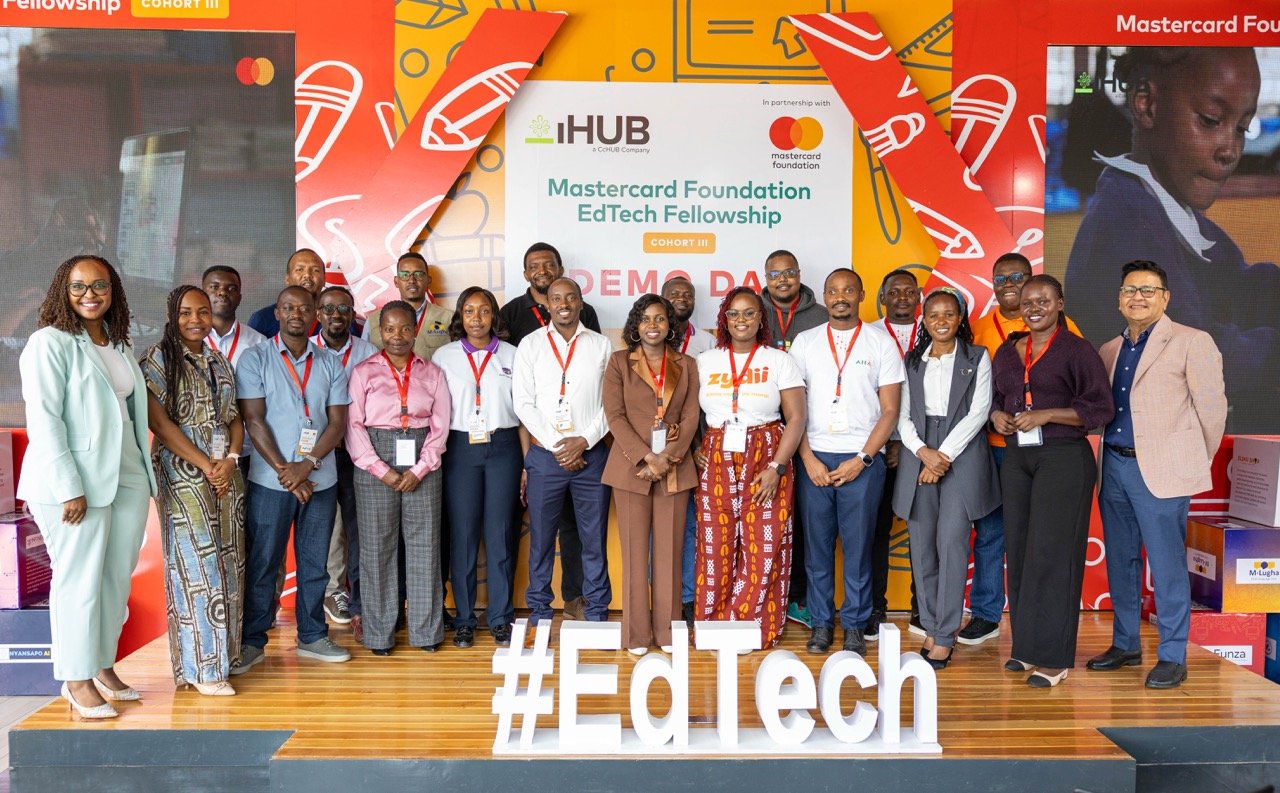

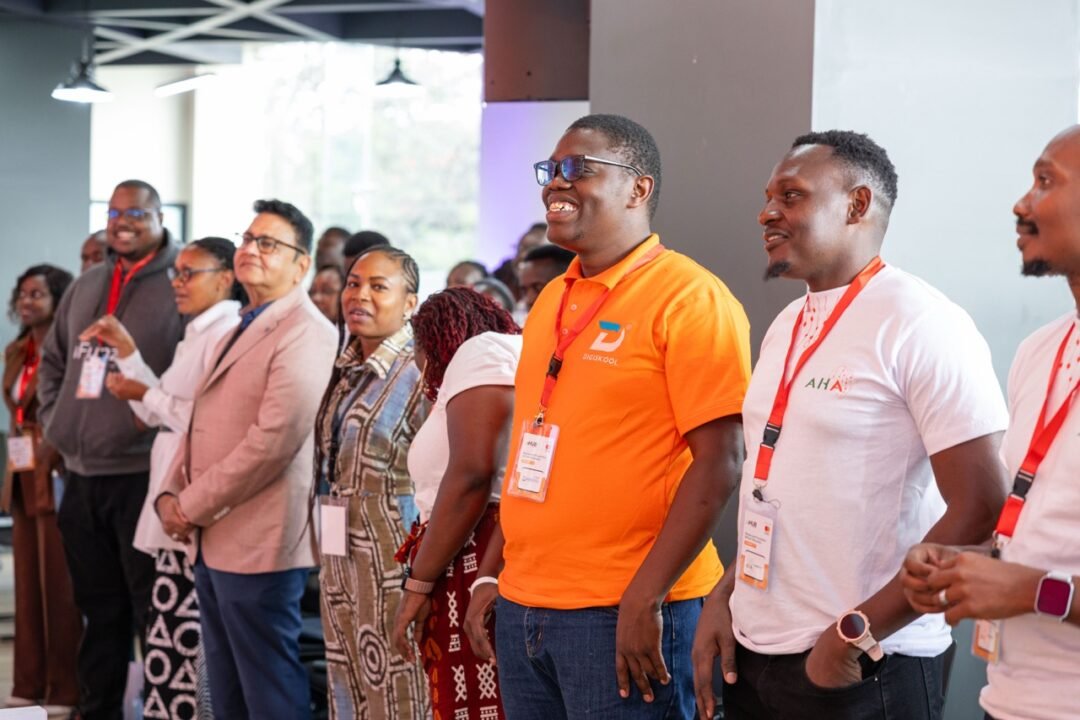
The Acceleration Phase of Cohort 3 of the Mastercard Foundation EdTech Fellowship in Kenya has officially concluded. Following the Demo Day for its third cohort – held during iHUB’s EdTech Impact Week in Nairobi – the programme has released cumulative data, revealing a US$3.6 million equity-free investment into 36 local startups.
Since 2023, the fellowship has reached 585,086 learners and engaged 2,075 schools across the country. However, the data reveals a programme that has evolved significantly over three years: shifting from mass-market acquisition in its first year to a sharp focus on inclusivity, gender equity, and job creation by 2025.
Critically, while the metrics show massive strides in disability inclusion and gender balance, the data points to a persistent geographic reality: the urban-rural divide remained largely static throughout the programme, with 75% of learners consistently hailing from urban areas against 25% from rural regions.
The Human Impact: What Cohort 3 Founders Said
While the metrics show scale, the direct feedback from founders reveals the specific operational gaps the fellowship filled – primarily in product accessibility, market strategy, and linguistic inclusion.
Abdinoor Alimahdi, CEO of M-Lugha (Cohort 3), highlighted how the advisory support was instrumental in refining their product features to better address the comprehension gaps among early learners:
“Being part of the Mastercard Foundation EdTech Fellowship has strengthened our ability to reach and support learners in marginalised communities. The mentorship and hands-on advisory helped us refine our product’s accessibility features and deepen our understanding of the linguistic needs of early learners. As a result, more children can now access mother-tongue learning content that reflects their realities and improves comprehension.”
Rhoda Kingori, Co-Founder & COO of Zydii (Cohort 3), highlighted how the advisory reshaped their technical approach to low-bandwidth users:
“The Mastercard Foundation EdTech Fellowship has fundamentally strengthened how Zydii supports learners and workers across Kenya. Through the Fellowship’s product and go-to-market advisory, we enhanced our mobile-first digital training experience on WhatsApp… As a result, we are now reaching more learners with relevant, affordable skills training, including those with disabilities.”
Critical Success Factors: The “Engine Room”
The Impact Report reveals that this was not merely a funding exercise. The “acceleration” involved a structured ecosystem designed to fix systemic flaws in African EdTech.
1. The “Expert” Support System: The programme deployed 32 iHUB experts to provide tailored advisory. Unlike generalist accelerators, this support covered ten specific pillars crucial for EdTech survival:
- Learning Science (Pedagogy)
- Safeguarding (Child Protection)
- Monitoring & Evaluation (M&E)
- Product Development
- Talent Management
- Distribution Strategy
- Investment Readiness
- Finance
- Communications
- Community Building
2. The “KICD Toolkit” Strategy: Recognising that government approval is the single biggest bottleneck for EdTech in Kenya, iHUB developed the “EdTech Toolkit for KICD Alignment”. This structural guide is designed to help startups navigate the Kenya Institute of Curriculum Development (KICD) approval process, ensuring their content can legally enter public schools and integrate seamlessly into the national education system.
3. Scope of Solutions: The startups were not limited to K-12 schooling. The fellowship deliberately targeted a mix of solutions to ensure a holistic approach:
- Tertiary Education
- Corporate Learning
- Formal & Informal Skills
- School Management Systems
The Cohort Breakdown: A Granular Analysis (2023–2025)
The data shows distinct trends for each year, moving from “Scale” to “Inclusion” to “Innovation.”
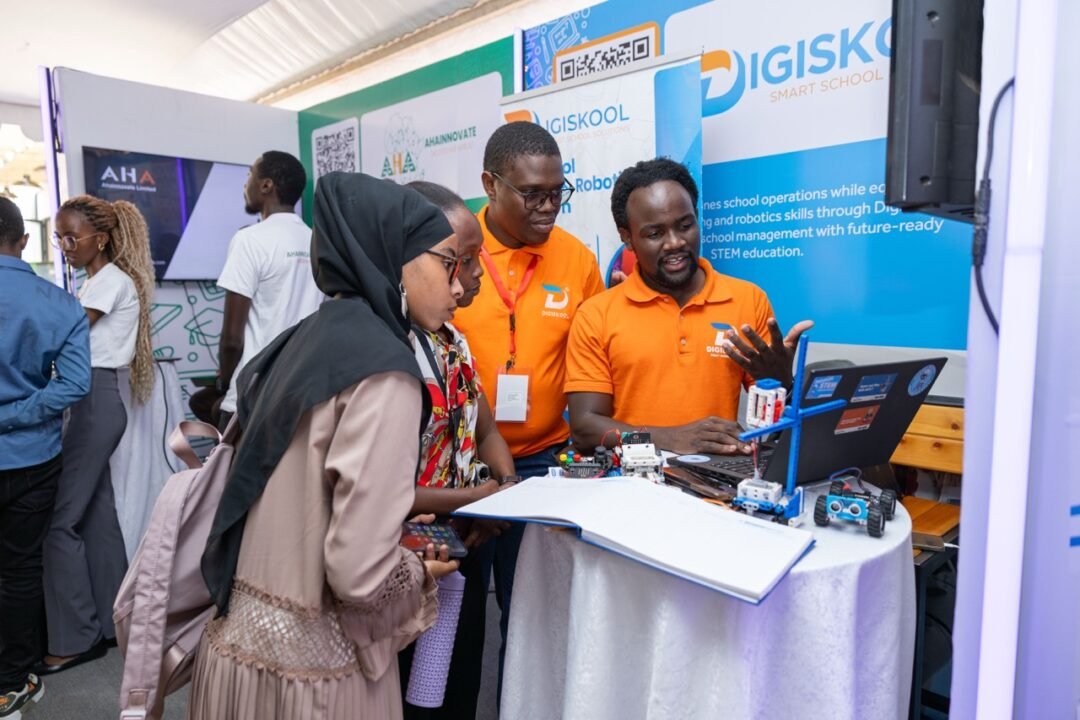
Cohort 3 (2025) – The “Women-Led & AI” Class Theme: Gender Equity, Offline Access, and AI. This cohort is notable for its leadership – 75% of the 12 startups are led by women founders. Their solutions ranged from AI-powered adaptive learning platforms to solar-powered offline classrooms for regions without reliable internet.
- Impact: 15,607 learners reached (to date), 163 schools, and 44 direct jobs created.
The Startups: AHA Innovate, Cloud School System, Digifunzi, Digiskool, Dignitas (LeadNow), Elimu Shop, iFunza, Infoney Solutions, M-Lugha, Nyansapo AI, Verb Education, Zydii.
Cohort 2 (2024) – The “Inclusive & Gig Economy” Class Theme: Disability Support and Vocational Skills. This cohort achieved the highest gender parity (51% male, 49% female learners) and focused heavily on economic outcomes.
- Impact: 274,758 learners. Notably, it reached 2,125 learners with disabilities and generated 196 gigs for artisans (via platforms like Fundis).
The Startups: Dals Learning, Mzizi, KuzeKuze, Uptyke (EdTech for the disabled), Kurasa, Esoma Solutions, NABU, Recess, Soma Chat, Fundis, Studio KSL, Soma Siri Afrika.
Cohort 1 (2023) – The “Scale” Class Theme: Mass Market K-12 and Regional Expansion. The inaugural cohort focused on volume and cross-border growth.
- Impact: 294,721 learners and 3,216 educators.
- Regional Growth: Arifu used this launchpad to expand operations beyond Kenya into Ethiopia, Uganda, and the Ivory Coast.
The Startups: Funke Science, Silabu, MsingiPACK, Kidato, EasyElimu, Smart Brains Africa, Angaza Elimu, InteMatta, Elewa, Loho Learning, Arifu, Snapplify.co.ke.
The Bigger Picture: Institutional Context
The fellowship is part of a massive continent-wide play. The Mastercard Foundation EdTech Fellowship was launched in 2019 and is currently active in 11 other African countries, with a goal to partner with 12 Tech Hubs and reach 1.8 million young people by 2025.
For iHUB, which is now part of Co-creation HUB (CcHUB), this programme leverages a network that extends to Nigeria, Rwanda, Namibia, and Togo. With over 14 years of operation and 1,000+ startups supported, iHUB has utilised this programme to position itself as the largest creative and innovation ecosystem enabler in Africa, effectively bridging the gap between social capital and economic prosperity.
What’s Next?
With the acceleration phase complete, the focus shifts to sustainability. Nissi Madu, Managing Partner at iHUB, confirmed the transition to a post-programme support structure involving mentorship and access to capital:
“We’re inspired by this cohort’s dedication; they’ve worked tirelessly to refine their solutions, co-design with their users, and ensure their products meet real learning needs. Through the Fellowship, we’re seeing a new generation of African innovators redefining what equitable and impactful education can look like. As we move into the post-programme phase, we’re excited to continue supporting these startups as they scale their solutions to reach millions of learners and drive lasting improvements in learning outcomes across Kenya.”
The priority for the Cohort 3 companies now becomes surviving the transition from grant support to sustainable commercial revenue, ensuring they remain viable without external funding.