


For years, the barrier to entry for small businesses wanting to accept card payments in Kenya has been a chunky, expensive piece of hardware: the Point of Sale (POS) terminal. If you were a small merchant, you either ponied up the cash for the machine or you stuck to mobile money. KCB Bank Kenya and Visa are betting that the hardware era is over.
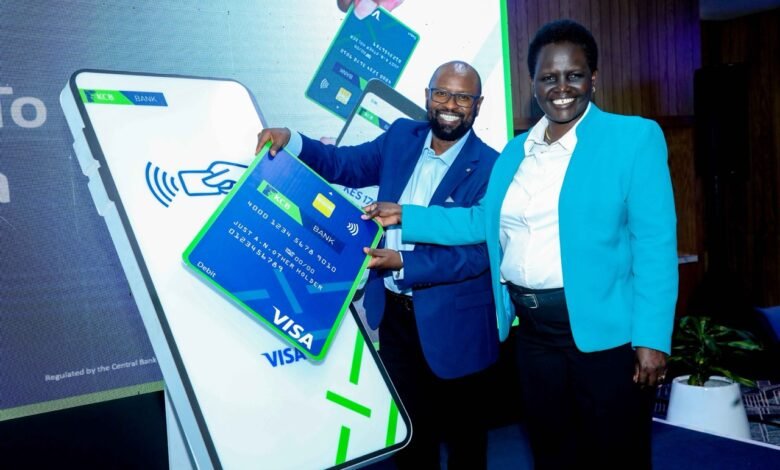
On December 5, 2025, the two financial giants announced a collaboration to roll out “Tap-to-Phone” technology across Kenya. The premise is straightforward but technically significant: instead of renting or buying a dedicated card machine, merchants can now use their own NFC-enabled Android smartphones to accept payments.
How the tech works
This isn’t just a QR code workaround. This is utilizing the Near-Field Communication (NFC) chip inside modern Android devices—the same chip used for Google Pay or Samsung Pay—but in reverse.
Usually, a phone acts as the card (sending data). With Tap-to-Phone, the merchant’s phone acts as the reader (receiving data). A customer simply taps their contactless Visa card (or their own phone/wearable) against the back of the merchant’s device, and the transaction processes just as it would on a Verifone or Ingenico terminal.
Under the bonnet, the system relies on the Visa Acceptance Platform. This is the critical piece of software infrastructure that handles the heavy lifting of security. It uses tokenization—a process that replaces sensitive card details with a unique digital identifier (a token)—to ensure that the merchant’s phone never actually stores the customer’s raw card data. This allows an off-the-shelf consumer device to meet global security standards for financial transactions.
Why this matters for the Kenyan Market
The hardware friction has long been a sticking point for SME digitization. “This innovation significantly lowers the cost of digital payments, especially for SMEs that often face barriers due to the expenses related to the purchase of POS infrastructure,” the company noted in their release.
Jane Isiaho, KCB Bank Kenya’s Director of Retail Banking, frames this as a move toward operational efficiency. By stripping away the need for proprietary hardware, the bank is essentially democratizing card acceptance. If a merchant has a mid-range Android phone, they are already hardware-ready; they just need the software permission.
“We are simplifying access to payment acceptance… and empowering merchants to serve customers faster and more securely,” Isiaho explained.
The dominance of Android
The limitation here is the operating system. The feature is launching specifically for Android smartphones. This isn’t surprising given Android’s massive market share dominance in Kenya compared to iOS, and Apple’s historical protectiveness over its NFC chip access for third-party developers (though this is slowly changing in other regions due to regulatory pressure).
For John Njoroge, Visa’s Country Manager for Kenya, South Sudan, and Somalia, this is about scale. “Tap-to-Phone eliminates traditional barriers by turning the devices merchants already own into secure acceptance tools,” Njoroge stated.
The bigger picture
This move aligns with KCB’s broader digital transformation strategy. As mobile money (M-PESA) continues to be the default for peer-to-peer and small merchant transactions, traditional banks and card networks like Visa have been looking for ways to reduce friction. By removing the physical terminal from the equation, they are hoping to make card swiping—or rather, tapping—as ubiquitous and low-effort as a Paybill number.