
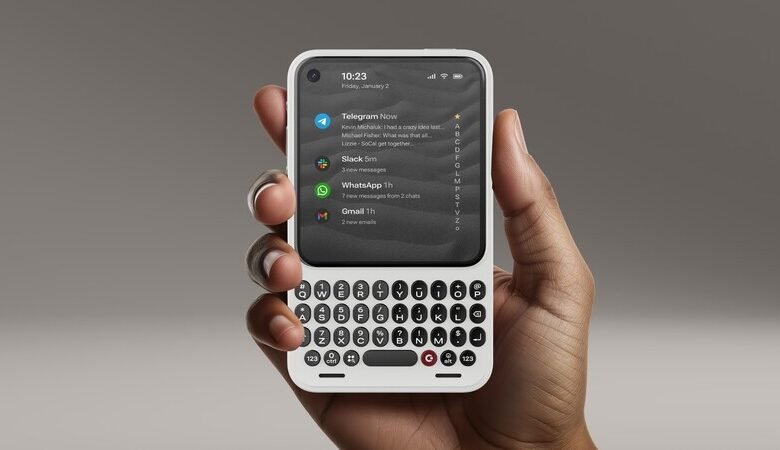

There is a persistent ache for the tactile click of a physical keyboard that simply refuses to die out. Today, Clicks Technology – the company that famously slapped a keyboard case on the iPhone last year – has announced a hardware pivot that is both nostalgic and radically ambitious. They have introduced the Clicks Communicator, a standalone device designed not to replace your main smartphone, but to act as a “companion” to it, much like a Kindle complements an iPad.
Accompanied by a new universal Power Keyboard, this launch represents a shift from making accessories to defining a new category of mobile computing: “Anti-distraction hardware.”
The Communicator: “Project Clover” Revealed
The headline announcement is the Communicator (codenamed “Project Clover”). At its core, the device addresses a modern paradox: we need to stay connected, but the devices we use to do so are engineered to distract us.
The Communicator is built on the philosophy of “triage.” It is a dedicated messaging device intended to handle your signals – Texts, WhatsApp, Emails, Slack – without the noise of Instagram Reels or TikTok feeds. Michael Fisher (MrMobile), co-founder of Clicks, explicitly compares the device to an e-reader. You don’t browse the web on a Kindle; you read. Similarly, you don’t “doomscroll” on a Communicator; you communicate.
To achieve this, Clicks recruited Joseph Hofer, the industrial designer behind some of the most iconic BlackBerry devices of the mid-2000s. The result is a device described as having a “Goldilocks form factor” – small enough to be pocketable alongside an iPhone 17 Pro Max, but substantial enough to type on comfortably.
Hardware for the “Recovering” Power User
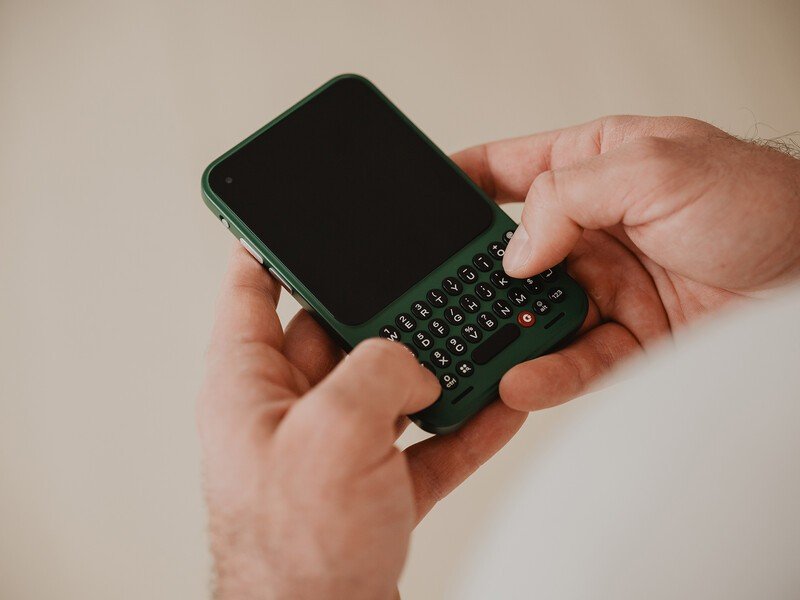
The device is unapologetically retro-futurist. The bottom half is dominated by a physical QWERTY keyboard. But unlike the dumbphones of the 90s, this keyboard is capacitive. Users can swipe their thumbs over the keys to scroll through emails or webpages, keeping their fingers off the small 4.03-inch display.
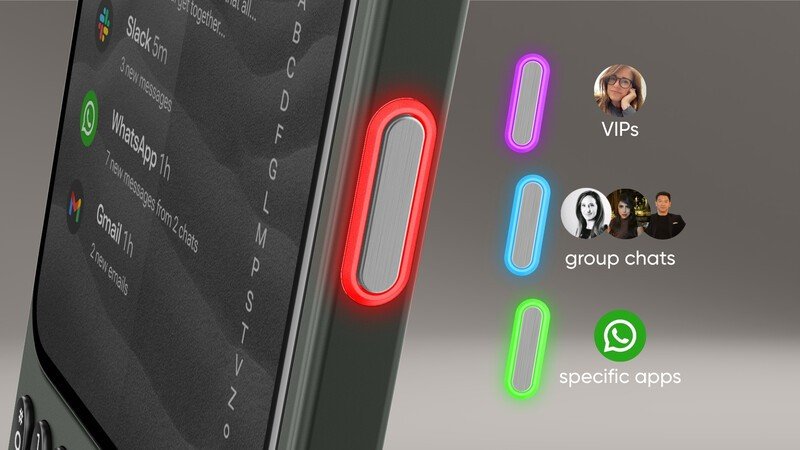
The most distinct hardware feature, however, is the Signal Light. Located on the side key (dubbed the “Prompt Key”), this LED strip offers granular, color-coded notification contexts. The idea is to break the habit of lighting up your screen for every buzz. If the light pulses green, it’s family; if it’s blue, it’s work; if it’s red, it’s urgent. If it’s not lit, you don’t check.
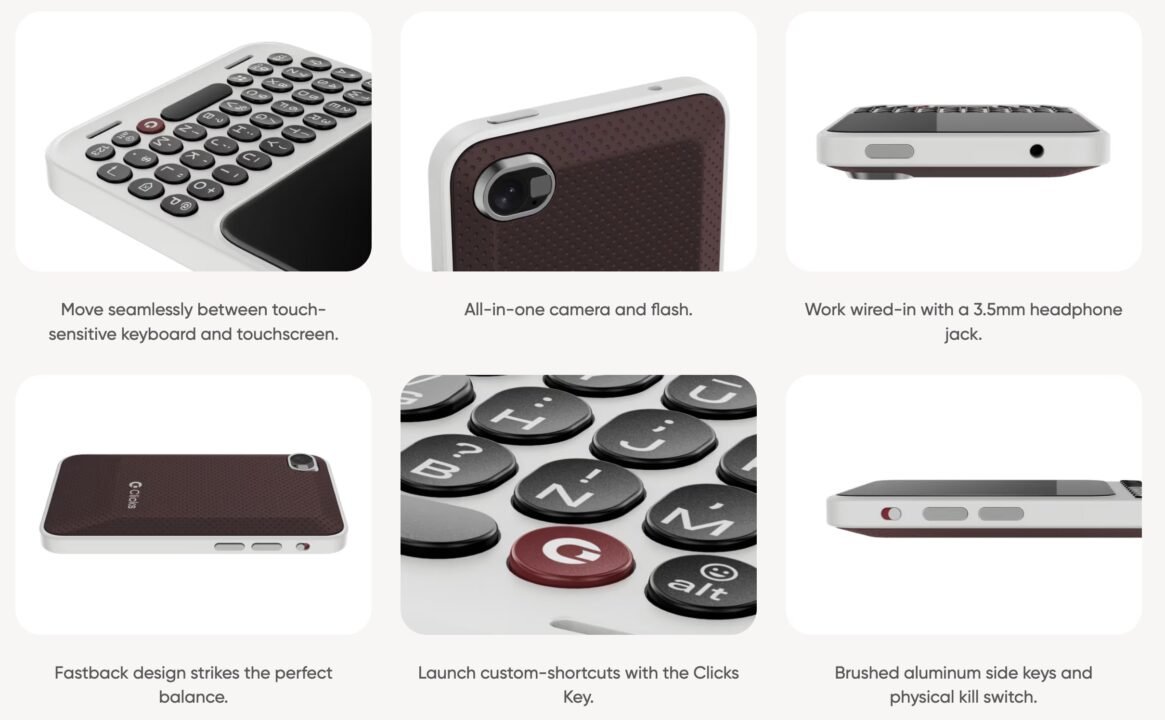
For the true tech enthusiasts, the Communicator is a love letter to lost features. It includes two ports that have largely vanished from modern flagships: a 3.5mm headphone jack and a microSD card slot (expandable up to 2TB). These inclusions signal exactly who this phone is for – the utility-focused user who resents the “dongle life.”
Software: Android, but Quiet
Running on Android 16, the Communicator avoids the standard grid of colorful app icons. Instead, Clicks has partnered with the developers of Niagara Launcher, a popular minimalist Android interface. The home screen is a simple, text-based list of essential apps.
The “Prompt Key” on the side also integrates deeply with voice and AI. A single press activates voice dictation (for quick replies or notes), while a long press can trigger an AI agent. There’s a “kill switch” physical key on the other side that silences the device entirely. Security is handled via “Android Strongbox,” ensuring that despite its retro vibes, the device meets modern encryption standards for enterprise use.
The Power Keyboard: A Universal Pivot
While the Communicator steals the show, the new Power Keyboard is arguably the more commercially viable product. Moving away from the fitted “case” design of their first product, this is a universal Bluetooth keyboard that attaches magnetically (MagSafe/Qi2) to the back of any phone.
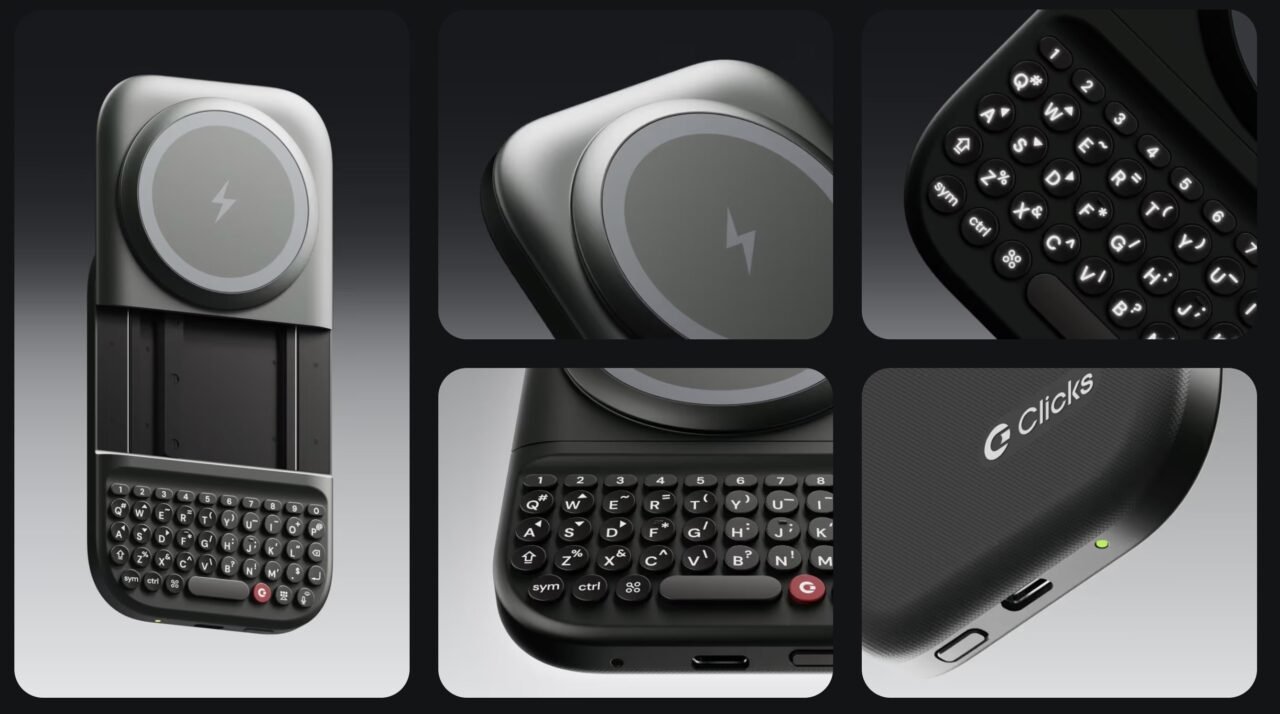
It features a slider mechanism that allows it to work in portrait mode or rotate into a “Batwing” landscape mode – ideal for banging out spreadsheets or long documents on the go. Crucially, it contains its own 2,150mAh battery, which not only powers the keys but wirelessly charges the phone it’s attached to. Fisher highlighted its versatility beyond phones, showcasing it as a text-input tool for Apple TV and VR headsets, solving the perennial problem of typing passwords in virtual reality.
The Gamble: Two Phones in 2026?
The critical question remains: will people actually carry two phones? The “dumbphone” movement has been growing, but usually as a replacement, not a companion. Clicks is betting that professionals are tired of the mental load of their primary devices but can’t afford to disconnect completely.
At $499 (approx. KES 64,870), the Communicator is priced like a mid-range phone, but it lacks the camera versatility and screen real estate of competitors in that bracket. It is a niche tool for a specific kind of digital burnout. Whether that niche is large enough to sustain a hardware startup remains to be seen.
Clicks Communicator Specifications
| Feature | Specification |
| Display | 4.03-inch AMOLED (1080 x 1200) |
| Keyboard | Backlit QWERTY with Capacitive Touch (Scroll support) |
| Processor | MediaTek Dimensity (4nm) |
| RAM | 8GB LPDDR5X |
| Storage | 256GB UFS 4.0 + MicroSD Slot (up to 2TB) |
| Battery | 4,000 mAh (Multi-day life) |
| Charging | 30W Wired, 15W Wireless |
| Cameras | Rear: 50MP (OIS) Front: 24MP |
| OS | Android 16 (Custom “Quiet” Interface w/ Niagara Launcher) |
| Connectivity | 5G, Wi-Fi 6E, Bluetooth 5.4, NFC, 3.5mm Jack |
| Special Features | Signal Light (Side LED), Prompt Key, Voice-First Input |
| Price | Retail: $499 (~KES 64,870) Early Bird: $399 (~KES 51,870) |