

We find ourselves at a precipice unlike any previous generation has experienced. The decisions we make in the next decade about how we build, deploy, and govern artificial intelligence will fundamentally reshape human civilization – not for one nation or region, but for all of humanity. This is the reality of our moment.
The Beginning
While in Uni, among the list of courses I was most excited for during my BSc in Informatics was Artificial Intelligence. Our lecturer, Dr. Korongo, stood out as of one of those rare teachers whose classes were interactive, rigorous, and exciting. But as is often the case with public universities, reality fell short of promise. The course outline felt shallow; and I felt like we rushed through concepts without truly diving deep into the profound implications of what we were studying.
Fortunately, the internet compensated for what our institution could not. I discovered voices online engaging with AI in ways our curriculum didn’t. I remember reading one article that stood out among many: Tim Urban’s “The AI Revolution: The Road to Superintelligence” series on Wait But Why. He posed questions that got me very excited and concerned: Is artificial intelligence our salvation or our extinction? Are we standing at the threshold of transcendence or catastrophe? I have since watched lots of content and read lots of arguments around this topic.
Today, as I write this over a decade later, those questions feel even more immediate. We are not approaching this future; we are living it.
Understanding the Spectrum: From Narrow to Super Intelligence
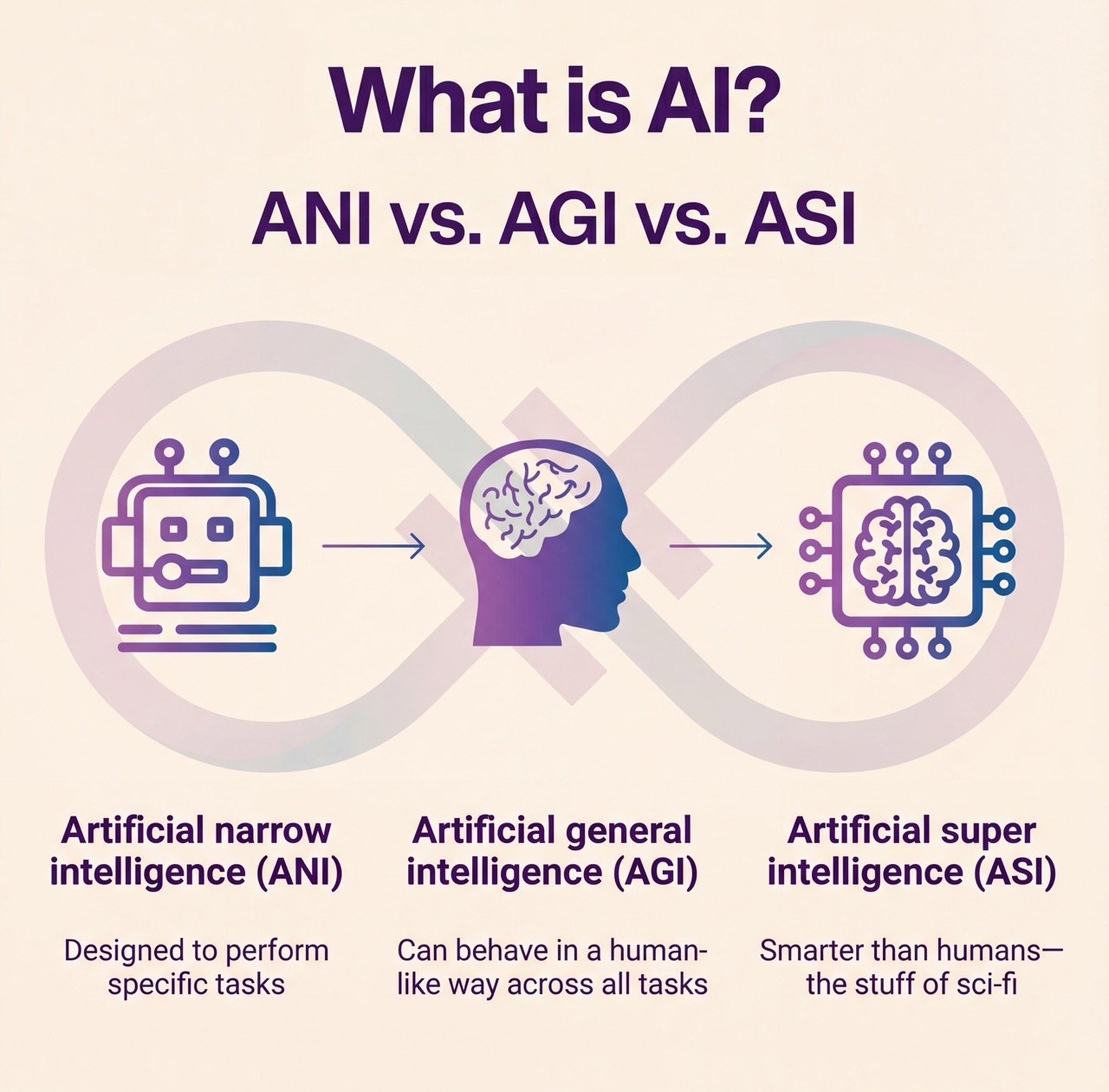
To understand where we are and where we’re headed, we must first establish what we’re actually talking about. What we call Artificial intelligence exists on a spectrum. There’s where we are right now, and where we imagine the future to be like.
- Artificial Narrow AI (ANI): This is what we have today. It excels at specific, defined tasks. For example tools like ChatGPT, Google Gemini, Deepseek R1 can write essays, debug code, and engage in conversation. These large language models (LLMs) are extraordinary achievements, products of immense computational power and training on billions of text examples. Yet they operate within constrained domains. They pattern-match with sophistication, but they do not truly understand. They cannot experience curiosity or forge genuine new insights independently.
- Artificial General Intelligence (AGI): This is what many researchers and companies are chasing. It represents a qualitatively different leap: an artificial system that matches or exceeds human cognitive ability across virtually all domains. It would learn, reason, and create in ways indistinguishable from human intelligence. It would require no human intervention to learn new tasks.
- Artificial Super Intelligence (ASI): This is the crazy fictional bit. Some argue that we’ll have created god if we build this. ASI surpasses even AGI, existing at levels of intelligence to humans as humans are to insects. We cannot fully predict or comprehend the implications.
Many researchers are of the argument that the distance from today’s very impressive LLMs to AGI is vast. GPT-5, released just months ago in August 2025, demonstrates “PhD-level” reasoning in specific domains. Yet researchers are clear: we have not cracked the code of true general intelligence. Some expert predictions place the probability of AGI reaching 50% somewhere between 2040 and 2061. Some optimists in the AI industry suggest 2026-2035. Others remain skeptical it’s possible at all. The honest truth: we do not know. The actual reality: it could be any time now.
The Historical Parallel We Must Understand
In the 80’s, mathematics teachers protested the introduction of calculators in schools. This may sound crazy to you in 2025, but it’s the same argument we are seeing against kids using ChatGPT in schools: These devices make students stupid.
The teachers were not entirely wrong – calculators did change how we relate to arithmetic. Yet they were not entirely right either.
What actually happened was more nuanced. Calculators freed students from tedious computation, allowing a focus on higher thinking: problem-solving, conceptualisation, elegant proof-construction. Those who learned arithmetic before calculators understood what they were doing. Those who reached for calculators before learning anything were left helpless. Rev. Nyakinda (PhD) in Maseno School in 2011 when I was in Form 4 really brought this out in us.
Right now, we face the same what-do-we-do moment with AI. Do we allow kids to use AI tools to learn, or do we outright ban them? The same approach with calculators should suffice: There needs to be a base of education before using AI. AI won’t make us stupid. It will make us know and think and reason and work and live differently, if we build it right. If we get it right.
The operative phrase is “if we build it right.” That requires a whole discussion around governance, equity, and power.
The Hardware Revolution: Chips and Minds Converging
In the last few years, we’ve seen an exponential increase in computing power. Apple’s M-series processors illustrate this vividly. The M1 chip, introduced in 2020, contained 8 cores and revolutionized laptop computing. By 2025, the M4 offers 14-16 cores with a 3-nanometer process, delivering nearly double the performance with vastly improved energy efficiency.
Now imagine this computational power not in a laptop, but embedded in your brain.
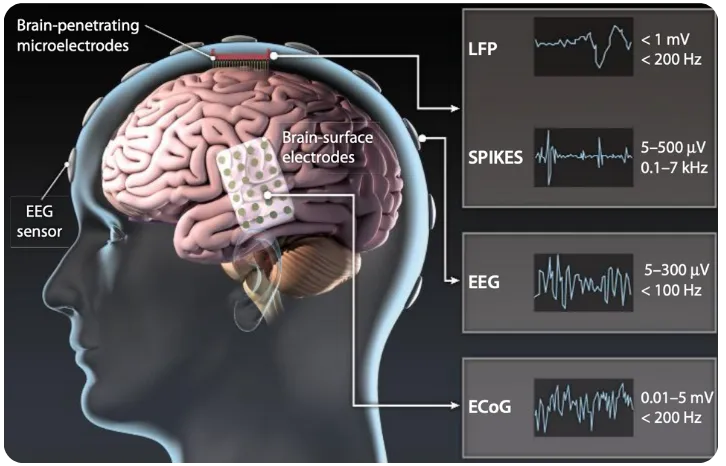
This may sound like science fiction, but Neuralink has already implanted brain-computer interfaces into nine human participants as of July 2025. These are not crude devices. They interface directly with the motor cortex, allowing paralyzed individuals to control cursors and robotic limbs through thought alone. The roadmap is aggressive: by 2027, the plan is to have multiple implants across motor, speech, and visual cortices. By 2028, full brain integration with AI systems capable of 25,000+ simultaneous channels.
Actually, let me edit this part: These are ACTUALLY crude devices. Compared to what the future holds, this is what a Nokia 3310 is to the iPhone 17 Pro Max right now.
Meanwhile, the external hardware we interface with is transforming. Samsung’s Galaxy Z Fold7, released this year, is now as thin as traditional smartphones when folded. Wearables have evolved from fitness trackers into continuous health monitoring systems – smartwatches with ECG sensors, AI-powered predictive models that detect disease patterns in real time, interfaces that feel not like devices but like extensions of ourselves.
We are witnessing the convergence of human and computational intelligence through the hardware we wear and, soon, the implants we integrate.
Walking to a Prof. Gichoya class in uni for the Human Computer Interaction (HCI) lecture was exciting because it was an easy lesson. “These are input devices… and these are output devices”. Well, the future whose gates we now knock will have the computer in your brain. I hope universities are already moving from HCI to BCI: the Brain-Computer Interface.
The Biological Revolution: CRISPR and the Rewriting of Life
While silicon advances accelerate, a parallel revolution is occurring at the molecular level. CRISPR has given humanity the ability to edit genes with unprecedented precision.
Back when Pocket: Read it Later was a very important app, I used to save a lot of articles to read later and I remember being so stricken by the title “The Gene Hackers” on The New Yorker. I still remember it because of course I do. This was the first time I was hearing about CRSPR and DNA editing. A few days later, there was the story about how Gene Editing had saved a girl dying from leukemia. This was the first time this tech had been used for such a task.
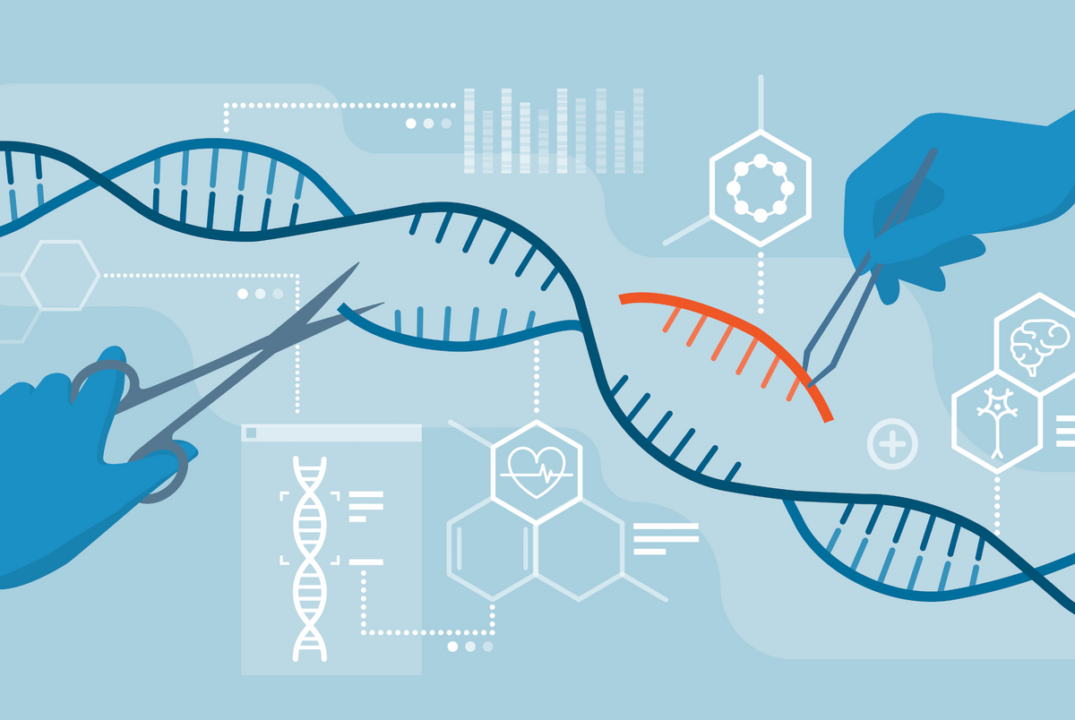
So what exactly is CRISPR? The acronym stands for “Clustered Regularly Interspaced Short Palindromic Repeats” – a mouthful, but here’s what it means in practice: it’s a tool that can find a specific genetic instruction in DNA and edit it, like using a word processor to find-and-replace in a document. In 1987, scientists discovered that bacteria naturally possessed this mechanism as a defense against viruses. By 2007, researchers fully understood how it worked. In 2013, doctors began using it intentionally to edit human genes. Today’s versions, like “prime editing,” can make changes even more precisely than before, without the damage that earlier versions caused.
What does this mean for us? Cancer doctors are now designing treatments tailored to each patient’s tumor. Farmers are growing crops that survive drought and disease. Diseases that were once considered incurable – genetic blindness, sickle cell disease, certain cancers – are now treatable. CRISPR is not a distant future; it’s working in hospitals and laboratories right now.
Now combine CRISPR with AI. Imagine an AI system analyzing millions of biological patterns simultaneously, spotting which genetic edits would work best for a disease faster than any human researcher could. Machine learning algorithms are already doing this. They’re identifying promising drug candidates in weeks that would take scientists years to find by hand. AI is reading medical images and detecting early-stage cancers better than radiologists. This fusion of biology and artificial intelligence is accelerating everything.
Consider what happened in the 20th century: vaccines and antibiotics transformed human life. Life expectancy nearly doubled, from 47 years in 1900 to over 78 today. That wasn’t luck. It was because we learned to prevent and cure disease at scale. CRISPR and AI-powered biology are set to repeat that revolution. They could eliminate genetic diseases entirely. They could catch cancers before symptoms appear. They could extend human healthspan – not just how long we live, but how well we live.
The Governance Crisis: Who Will Rule the Future?
While I’m optimistic and ready for the future, the truth is this: The AI race is already redrawing power through capital, compute, chips, and standards.
The West is moving with unprecedented speed and capital. The United States and European nations are pouring billions into AI infrastructure, chip manufacturing, and research institutions. OpenAI, Google, Meta, and countless startups are moving with entrepreneurial velocity that, for better or worse, outpaces regulatory thinking.
China is engaged in an equally fierce sprint. Beijing has recognized that AGI will be the ultimate asymmetric advantage. Chinese investment in AI rivals the West’s, and in some sectors surpasses it. The government treats AI as a strategic national asset.
But Africa – and much of the Global South – faces a different reality. Our governments lack the capital and technical expertise to compete. Worse, the response from many African states has been reactive rather than visionary: endless regulatory committees, blanket restrictions, and bureaucratic theater that signals caution without enabling innovation. We have ceded the future to others. We honestly can’t compete – even if we start now. I know, this feels bleak and sad.
This matters profoundly. The systems that emerge as AGI- or ASI-capable will not be neutral. They will reflect the values, biases, and priorities of whoever built them. A world-governing AI built on Silicon Valley assumptions will distribute power differently than one built in Beijing. One built by corporations will serve different interests than one governed internationally.
The Era of Digital Governance and Interconnected Humanity
As all this is happening, we are also witnessing an extraordinary historical transition in how humanity organizes itself. For millennia, humans lived in small communities – tribes, villages, city-states. These gave way to empires, then nation-states. Democracy emerged as a framework for governance at the national level. Then the internet arrived, and suddenly we were no longer merely citizens of nations; we were inhabitants of an interconnected globe.
This shift is psychological as much as technological. I am writing this in Nairobi, while watching the recent mayoral election in New York with genuine investment. I have never set foot in New York, yet I cared about the outcome because I follow global politics through interconnected digital networks. Recently in Tanzania we’ve seen serious violence and death being meted on protestors, and I’ve personally been so invested and felt so much pain and anger. When I see youth movements in Nepal demanding justice and taking to the streets, I have a sense of pride and one-ness. My emotional landscape is no longer bounded by my nation’s borders; it has become planetary.
This interconnectedness will intensify exponentially with AI and new human-computer interfaces. Imagine neural interfaces allowing instantaneous translation and knowledge-sharing across language barriers. Imagine AI systems capable of modeling geopolitical outcomes with precision, making transparent the consequences of policy decisions. The world becomes simultaneously more transparent and more complex.
The governance question becomes not merely “Who leads each nation?” but “Who will govern humanity’s collective future?” Will it be the corporations whose platforms mediate our digital lives? Will it be the first AGI or ASI system created, regardless of its origins? Will it be nation-states with nuclear weapons capability? Will it be whoever captures the attention of people online? We do not yet know.
What we know is that the current trajectory – dominated by Western capital and Chinese state power, with Africa and the Global South largely excluded from decision-making – is unsustainable and unjust. We cannot accept a future designed for us rather than with us.
A Call to Courage and Collective Action
The future is not predetermined. The outcome of this pivotal moment depends on choices made now.
If you are reading this, understand: the future is here. Your role is to determine how you engage with it. Some of you reading this will work to shape how AI is built and governed – whether in your nation’s capitals, in research institutions, or in startup ecosystems. Some will work to ensure AI benefits are distributed equitably. Some will create businesses and opportunities as these technologies reshape every sector of the economy. Some will simply be citizens trying to live meaningful lives in an increasingly complex world.
Any of these roles is valid. But passivity is not. The transformation is coming whether we will it or not. The only question is whether we shape it or are shaped by it.

For Africa, for Asia, for the Global South: the message is urgent. If we cannot find ways to build our own computational capacity, then we must find ways to be part of what’s being developed. If we cannot develop our own AI systems reflective of our values and priorities, we must demand seats at every table where the future is being negotiated.
For everyone: we must insist on governance frameworks for AI that are transparent, participatory, and accountable. We must demand that the immense power of AGI – when or if it arrives – be governed not by a single corporation, nation, or person, but by collective human wisdom.
I had the same argument when America banned China in my article “Huawei ban a wake-up call to all Android Makers”: “companies with a global reach should, going forward, only be controlled globally”. Well, rewriting it here to fit this topic, the same argument holds water: AI that shapes the future of humanity should only be controlled by ALL of humanity. Not companies. Not governments. Not armies. Everyone should have a seat at the table, and have their voices heard. The how is the challenge.
We must recognize that for yet another time in history, the decisions we make now will affect not just future generations, but potentially the trajectory of conscious intelligence across the entire galaxy.
We stand at the precipice of a new world. We have the technology, the knowledge, and the capability to build something extraordinary: a future where AI amplifies human capability, where CRISPR-edited medicine liberates us from genetic disease, where interconnected humanity collaborates across boundaries, where governance is just and participatory.
Or we can sleepwalk into a future determined by others.