

The race to capture Africa’s burgeoning Web3 developer market just got a significant financial second wind. Hashgraph Ventures, a venture capital fund regulated out of the Abu Dhabi Global Market (ADGM), has pledged $1 million (approx. KES 129 million) to back startups emerging from the Hedera Africa Hackathon.
While the hackathon itself concluded in late 2025, this new pledge changes the stakes. It shifts the narrative from a standard coding competition with cash prizes to a serious pipeline for institutional venture capital.
For the uninitiated, this isn’t just “prize money” being handed out in giant novelty checks. This is equity investment. Hashgraph Ventures is looking to buy into the most promising companies that were built during the event.
The Capital Stack: How the money works
To understand the magnitude of this, we have to look at the full financial picture. The total pot available to these African developers is now split into two distinct buckets:
- The Prize Pool ($1 Million): Contributed by The Hashgraph Association and the Exponential Science Foundation. This is non-dilutive grant money—essentially, “here is cash to keep building, we don’t own part of your company.”
- The Investment Capital ($2 Million): This is where today’s news fits in.
- $1 million from Hashgraph Ventures (the new pledge).
- $1 million previously committed by United Gulf Financial Services (UGFS).
Why this matters: Grants keep the lights on; venture capital scales a business. By moving $2 million into the investment column, the organisers are signaling that they believe the output of this hackathon isn’t just code—it’s commercially viable intellectual property.
Dara Campbell, Senior Executive Officer of Hashgraph Ventures, framed the pledge as a move to bring “institutional guidance” to the region, leveraging their networks in the US, Asia, and the Middle East to help these African founders scale globally.
The Scale: 13,000 Developers
The Hedera Africa Hackathon, which ran from August 1st to October 31st, 2025, was massive by any standard.
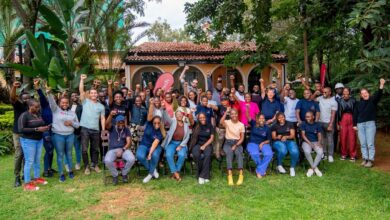
The event spanned 20 cities across the continent. According to the release, it registered 13,000 developers and resulted in 1,300 specific project submissions.
The Critical View: In the tech world, hackathon numbers are often inflated by “registrants” who never submit code. However, 1,300 submissions is a robust metric. If even 1% of those submissions become viable companies, that is 13 new funded startups entering the African tech ecosystem in a single quarter.
The projects weren’t just about crypto-trading. The mandate required developers to build on the Hedera network across verticals like:
- Agriculture & Sustainability: Critical for the African market.
- Healthcare & Finance: High-impact sectors.
- Deep Tech: The convergence of AI, IoT, robotics, and quantum computing.
The Tech: What is Hedera?
If you are new to the “Layer 1” wars, you might be asking: Why Hedera? Why not Ethereum or Solana?
This is where the nuance lies. Hedera technically isn’t a blockchain in the traditional sense. It uses a technology called Hashgraph.
- Blockchain: Think of it like a chain where blocks of data are added one by one in a straight line. It can be slow because everyone has to agree on the block order.
- Hashgraph (DAG): Directed Acyclic Graph. Think of this more like a woven fabric or a gossip network. Computers “gossip” information to each other randomly, and the history is woven together.
The Claim: Hedera claims this makes their network faster, more energy-efficient, and cheaper (predictable fees) than traditional blockchains, making it more suitable for enterprise use cases like supply chain tracking or large-scale payments—areas ripe for disruption in African markets.
The geopolitical angle
There is a distinct “Middle East meets Africa” through-line here. Both Hashgraph Ventures and UGFS are tied to the Gulf region (Abu Dhabi and Bahrain/Oman respectively).
Abu Dhabi has been aggressively positioning itself as a regulated safe haven for crypto and digital assets through the ADGM (Abu Dhabi Global Market). By funneling capital into Africa, they are effectively exporting their regulatory and financial influence, helping to build a “Web3 corridor” between the Gulf and Africa.
The hackathon was also supported by major heavyweights including Orange Middle East & Africa, Sygnum Bank, and local hubs like Tunisia’s DAR Blockchain, ensuring the event had boots on the ground rather than just remote management.
What happens next?
The money isn’t automatic. Hashgraph Ventures stated that selected projects will be evaluated on a “case-by-case basis.” This means the winners of the hackathon now face due diligence—the rigorous process where VCs check if a business is actually legit.
For the developers in Nairobi, Lagos, Cape Town, and Tunis, the coding phase is over. The pitching phase has just begun.