

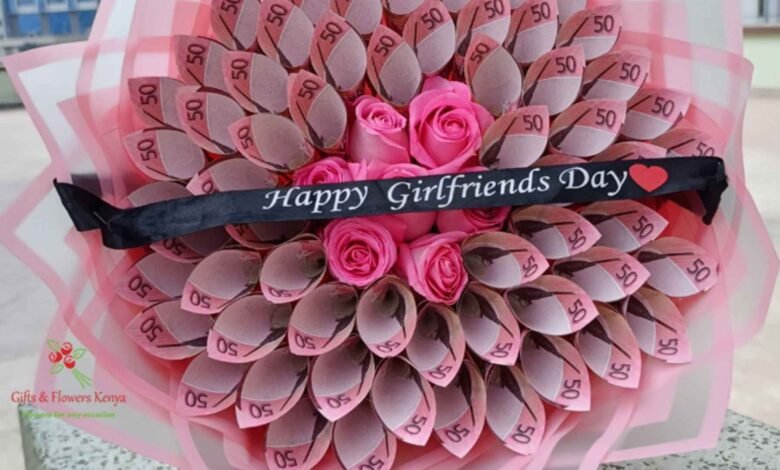
In a definitive move to protect the integrity of the national currency, the Central Bank of Kenya (CBK) has issued a public notice today, February 2, 2026, cautioning Kenyans against the growing trend of using banknotes for decorative and celebratory purposes. This advisory specifically targets the increasingly popular practice of creating “cash flower bouquets,” ornamental displays, and other artistic arrangements that utilise actual currency.
While the gesture of gifting cash remains culturally acceptable, the method of presentation has raised significant regulatory concerns. The CBK’s press release highlights a critical conflict between social trends and monetary policy: the physical defacement of legal tender.
Why Money Bouquets are a Problem:
At the heart of the CBK’s concern is the physical stress placed on the paper and polymer substrate of the Kenya Shilling (KES). The press release details that in the creation of these gifts, banknotes are frequently “folded, rolled, glued, taped, stapled, or pinned.”
From a technical perspective, this is not merely a cosmetic issue. Modern currency processing is a highly automated ecosystem. When a banknote is introduced into the banking system, it passes through high-speed sorting machines and Automated Teller Machines (ATMs). These machines rely on specific physical tolerances—thickness, dimensions, and surface texture—to verify the note’s authenticity and fitness for circulation.

The CBK notes that the use of adhesives (glue and tape) and fasteners (pins and staples) significantly interferes with this equipment. Residue from tape can jam sensitive sensors in cash counting machines, while holes from staples or pins can cause notes to tear during high-speed processing. Consequently, these “beautified” notes are rejected by automated systems, rendering them unfit for circulation much earlier than their projected lifespan.
The Legal Ramifications: Section 367 of the Penal Code
Crucially, the Central Bank has shifted the narrative from a mere advisory to a legal reminder. The statement explicitly cites Section 367 of the Penal Code (Cap. 63, Laws of Kenya).
This section criminalises the defacement, mutilation, or impairment of currency notes. The public is reminded that any person who wilfully damages currency issued by lawful authority is committing a punishable offence. By invoking the Penal Code, the CBK is signaling that the alteration of banknotes for aesthetic purposes is not a harmless artistic expression, but a violation of the law. The currency is state property entrusted to the public as a medium of exchange, not raw material for craft.
The Economic Cost:
Beyond the legalities, there is a distinct economic argument presented in the release. The premature withdrawal of banknotes creates an “avoidable cost” to both the Bank and the public.
Printing currency is an expensive logistical operation involving specialised security features, paper, and ink. When notes are damaged by glue or staples, they must be removed from circulation and replaced with new stock. This artificially increases the velocity of note replacement, diverting funds that could be utilised elsewhere. Ultimately, the taxpayer bears the burden of reprinting money that was destroyed through negligence.
The Way Forward:
The CBK has clarified that it does not object to cash as a gift. The objection is solely regarding the treatment of the physical note. The regulator urges the public to adopt “alternative, non-damaging methods.”
For Kenyans wishing to gift money, the implication is clear: use envelopes, direct digital transfers, or ensure that if physical cash is presented, it remains flat, clean, and free of foreign materials like glitter, glue, or pins.
As the Central Bank continues its public sensitisation campaigns, the message is unequivocal: The Kenya Shilling is a store of value and a unit of account. To function effectively, it must be treated with the respect due to a national symbol, keeping the gears of the economy turning smoothly without the friction of staples and tape.








Join the discussion