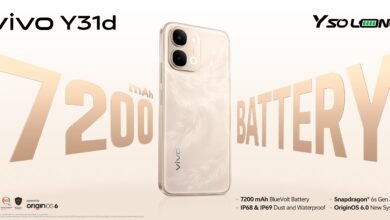


The smartphone industry has spent the better part of a decade obsessed with aesthetics—shaving millimetres off edges and curving glass to make devices feel like delicate jewellery. On February 12th, vivo officially introduced the Y31d to the Kenyan market, and it is a device that completely rejects that delicate premise.
Priced aggressively at KES 26,999 for the base model, the vivo Y31d is an exercise in brutal practicality. It is a highly specialised tool built to solve the single most universal friction point of modern technology: battery anxiety.
Here is our critical breakdown of the vivo Y31d, its massive power plant, and the calculated compromises vivo made to bring it to market.
The 7200mAh Elephant in the Room
The defining characteristic of the Y31d is its internal power source. While the industry standard has plateaued at 5000mAh, vivo has shoehorned a gargantuan 7200mAh “BlueVolt” battery into this chassis.
To put that into perspective, vivo claims this capacity translates to 11.8 hours of continuous PUBG gameplay, or an absurd 45 hours of video playback on a single charge. For the average user in Kenya, who might deal with long commutes, heavy field work, or unpredictable grid power, this is effectively a two-to-three-day smartphone.
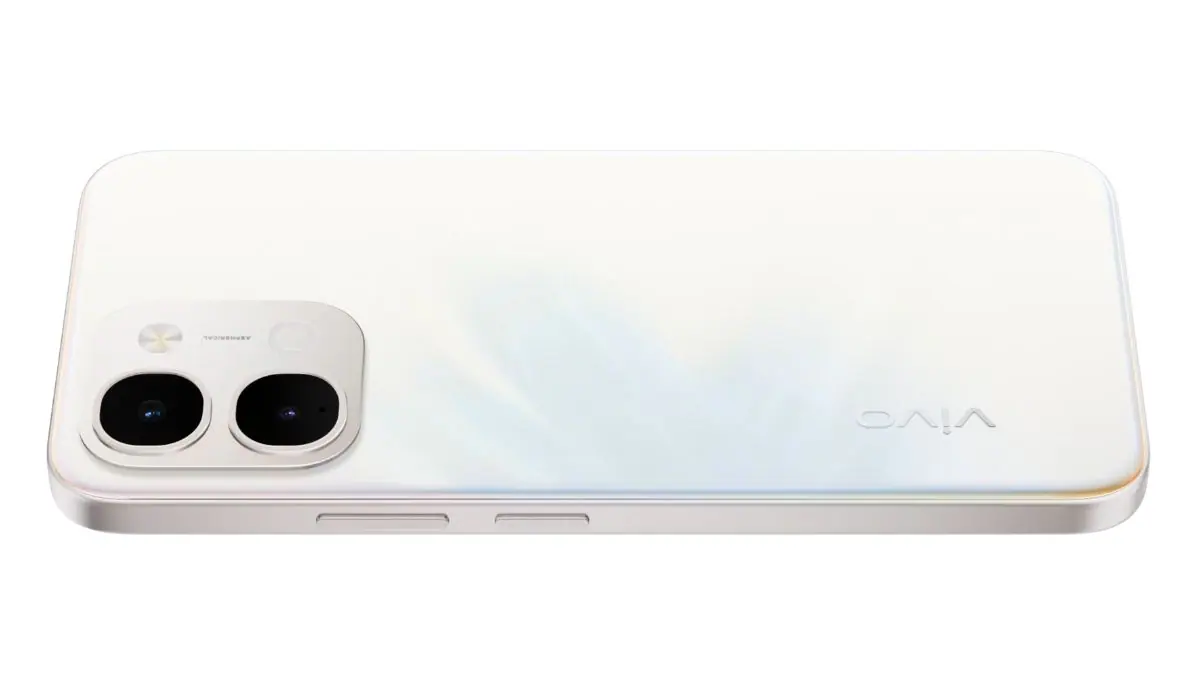
However, big batteries create two distinct engineering headaches: heat and longevity.
- The Charging Trade-off: vivo opted for 44W FlashCharge technology. While competitors are pushing 67W or even 120W speeds, a slower, steadier 44W charge is significantly better for managing the thermal load of a 7200mAh cell. It will take 43 minutes to hit 50%, which requires a bit of patience.
- The 6-Year Promise: To mitigate degradation, the device features a “25-Dimension Security Protection” system that monitors temperatures 43,200 times a day. Consequently, vivo asserts a 6-Year Battery Health lifespan, claiming the cell will retain 80% of its capacity even after 1,600 charge cycles.
Industrial Durability for the Real World
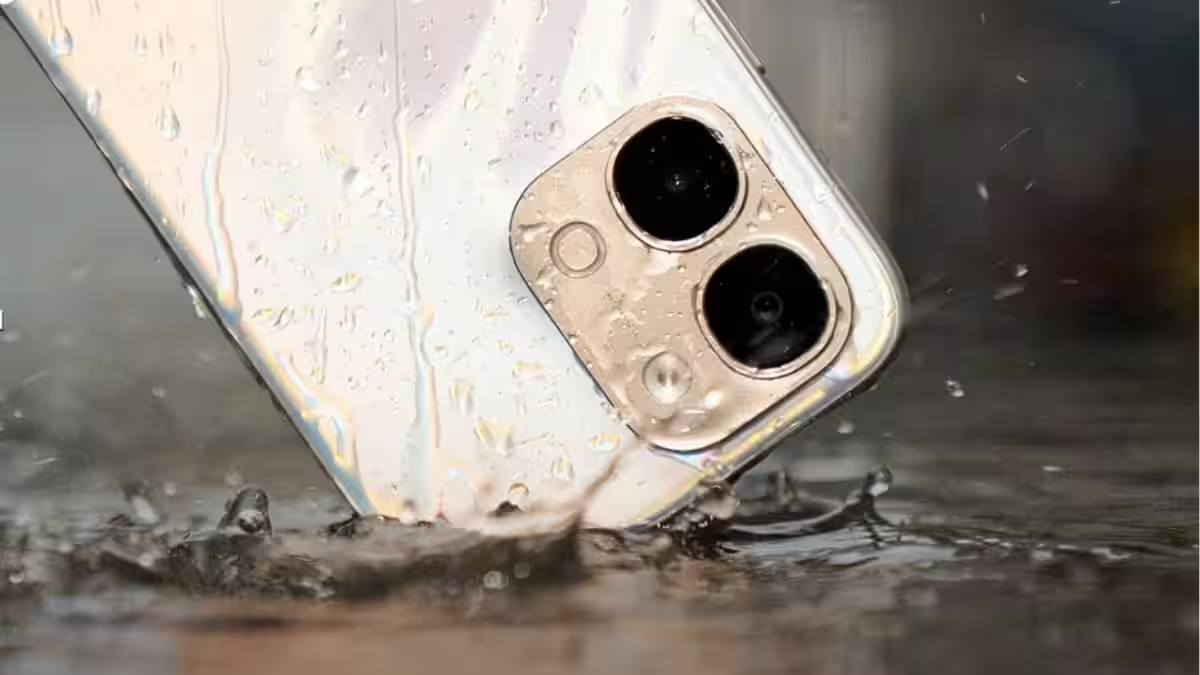
Most mid-range phones offer basic IP54 splash resistance. The Y31d, conversely, crosses over into rugged, industrial territory with IP68 and IP69 certifications.
The distinction here is vital. IP68 means it can survive a drop in a swimming pool. IP69 means it can withstand high-pressure, high-temperature water jets. You could theoretically power-wash this device.
vivo has paired this physical sealing with clever software. A “Wet-Hand Touch” feature ensures the capacitive screen doesn’t register ghost touches when covered in raindrops , and a “One-Tap Water & Dust Ejection” tool mechanically vibrates liquid out of the speaker grilles. Wrapped in what vivo calls “Titan Glass” and boasting an SGS 5-Star Drop Resistance certification, it is built for mechanics, delivery riders, and field engineers.
The Calculated Compromises
You cannot build a tank for KES 26,999 without cutting corners elsewhere. The Y31d’s spec sheet reveals exactly where vivo trimmed the fat to accommodate the battery and durability.
- The Processor: The phone is powered by the Qualcomm Snapdragon 6s Gen 2 4G. In 2026, launching a 4G-only device might raise eyebrows, but it is a highly strategic choice. 4G modems consume drastically less power than 5G modems. By sacrificing peak network speeds, vivo guarantees extreme endurance.
- The Display: While it features a smooth 120Hz refresh rate and an impressive 1250 nits of peak brightness —perfect for the Nairobi sun—the 6.75-inch IPS LCD panel is only a 720p resolution (720 x 1570). It won’t offer the pin-sharp clarity of a 1080p AMOLED screen, but fewer pixels mean less strain on the processor and, ultimately, even more battery life.
The entire system runs on Android 16 with OriginOS 6 , which brings a suite of AI productivity tools and guarantees a “50-Month Smooth Experience” to stave off software lag.
Know What You Are Buying:
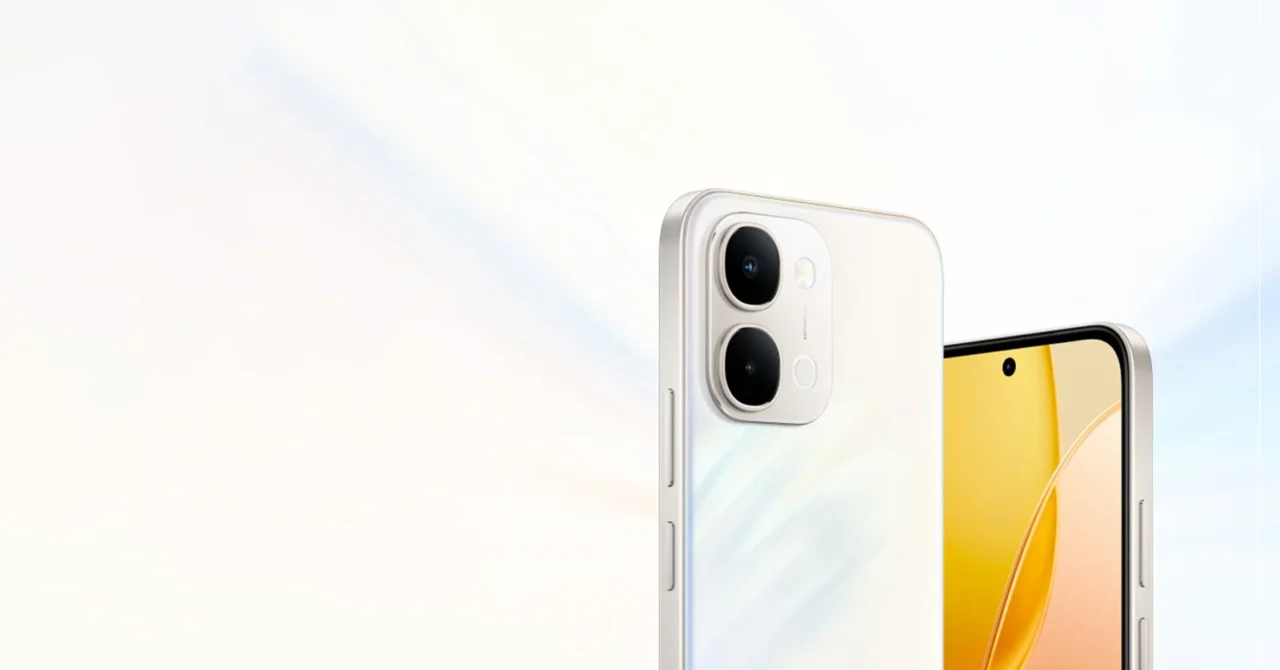
Available in Feather Gold and Starlight Grey , the vivo Y31d (KES 26,999 for 6GB/128GB and KES 29,999 for 6GB/256GB) is not trying to be a sleek flagship. It is an unapologetic, hyper-focused utility tool.
If you prioritise 5G speeds, ultra-high-definition media consumption, you should look elsewhere. But if your primary concern is whether your phone will survive a 14-hour workday on a construction site, a long road trip upcountry, or a sudden downpour, the Y31d is currently one of the most compelling endurance devices on the Kenyan market.