
If you ever watched an early 2000s Kenyan music video and had absolutely no idea what the artist was actually saying, you aren’t alone. Veteran pop icon Nameless knows it, too. “I have realised that many fans never fully caught our earlier lyrics simply because subtitles weren’t a thing added onto music videos years back,” he notes. It’s a throwaway observation about the evolution of video editing, but it hits on a profound, scientifically backed truth: reading through subtitles naturally, almost invisibly, builds literacy.
Now, that exact mechanic is being weaponised to fight one of Kenya’s most pressing educational crises.
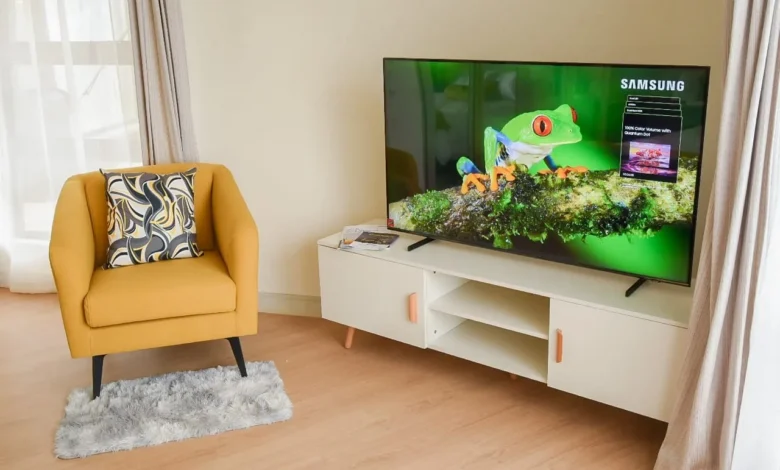
Starting today, February 23rd, 2026, a new broadcast block called “Read Along Hour” is taking over Akili TV’s 5:00 PM to 6:00 PM weekday slot. Born out of a partnership between the free-to-air network and global literacy initiative Switch On | Read On, the premise is brilliantly simple. Instead of begging parents to buy expensive tablets or download data-heavy educational apps, the initiative is meeting families exactly where they already are: in front of the television, watching Supa Strikas and Wild Kratts.
But there’s a catch. These aren’t your standard closed captions. The programmes are embedded with what the creators call “Literacy Grade Subtitles.”
To make sure these subtitles aren’t just tuned out as visual white noise, the broadcast introduces a clever piece of user interface known as the “L-Bar.” Appearing at the beginning and end of every episode, this graphic overlay gamifies the viewing experience. It displays the total number of words read during the show, highlights three “tricky spellings” that defy phonetic logic, and introduces three advanced vocabulary words.
It is, essentially, a covert reading lesson disguised as an after-school reward.
And the timing couldn’t be more critical. The digital age has seen screen time skyrocket, often at the expense of traditional reading. The fallout is stark. According to a recent study by the Usawa Agenda, 50% of Grade 6 students in Kenya cannot read a Grade 3-level English story. When half of a generation lacks foundational literacy, the downstream effects on the broader economy and tech ecosystem are severe.
This is where the genius of the Read Along Hour lies – it requires zero friction and costs exactly 0 KES. Henry Warren, founder of Switch On | Read On, frames it as a no-brainer for caregivers: “Stories are powerful teachers. If you’re a parent who cares about your child’s literacy, this is one of the simplest things you can do, and it’s completely free. Just tune in at 5 PM.”
To drive the cultural shift, the initiative tapped Nameless and Wahu to champion the project. Bringing in celebrity parents isn’t just a PR stunt; it’s a vital layer of social proof. It destigmatises the struggle of teaching kids to read and frames shared screen time as an opportunity for growth rather than a parenting failure. “When children see reading reflected in the content they love, and parents feel empowered to be part of that journey, the impact is lasting,” says Wahu.
Jeff Schon, CEO and Co-founder of Akili TV, echoed this sentiment, noting that if children are already surrendering their time to screens, “that time should give something back.” Andrew Kay of the World Literacy Foundation agrees, pointing out that integrating “literacy infrastructure” into daily routines is the key to sustainable learning.
In an era where “ed-tech” is usually synonymous with venture-backed, paywalled software, there is something deeply refreshing about this approach. It is a reminder that sometimes the most disruptive innovation isn’t a new algorithm; it’s just using old technology, like TV subtitles, in a much smarter way.