

The carbon credit market is currently experiencing a massive crisis of confidence. For years, European corporations have poured billions into “Nature-based Solutions” (NbS) in the Global South, only to discover later that the trees they paid to protect were cut down, or the clean cookstoves they funded were never used. The fundamental flaw was not the intention; it was the analogue data collection. You cannot secure a multi-billion dollar global market using clipboards and human estimates.
Enter the era of ClimateTech and digital Measurement, Reporting, and Verification (dMRV).
This week, Sweden’s development finance institution, Swedfund, announced a EUR 15 million (approximately KES 2.27 billion) investment into hummingbirds-Gondwana. Gondwana is a specialised investment platform developed by the French firm hummingbirds. But look closer, and this is not just a standalone deal. Swedfund’s injection sits alongside capital from British International Investment (BII) and Proparco, creating a massive EUR 50 million (KES 7.58 billion) funding pool de-risked by European Union guarantees.
To satisfy the rigorous demands of these institutional investors, Gondwana cannot rely on old methods. They are implicitly making a KES 7.58 billion bet on the hardware, satellite telemetry, and IoT networks that bridge the trust gap between European capital and rural ecosystems in Africa, Latin America, and Southeast Asia.
The Hardware of Clean Cooking: From Pots to Data Nodes
One of the core pillars of the Gondwana platform is the distribution of clean cooking solutions. Traditionally, quantifying the impact of a clean cookstove was an exercise in guesswork. Field agents would visit a village once a year, ask a family how much wood they saved, and write it down.
Today, tech-enabled developers are deploying “smart stoves.” These devices are equipped with thermal sensors, microprocessors, and IoT SIM cards. Every time a mother in rural Kenya turns on an advanced biomass or electric pressure cooker, the thermal sensor logs the exact duration and temperature of the cooking event. This data is transmitted via local mobile networks to a cloud database.
This dMRV approach allows platforms like Gondwana to apply the Gold Standard’s stringent “Metered Methodology.” They no longer estimate emission reductions; they prove them mathematically, byte by byte. The stove is no longer just a cooking appliance; it is an edge-computing node in a global carbon-tracking network.
Eyes in the Sky: The Biological Server Farm
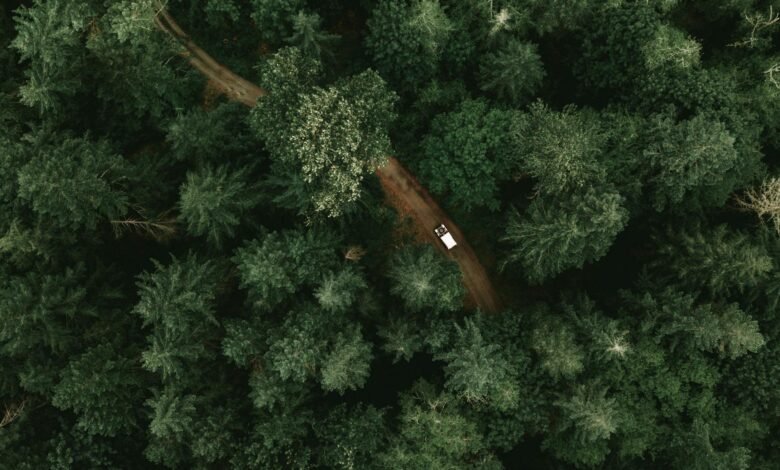
The other side of Gondwana’s mandate involves large-scale forest conservation, mangrove restoration, and agroforestry. If we imagine a restored mangrove forest in Kenya as a biological carbon-capture server farm, how do we monitor its performance without sending an auditor to count every tree?
The answer lies in geospatial intelligence. Project developers are increasingly abandoning ground surveys in favour of high-resolution optical satellite imagery, LiDAR (Light Detection and Ranging), and AI-driven drone mapping.
Machine learning algorithms can now process satellite data to detect minute changes in tree canopy cover, soil moisture, and above-ground biomass. If an illegal logging event occurs in a protected area in Southeast Asia, the satellite telemetry detects the loss of canopy density, flags the anomaly using AI, and automatically adjusts the carbon credit ledger. This continuous, technology-driven observation ensures that investors like Swedfund are paying for verified, time-stamped ecological realities.
The Algorithmic Controversy
However, we must apply critical thinking to this technological utopianism. Technology is only as good as the algorithms driving it.
The carbon market is currently fiercely debating the formulas used to calculate avoided emissions, specifically the fNRB (fraction of Non-Renewable Biomass). Historically, algorithms overestimated the percentage of wood that came from unsustainable sources, leading to the over-issuance of carbon credits.
Furthermore, hardware in frontier markets fails. Sensors melt, SIM cards lose connectivity in remote areas, and satellite imagery can be obscured by persistent cloud cover in tropical regions. When an IoT stove goes offline, does the carbon credit generation halt? How does a platform like Gondwana handle the “dark data” periods? These are the critical questions that dMRV software engineers are currently scrambling to solve.
The Future is Digitised
The Swedfund and hummingbirds-Gondwana deal highlights a vital truth: the future of climate finance in emerging markets is inextricably linked to the digitisation of nature. As standard-setting bodies like the Paris Agreement’s Article 6.4 Supervisory Body demand higher integrity, the capital will only flow to projects that can provide an immutable, digital audit trail.
The KES 7.58 billion bet has been placed. Now, the sensors and satellites must deliver.