
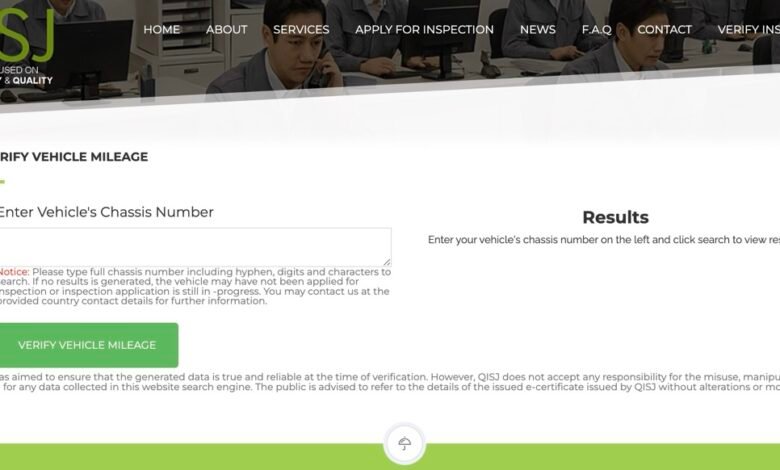
- The News: Quality Inspection Services Japan (QISJ) has quietly removed free access to exact vehicle mileage data on their portal.
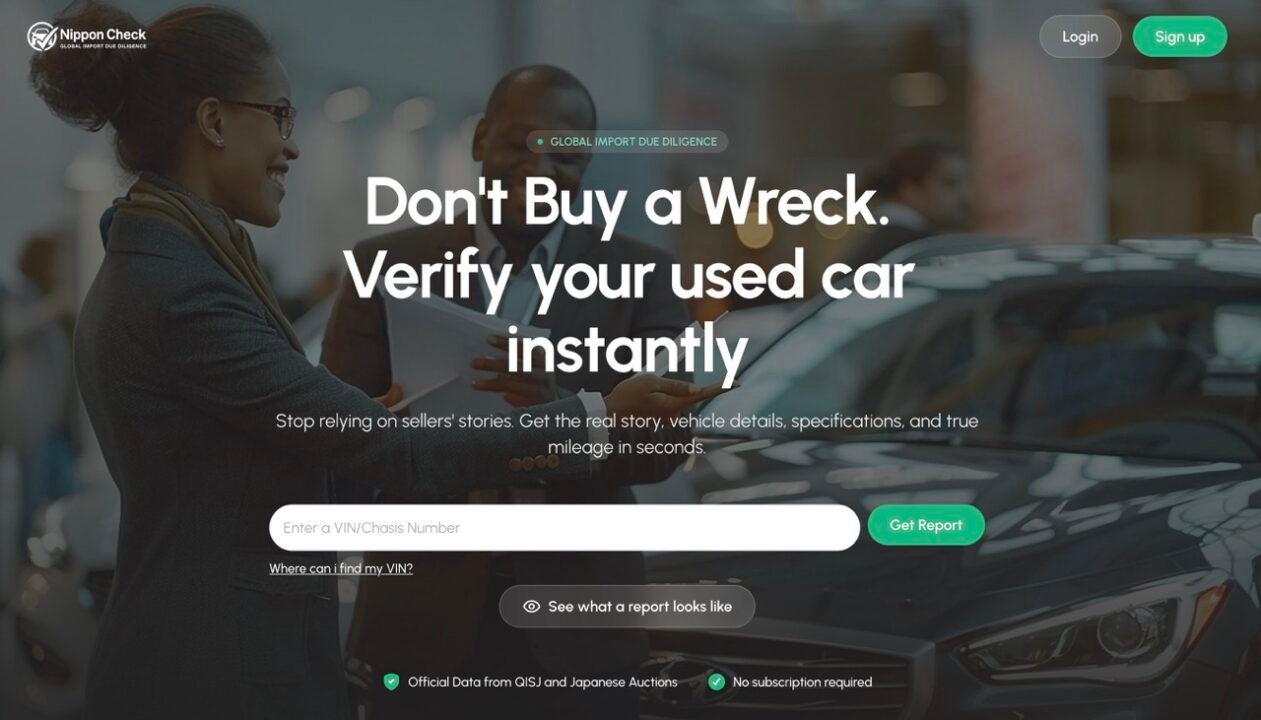
- The Shift: Users are now redirected to a third-party gateway, https://nipponcheck.com/, and forced to pay a KES 500 toll to view the verified mileage.
- The Impact: This paywall introduces critical friction into the car-buying process, threatening to fuel a spike in odometer fraud and "chassis cloning" in Kenya’s high-risk used car market.

For years, purchasing a foreign-used car in Kenya has been a high-stakes game of roulette. In a market where a vehicle’s value is inextricably tied to its mileage, unscrupulous dealers have perfected the dark art of “clocking”; rolling back digital odometers to sell heavily used Japanese imports at premium prices.
Until recently, buyers had one silver bullet: the QISJ website. By punching in a car’s chassis number, a prospective buyer could instantly, and freely, pull the exact mileage recorded when the car was inspected in Japan before export. It was the ultimate, indisputable fact-check.
Now, that critical line of defence has been severed. QISJ has outsourced this data to NipponCheck, hiding the exact mileage behind a KES 500 paywall. The main QISJ portal now only offers the bare minimum – the chassis number, date of certification, and inspection centre. The numbers that actually matter have been commodified.
Mileage Scam
To understand why this seemingly small paywall is so detrimental, one must first dissect how sophisticated mileage fraud has become in Nairobi. As documented heavily across Kenyan automotive circles on X, the scams go far beyond simply plugging a laptop into the OBD2 port.
1. The Digital Rollback: The most common analogue method transposed to the digital age. A car arrives in Mombasa with 180,000 kilometres on the clock. Before it hits the showroom floor in Nairobi, the odometer is digitally altered to read 65,000 kilometres. (Sources: Shad Khalif, Dickson Otieno) The price tag is subsequently inflated by hundreds of thousands of shillings.
2. The Chassis Clone: As highlighted by automotive platform Carnversations (Source: X Post), some dealers have evolved. Knowing savvy buyers will demand a QISJ check, rogue dealers provide prospective buyers with a fake chassis number belonging to a different make, model, and colour car that genuinely has low mileage. When the buyer searches the fake chassis number on QISJ, the data checks out. They buy the car, completely unaware they are looking at the data of a ghost vehicle.
In all these scenarios, the free QISJ mileage check was the primary, frictionless tool used to expose the fraud.
KES 500 to Verify Mileage
On paper, KES 500 might seem like a negligible fee when purchasing a vehicle worth millions of shillings. However, in the realm of user behaviour, any fee introduces friction.
When the service was free, a buyer browsing a car yard could instantly check five or six different cars on their smartphone. Now, running those same background checks costs KES 2,500 and requires navigating a payment gateway. Human nature dictates that many buyers will simply opt to trust the dealer’s word or rely on the incomplete data still available on the main QISJ site.
This friction overwhelmingly benefits the rogue dealer. The harder it is to verify the truth, the easier it is to sell a lie.
The Business of Data
Why did QISJ do this? From a pure business and technology standpoint, data is an expensive, exploitable asset.
- Server Costs & Monetisation: Hosting, managing, and securing a database of millions of vehicle records requires significant server architecture. For years, QISJ provided a public utility for free. By partnering with NipponCheck (a classic Data-as-a-Service model), they have transformed a sunk operational cost into a lucrative, recurring revenue stream.
- Combating Data Scraping: When data is free and open, automated bots can scrape the entire database to build competing commercial platforms or vehicle history apps. A KES 500 paywall completely eliminates casual scraping and forces anyone using the data commercially to pay a toll.
What This Means for the Kenyan Auto Market
The transition to NipponCheck signifies the end of the “trust but verify for free” era. Moving forward, buyers must factor data acquisition into their purchasing budget. The KES 500 fee is no longer optional; it is a mandatory insurance premium against being scammed.
For the broader tech ecosystem, this creates a vacuum. Will the Kenya Bureau of Standards (KEBS), which mandates these inspections, step in to demand that mileage data remain freely accessible for consumer protection? Until then, the rule of the yard remains: Caveat emptor. Buyer beware.
QISJ and NipponCheck FAQs:
- Why is QISJ no longer showing mileage for free?: QISJ has shifted the detailed mileage data to a third-party platform, NipponCheck, transitioning from a free public utility model to a paid Data-as-a-Service (DaaS) model.
- How much does NipponCheck cost?: Users are required to pay KES 500 per chassis number search to view the verified export mileage.
- Is the free QISJ website completely useless now?: Not entirely. The free tier on the QISJ website still verifies the chassis number, date of certification, and the inspection centre. However, it completely omits the mileage.
- How do I avoid buying a clocked car in Kenya?: Always insist on viewing the original export certificate. If it is “lost,” you must pay the KES 500 fee on NipponCheck or use an independent, trusted mechanic to physically verify the wear and tear on analogue components against the digital odometer reading.