

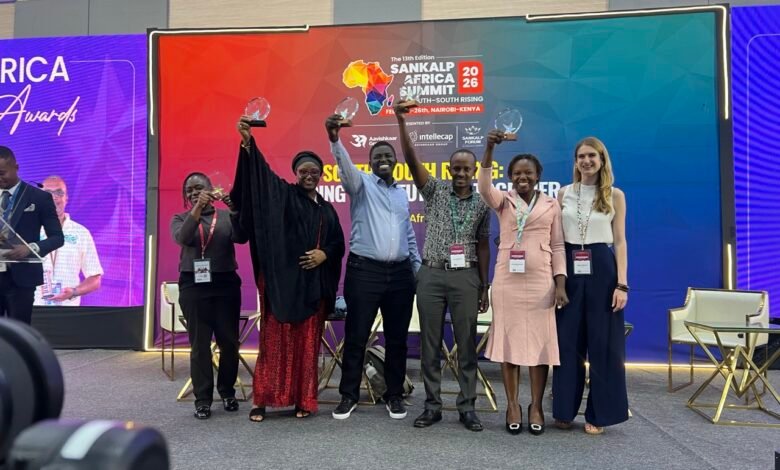

The applause inside Nairobi’s Sarit Centre last week was not just for the five enterprises crowned at the 13th Sankalp Africa Summit. It was the sound of a maturing ecosystem. When three of the five top honours at a pan-African summit are scooped up by local founders, it signals a shift. Kenya is no longer just hosting the conversation on African innovation; it is dictating the terms.
Yet, beyond the polished pitches and the celebratory press releases of February 25th, a more complex narrative is unfolding. The victories of Rio Fish, M-Taka, and Malaica represent a fascinating intersection: the maturation of the “Silicon Savannah,” the rise of grassroots solutions to systemic crises, and a pivotal pivot towards “South-South” venture capital.
The Macro Reality: Silicon Savannah Grows Up
For years, Kenya’s startup scene has been lauded for its potential, heavily buoyed by the ubiquitous success of mobile money. Today, the ecosystem is highly specialised. The fact that Kenyan startups dominated the AgriTech, Circular Tech, and HealthTech categories at Sankalp is not a coincidence; it is the result of deliberate infrastructure.
Nairobi has cultivated an environment where incubators, policy frameworks, and digital literacy converge. However, the critical question remains: are we building solutions for the press, or solutions for the populace? The answer lies in the micro-narratives of last week’s victors, who are tackling what can only be described as Kenya’s “Triple Threat”—food security, waste management, and maternal health.
The Micro Impact: Women, Waste, and Wombs
To understand the weight of these awards, one must look past the technology and focus on the founders building futures in the mud, the wards, and the dumpsites.
- Feminising the Blue Economy (Rio Fish Ltd): Led by Angela J Odero, Rio Fish is dismantling the patriarchal structures of the aquaculture industry. By advancing sustainable fish farming, Odero is not just feeding communities; she is financially empowering women and youth who have historically been marginalised in the sector.
- Digitising the Dumpsite (M-Taka Solutions): In the Circular Tech space, Benson Abila’s Kisumu-based M-Taka is bringing dignity to the informal waste economy. By creating a digital bridge between households, waste collectors, and recyclers, M-Taka is formalising a chaotic sector. It is a brilliant example of applying high-tech solutions to gritty, on-the-ground realities.
- Protecting the Mothers (Malaica AG): Co-founded by Victor Murage Ndegwa, Malaica won the HealthTech category for a deeply urgent cause: maternal mortality. By delivering affordable, continuous pregnancy care across Kenya through a digital platform, Malaica is proving that tech can be a literal lifesaver in underserved regions.
These founders are not building apps for the sake of convenience; they are engineering survival mechanisms.
The Financial Nuance
While the founders deserve their plaudits, the structural framing of the Sankalp Awards, hosted by the Aavishkaar Group and Intellecap, points to a massive shift in global finance.
Historically, African startups have relied on Western capital, often bending their business models to suit the palates of Silicon Valley or London investors. Sankalp, an initiative born in India, represents the “South-South rising” phenomenon. As Syna Dehnugara, Director of Sankalp Forum, rightly noted, the Global South is now exchanging ideas and capital internally.
But we must apply a critical lens. The Sankalp Forum boasts of helping raise over USD 800 million in funding globally over 16 years. But how much of that capital is genuinely flowing into early-stage, locally founded Kenyan startups? More importantly, how does that translate into tangible KES on the ground?
When a Kenyan founder wins an award like this, the ecosystem must ask: Does the accolade come with the substantial, unrestrictive KES injections required to scale, or is it merely a reputational boost? The shift to South-South capital is promising because it suggests investors who understand the nuances of emerging markets. However, local founders still need hard currency, fair valuations, and investors willing to take risks on truly indigenous solutions, rather than just funding expat-led ventures.
The Road Ahead
Kenya’s 60% sweep at the Sankalp Africa Awards 2026 is a triumph. It proves that local minds are best equipped to solve local problems. But as the applause fades, the real work begins. If Nairobi is to maintain its crown as the innovation capital of East Africa, the ecosystem must ensure that the brilliance of founders like Odero, Abila, and Ndegwa is matched by transparent, equitable, and substantial investment.