

Imagine a woman running a thriving wholesale cereals business in Kakamega. Every day, cash changes hands, stock moves, and she pays her suppliers. Yet, when she walks into a bank to request a loan to purchase a delivery truck, she is turned down. Why? Because her thriving business exists entirely in her head and in a drawer of unsorted receipts. To the formal financial system, her business is invisible.
This scenario is the daily reality for millions of Kenyan entrepreneurs. While women form the backbone of county-level economies, historical data from the Kenya National Bureau of Statistics (KNBS) consistently shows that women dominate the unlicensed and informal MSME sector. Informality offers flexibility, but it is a severe trap when it comes to scaling.
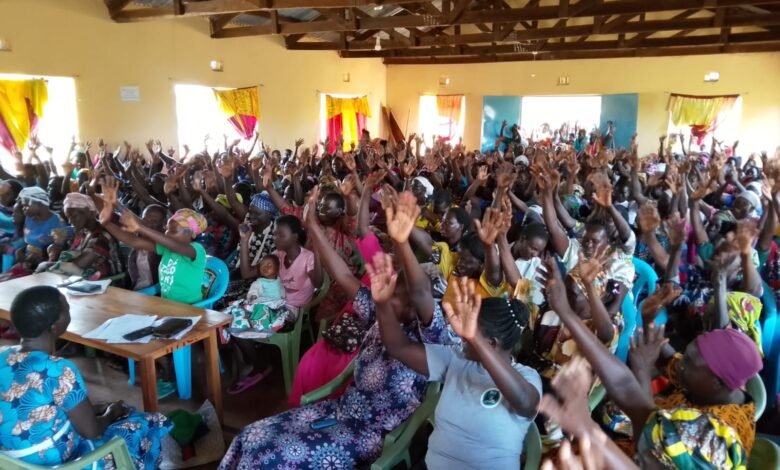
To bridge this specific gap, a massive capacity-building initiative by the Stanbic Foundation, in partnership with Kenya Industrial Estates (KIE) and various county governments, has successfully trained over 100,000 women-led MSMEs across ten counties.
The Informality Trap: Why Capital Without Education Fails
Often, the default solution to empowering women in business is simply throwing credit at them. However, injecting capital into an unoptimised business structure is a recipe for default. The Stanbic Foundation and KIE partnership takes a fundamentally different, critically necessary approach: fixing the plumbing before turning on the tap.
The programme, currently rolled out across Homa Bay, Busia, Kakamega, Kisumu, Uasin Gishu, Kisii, Nyamira, Kericho, Nairobi, and Kiambu, zeroes in on the operational mechanics of business survival:
- Structured Record Keeping: Transitioning entrepreneurs from mental accounting to verifiable financial statements.
- Cash Flow & Budgeting: Teaching the critical difference between profit and cash on hand—the primary reason seemingly successful small businesses collapse.
- Demystifying the CRB: This is perhaps the most revolutionary aspect of the curriculum. For many grassroots entrepreneurs, the Credit Reference Bureau (CRB) is feared as a financial death sentence or a “blacklist.” By reframing the CRB as a tool to build a positive credit score, the programme removes the psychological barrier preventing women from seeking formal, affordable credit.
Unlocking the KES 180 Million Pipeline
When financial literacy is built at the grassroots level, it acts as a de-risking mechanism for financial institutions. A trained entrepreneur is a bankable entrepreneur.
This educational rollout is backed by serious capital. The Stanbic Foundation, which celebrated its 5-year milestone in 2025, has already disbursed over KES 180 million in microloans to MSMEs. By combining this liquidity with strict financial management training, the initiative transitions women from merely surviving economic shocks to actively creating jobs, stabilising household incomes, and driving inclusive county-level growth.
As we mark International Women’s Month, the narrative must evolve. True economic empowerment is not just about celebrating the “hustle”; it is about providing the structural tools required to turn that hustle into a resilient, scalable, and fully bankable enterprise.