
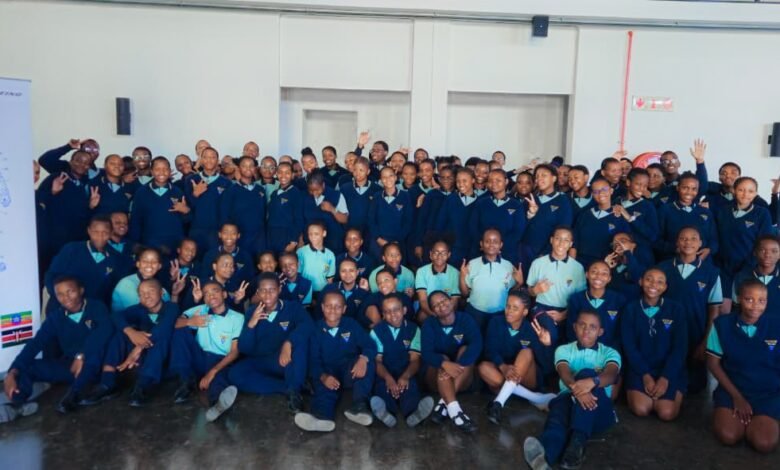

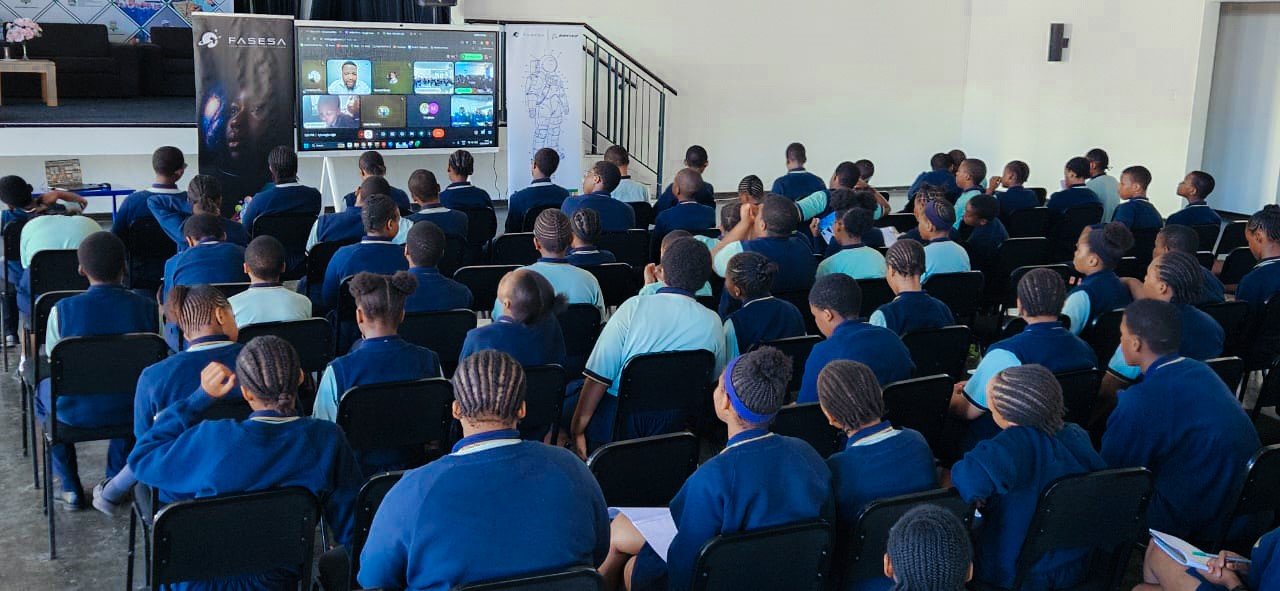
As the continent’s aerospace ambitions rapidly accelerate, a major educational initiative is scaling up to build the required talent pipeline. On 4 March 2026, the Future African Space Explorers STEM Academy (FASESA) and Boeing announced the third edition of their “Pathways to Space” programme. For the first time, the initiative is expanding into South Africa, complementing its ongoing rollout in Ethiopia, Kenya, and Nigeria.
The 2026 iteration marks a significant scale-up, aiming to train over 2,000 high school students between the ages of 13 and 18 across the four nations. Delivered in partnership with local educational and government institutions, the participating state schools are identified directly by national Ministries of Education and Ministries of Science and Technology.
Engineering “The First African Spacesuit”
Moving beyond theoretical classroom modules, the programme organisers are introducing a highly specialised new design challenge themed “The First African Spacesuit”. Students will be tasked with exploring the nuanced intersections of human factors, materials science, and spacesuit engineering.
This hands-on, industry-aligned learning will feature guided workshops and virtual sessions led by global aerospace professionals from NASA’s Johnson Space Center, Final Frontier Design, and top U.S. universities, alongside former astronauts.
Furthermore, a core component of the 2026 curriculum will feature a physical high-altitude balloon mission. This is designed to deepen students’ practical understanding of atmospheric science, payload design, and data analysis.
“Almost every child dreams of becoming an astronaut, but the space industry offers far broader opportunities — from building satellites and spacecraft and designing hardware and software to supporting mission control, launch operations, life-support systems and on-orbit research,” noted Henok Teferra Shawl, Boeing’s managing director for Africa. He emphasised that the programme aims to connect Africa’s fast-growing population and untapped potential with tangible skills in the continent’s growing space ecosystem.
Sean Jacobs, founder and executive director of FASESA, echoed this sentiment, stating the 2026 programme reflects a commitment to equipping African youth with the technical depth and confidence required to participate in the continent’s space future.
The Broader Continental Context
This educational push perfectly aligns with significant governmental momentum across the region. The African Union launched the African Space Agency in 2025 to coordinate continental space ambitions.
Regionally, the ecosystem is fragmenting into distinct specialisations:
- South Africa: Remains the continent’s most mature space ecosystem with deep expertise in space science, data applications, and satellite development.
- Ethiopia: Is actively advancing plans for additional Earth-observation satellites.
- Kenya: Continues to expand its satellite applications through the Kenya Space Agency.
- Nigeria: Is focusing on strengthening its communications and remote-sensing capabilities.
Since its initial launch in 2024, the Pathways to Space initiative has reached more than 1,200 students across Kenya, Ethiopia, Nigeria, and Tanzania. For Boeing, which currently holds a 70% market share in African commercial aviation and operates offices in both South Africa and Ethiopia, this initiative is part of a larger, long-term historical investment. Over the past decade, the aerospace company has invested $14.5 million into academic and non-profit community partnerships in Africa, reaching over 43,500 individuals through educational programmes in the last five years alone.