

If you are building a startup in Kenya’s e-mobility, renewable energy, or circular economy sectors, the biggest hurdle is rarely the technology itself. It is the capital. Commercial banks are notoriously risk-averse, often viewing unproven climate-tech hardware and green infrastructure as a gamble.
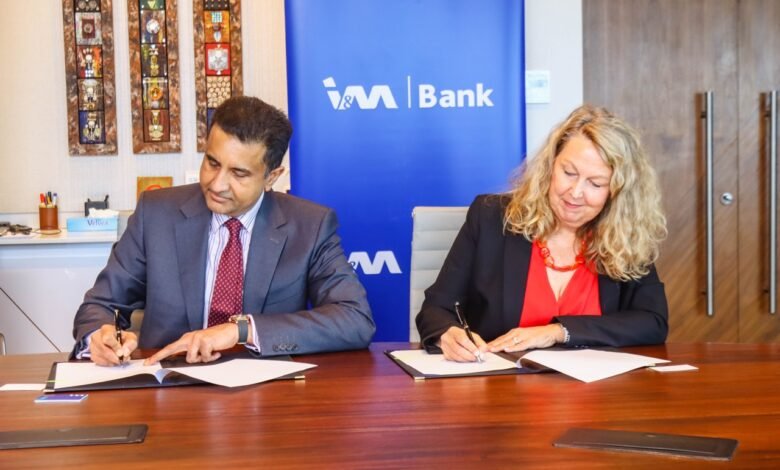
Today, however, a significant shift occurred. I&M Bank, one of East Africa’s Tier-1 lenders, announced a new partnership with the Swedish International Development Cooperation Agency (Sida) to unlock a dedicated green transition lending portfolio of up to USD 30 million (approximately KES 3.89 billion).
The real story isn’t in just the sheer amount of money; it’s the specific financial engineering making this possible.
The 50% Risk-Sharing Guarantee
Banks want to lend money to make money, but they fear defaults. If a local startup wants to build a network of solar-powered charging stations and asks for a KES 50 million loan, traditional banks often say no because the risk profile of new climate technology is too high.
This is where Sida steps in, not by handing cash directly to the startups, but by providing a Green Finance Risk-Sharing Guarantee to I&M Bank.
Think of Sida as a wealthy, institutional co-signer.
Sida has put up a USD 15 million (KES 1.94 billion) guarantee covering an eight-year period. It operates on a 50 percent risk-sharing structure. This means if I&M Bank lends KES 50 million to that solar-charging startup, and the startup unfortunately fails and defaults, Sida absorbs 50 percent of the bank’s loss.
By artificially halving the risk for I&M Bank, Sida gives the lender the confidence to open its vaults to sectors it might otherwise ignore. According to Marie Ottosson, Head of Development Cooperation at the Embassy of Sweden in Kenya, this mechanism is specifically designed to “mobilise private capital” toward projects aligned with the Paris Agreement.
Where is the Money Going?
The KES 3.89 billion portfolio is earmarked for sectors that are pivotal to Kenya’s green transition. Eligible sectors include:
- Renewable Energy & Energy Efficiency: Moving away from grid reliance.
- Clean Transportation: A massive boon for Kenya’s booming e-mobility space (electric motorcycles, buses, and charging infrastructure).
- Circular Economy: Startups focused on recycling, upcycling, and eco-efficient manufacturing.
- Sustainable Water and Land Use: Agritech and resource management.
Shameer Patel, Director of Retail & Business Banking at I&M Bank, noted that the institution is backing its sustainability commitments with “real capital” to build a sustainable economy. This move is a core pillar of I&M Group’s broader iMara 3.0 strategy, which seeks to integrate sustainability directly into their core business model rather than treating it as a corporate social responsibility (CSR) afterthought.
Beyond Greenwashing
While unlocking nearly KES 4 billion is a massive win for the ecosystem, the critical question remains: Who actually gets this money?
Historically, large-scale bank facilities often end up in the hands of established, legacy corporations—like massive agricultural exporters looking to upgrade their energy grids—rather than the agile, innovative startups genuinely driving new tech. It will be crucial to watch I&M Bank’s specific lending criteria to see if SMEs and early-stage climate-tech founders can actually pass the bank’s rigorous vetting processes.
Furthermore, there is the ever-present threat of “greenwashing.” How do we ensure these funds are genuinely reducing carbon emissions?
To their credit, the partnership relies on strict guardrails. The loans will be structured voluntarily applying the Green Loan Principles (developed by the International Capital Market Association), which mandate strict rules on how proceeds are used and reported. Additionally, the bank will lean on the newly established Kenya Green Finance Taxonomy, a standardisation framework that clearly defines what legally constitutes a “climate-aligned” activity in Kenya.
If executed correctly, this eight-year, risk-sharing model could force the rest of the banking sector to step up, proving that financing Kenya’s green tech revolution is not just good for the planet—it is good business.