


In a recent piece on Kenya’s billion-dollar gig economy, we explored how more than half of the country’s ride-hailing drivers depend on platform earnings as their primary income — a level of dependency that far exceeds neighbouring markets. But there’s another dimension of that dependency story that deserves its own examination: who, exactly, is getting access to these livelihoods in the first place.
The answer, according to Ipsos Strategy3’s 2025 multi-country Gig Economy Study, is almost exclusively men.
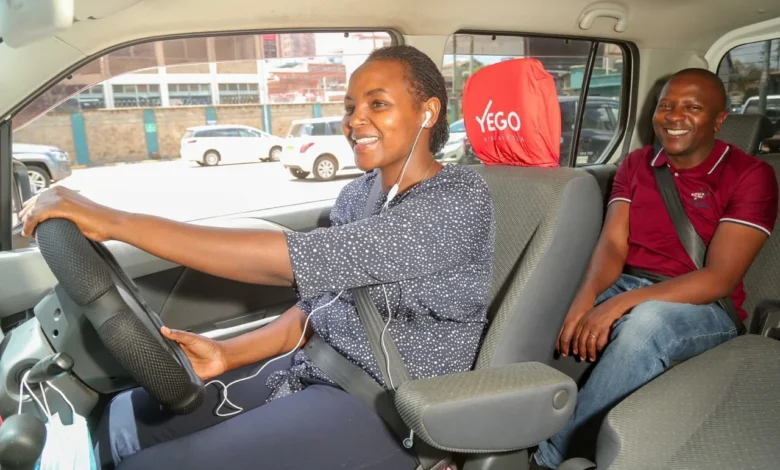
Among ride-hailing participants surveyed in Kenya, 97% were male. Women accounted for just 3%. The survey’s ride-hailing sub-sample is small enough that the precise figure carries a wide margin of error, but the direction is consistent with broader industry research from the World Bank and Research ICT Africa, which document similar patterns across the continent.
This isn’t a rounding error. It’s a structural feature of the sector. It’s a structural feature of the sector. And it sits uncomfortably alongside the narrative that gig platforms are lowering barriers to economic participation across Africa.
A gateway that only opens one way
The promise of ride-hailing has always been accessibility. No degree required. No lengthy hiring process. Download the app, register your vehicle, start earning. In Kenya, where 90% of new jobs created in 2024 were in the informal sector and youth unemployment hovers around 12%, that pitch resonates. For many, it delivers. The Ipsos data shows that 54% of gig workers reported significant improvements to their standard of living.
But “low barriers to entry” clearly doesn’t mean “equal access.” The barriers women face aren’t on the app’s registration screen. They’re in the world surrounding it.
Vehicle ownership is the most obvious constraint. Ride-hailing requires access to a car; either owned, financed, or borrowed. In Kenya, as across much of sub-Saharan Africa, vehicle ownership skews heavily male, a downstream effect of gender gaps in income, credit access, and asset accumulation. Partnerships like Bolt’s vehicle financing arrangement with M-Kopa have made ownership more accessible, but these programmes haven’t been specifically designed to close the gender gap.
Then there are safety concerns. Driving strangers around a city, often at night, carries risks that fall disproportionately on women. The Ipsos study didn’t quantify this directly, but it’s a well-documented deterrent across global ride-hailing markets – and one that’s amplified in contexts where street-level security infrastructure is limited.
Working hours compound the problem. The Ipsos focus groups revealed that peak earning periods are early mornings (starting around 5:30 AM) and weekends, particularly Friday through Sunday. Drivers described routines built around these windows. For women managing domestic responsibilities (which, across East Africa, still fall disproportionately on them) these schedules can be difficult to reconcile with caregiving demands.
The wider gig economy tells a different story
What makes the 97/3 split particularly striking is that ride-hailing isn’t representative of Kenya’s broader gig economy. E-commerce, the largest gig sector at 42% of participants, has a substantially more balanced gender profile, driven by women selling through platforms like Jumia, Instagram, and Facebook Marketplace. Micro-tasks and freelancing also have lower entry barriers that don’t require physical assets or late-night availability.
The gig economy, in other words, isn’t uniformly excluding women. Ride-hailing specifically is. And because ride-hailing is the sector that receives the most policy attention, regulatory energy, and platform investment – Kenya’s 2022 Digital Taxi Regulations, Bolt’s driver bundles, the EV push – the result is that a disproportionate share of institutional support flows toward a workforce that is almost entirely male.
This creates a compounding effect. The more ride-hailing is positioned as the flagship of Africa’s gig economy, the more resources it attracts. The more resources it attracts, the wider the gap grows between the support available to (predominantly male) drivers and the support available to women in e-commerce, freelancing, or micro-task work – sectors that receive far less platform investment or regulatory attention.
What inclusion would actually require
Across the continent, there are early signals of what deliberate intervention looks like. In Uganda, a female entrepreneur launched Diva Taxi, an all-women ride-hailing app that employed dozens of women who had lost jobs during COVID-19; a model that addresses safety concerns by design. In South Africa and Kenya, the Ipsos report notes that “inclusion initiatives exist” and women’s participation is “growing slowly,” though still far from parity.
But isolated initiatives won’t shift a 97/3 ratio. Meaningful change would require platform-level design decisions: vehicle financing programmes that actively target women, safety features that go beyond in-app SOS buttons, flexible scheduling tools that accommodate non-traditional driving hours, and perhaps most importantly, earnings data disaggregated by gender so that progress can actually be measured.
It would also require looking beyond ride-hailing altogether. If women are already participating in e-commerce and freelancing at higher rates, the strategic question isn’t just “how do we get more women into ride-hailing?” It’s “how do we ensure the sectors where women already work receive comparable investment, policy support, and financial inclusion infrastructure?”
The Ipsos data shows that mobile money is already deeply integrated into gig work — Sub-Saharan Africa processes over 70% of global mobile money transactions, and platforms rely on M-Pesa, MTN MoMo, and Airtel Money for driver payouts and customer payments. That same infrastructure could underpin credit access, savings tools, and insurance products for women in e-commerce — if the will and the capital were directed there.
The question the data forces
Kenya’s gig economy is real, it’s growing, and it’s improving lives. But the 3% figure is a reminder that growth and inclusion are not the same thing. A billion-dollar market built almost entirely on male labour isn’t a failure of women’s ambition. It’s a failure of design.
The platforms, regulators, and investors shaping this sector have a choice: continue building around the workforce that already shows up, or redesign the system so that who shows up isn’t predetermined by gender. So far, the data suggests they’ve mostly chosen the first option.
Three percent says the market is waiting for someone to choose differently.
Data covers Kenya, Nigeria, and South Africa, with 250 survey respondents per country, supplemented by focus groups and in-depth stakeholder interviews. Additional data from GSMA, World Bank Global Findex 2024, and KNBS.