
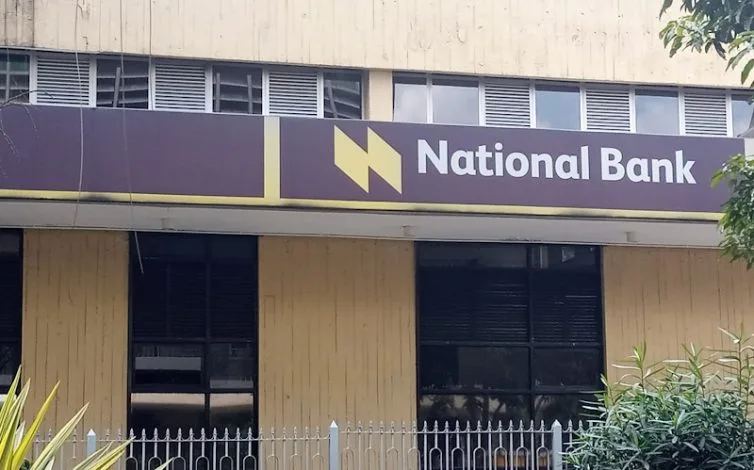

If you had told someone in 2019 that the National Bank of Kenya, a lender whose bad loan book had swelled to KES 31.4 billion and which was being sold off by the government to avoid collapse, would one day post a 178% jump in pre-tax profit, they would have struggled to believe it.
Yet here we are.
On 23rd March 2026, NBK released its FY 2025 results. The numbers are striking. Profit before tax surged to KES 2.91 billion, up from KES 1.05 billion in 2024. Profit after tax came in at KES 2.39 billion, up from KES 1.06 billion in 2024, a 125% increase. Customer deposits crossed KES 106 billion. Total equity rose to KES 17 billion from KES 13.4 billion.
But here is the number that stops you: NBK ended 2025 with fewer assets and a dramatically smaller loan book than it had in 2024. Total assets fell from KES 148.3 billion to KES 141.3 billion. Net loans and advances dropped from KES 75 billion to KES 51 billion. That is a KES 24 billion reduction in lending.
A bank that lent out less money made dramatically more profit. So what exactly happened?
A Brief History of a Troubled Institution
To understand what Access Bank has done with NBK, you need to know how deep the hole was.
NBK was incorporated on 19th June 1968, fully owned by the government, with the explicit objective of helping Kenyans access credit and control their economy after independence. For decades, that mission was undermined from within. Bad loans became a chronic problem, with politically connected borrowers defaulting on debt that had been issued without adequate collateral. By the time KCB moved to acquire NBK in 2019, the bad loan portfolio stood at KES 31.4 billion, nearly half of the entire loan book.
In 2015, NBK posted a loss of KES 1.2 billion, driven by heavy provisions and a loan impairment charge that jumped by KES 3.2 billion over the year. KCB acquired the bank in September 2019, ran it as a subsidiary for six years, cleaned some of the mess, but ultimately decided NBK was not central to its strategy. KCB CEO Paul Russo later explained the reasoning simply: “We divested NBK to have a single, more focused approach on KCB Kenya.”
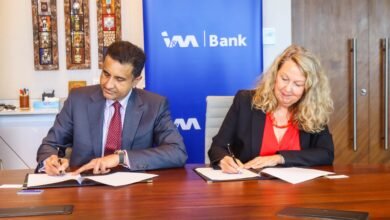
Access Bank and KCB Group completed the sale of NBK on 30th May 2025, following the receipt of all required regulatory approvals. NBK became a wholly owned subsidiary of Access Bank PLC. Access Holdings disclosed a total consideration of USD 109.6 million for the acquisition. As part of the transition, certain assets and liabilities of NBK were transferred to KCB Bank Kenya, enabling NBK to enter its new chapter with a leaner balance sheet.
What happened next is the real story.
The Three Moves That Drove the Turnaround
Access Bank did not walk into NBK and throw money at growth. It did the opposite. Three things worked together to drive the profit jump.
First, operational costs came down. Operating expenses fell from KES 9.18 billion to KES 8.49 billion. That is a KES 690 million reduction in the annual cost of running the bank. In banking, where margins are tight and fixed costs are unforgiving, cutting nearly 8% of operating overhead in a single year is a meaningful achievement.
Second, the cost of funding dropped sharply. Interest expenses declined by 33%. This means NBK became significantly more efficient at how it funds itself, paying less to attract and hold deposits relative to what it earns on them. The result was that Net Interest Income grew to KES 10.3 billion. That is the core banking engine, borrowing at one rate and lending at a higher one, working as it should.
Third, and most visibly, asset quality improved. Allowances for expected credit losses fell to KES 1.5 billion from KES 2.4 billion, a 37% improvement. These provisions are money set aside to cover loans that may go bad. When they fall, it signals two things. The existing loan book is cleaner. And management has greater confidence in the quality of new lending decisions. NBK’s non-performing loans dropped from KES 30.7 billion to KES 15.6 billion, which management attributed to deliberate selection during the acquisition process and enhanced recovery efforts.
The KES 24 Billion That Disappeared, On Purpose
The most counterintuitive part of this story deserves its own section.
NBK’s net loans and advances dropped from KES 75 billion to KES 51 billion in a single year. For a commercial bank, loans are the primary revenue engine. Fewer loans should mean less income. So why did profitability more than double?
Two things explain it.
The first is structural. As part of closing the acquisition, certain loan assets were transferred to KCB Bank Kenya under the Share Purchase Agreement. This was a negotiated part of the deal, not a sign of distress.
The second is strategic. The official press release describes it as a deliberate shift towards a “risk-adjusted lending strategy.” In plain terms, NBK stopped lending to everyone and started lending only to borrowers it was confident could repay. Fewer loans, but better ones. Loans that generate income without dragging down capital in provisions.
This is precisely the opposite of the growth-at-all-costs model that plagued NBK for decades. And the profit numbers vindicate it.
Meanwhile, customer deposits grew from KES 98 billion to KES 106 billion, an increase of KES 8 billion. Customers kept depositing more money at NBK even as the bank was being more selective about who it lent to. That is a quiet but meaningful vote of confidence. People trusted NBK with their savings, even while the bank was rebuilding.
Total equity climbed from KES 13.4 billion to KES 17 billion, and the bank’s capital ratios are now fully compliant with all CBK regulatory requirements. The Central Bank of Kenya has been pushing lenders to raise core capital, targeting KES 10 billion by 2029. NBK meeting all capital thresholds positions it ahead of a regulatory wave that is already putting pressure on smaller players.
Access Bank’s Bigger Game in Kenya
There is a layer to this story that goes beyond NBK’s own numbers.
Since the acquisition, Access Bank has begun integrating operations with NBK, allowing customers of either bank to transact across a combined network of over 100 branches countrywide. That shared footprint, NBK’s 77 branches alongside Access Bank Kenya’s existing network, creates one of the more substantial physical banking presences in the country.
Before the NBK acquisition, Access Bank Kenya operated only 23 branches across 12 counties, holding a market share of 0.2% and ranking 37th out of 39 licensed commercial banks in Kenya. The NBK acquisition was not just a financial investment. It was a step-change in market presence.
The broader ambition is clear. Access Bank’s MD Roosevelt Ogbonna described Kenya as sitting “at the heart of regional commerce,” and framed the NBK acquisition as a way to leverage combined strengths to deliver banking solutions to individuals, businesses, and government institutions. NBK’s historical relationships with government and institutional clients, including deposits from public sector entities, give Access Bank exactly the kind of balance sheet depth and institutional credibility it needs to compete at a higher tier in Kenya.
The W Initiative: Small Programme, Important Signal
Buried near the end of the press release, but worth watching, is the W Initiative, NBK’s programme designed to support women entrepreneurs and professionals. It offers tailored financial products, business advisory services, capacity-building programmes, and access to networks.
It would be easy to read this as standard corporate messaging. But read it in the context of where Kenyan banking is heading.
Kenya has reached 91% mobile money penetration, and mobile financial services are now encroaching on deposits, payments, and lending, areas long dominated by banks. Traditional banks are under genuine pressure to find and serve customer segments that fintechs and mobile money platforms have not fully captured. Women-led businesses, which remain systematically underserved by formal credit markets despite being a significant force in Kenya’s economy, represent exactly that kind of opportunity.
NBK has not yet disclosed specific lending volumes, beneficiary numbers, or product details within the W Initiative. That is the question worth watching in 2026. Is this a genuine strategic commitment to women’s financial inclusion, or a rebrand of products that already existed? The proof will be in next year’s numbers.
What to Watch in 2026
NBK has set out its 2026 priorities clearly: build a diversified, high-quality loan portfolio; deepen digital innovation; leverage integration synergies with Access Bank; and sustain deposit growth.
The loan book rebuild will be the critical test. Growing from KES 51 billion back towards meaningful scale, while maintaining the lending discipline that drove this year’s asset quality gains, is genuinely hard. It requires credit underwriting frameworks that can scale without reverting to past habits. Access Bank’s risk infrastructure and pan-African experience will be central to whether NBK threads that needle.
The digital piece also warrants attention. The press release mentions “accelerating digital innovation and service delivery” as a 2026 priority but provides no specifics. In a market where M-Pesa, digital lenders, and neobank-style products are redefining everyday banking, a 77-branch network and mobile app are the baseline, not the differentiator. The more interesting question is whether NBK, with Access Bank’s backing, moves into embedded finance, deeper SME digital tools, or scaled agency banking.
For now, the FY 2025 results represent something genuinely uncommon in Kenyan banking: a credible, numbers-backed turnaround story. Not of a startup or a fintech challenger, but of one of Kenya’s oldest financial institutions, rebuilt from the inside out.
NBK is not yet back to its full potential. But for the first time in a long time, it is moving in the right direction, and the numbers say so clearly.
National Bank of Kenya operates 77 branches and 4 agencies across Kenya. It is a wholly owned subsidiary of Access Bank PLC. FY 2025 results cover the year ended 31st December 2025.