

If you run a business registered in the US but move money to or from Africa, there is a good chance you have had a frustrating time with your bank. Delayed payments. Frozen accounts. Transactions flagged or outright blocked. Sometimes, the bank simply closes your account with little explanation.
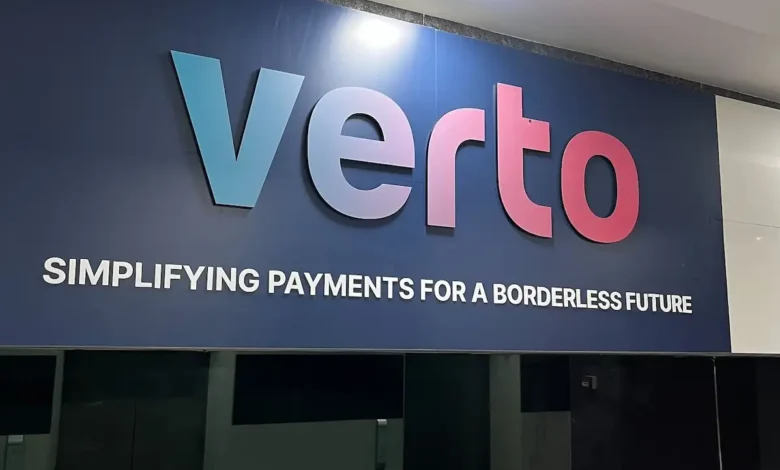
Verto, a London-headquartered cross-border payments fintech, is betting it can solve that problem. The company has launched US-dollar business accounts that allow firms to receive, hold and move funds under their own business name, backed by US banking infrastructure. The accounts sit alongside Verto’s existing cross-border payment rails, which already cover 190 countries and 49 currencies.
The product is aimed squarely at US-registered businesses with African operations. Think venture-backed startups scaling across markets, import-export SMEs, and investors funding companies on the continent. These are the firms that increasingly find themselves caught in a widening gap between legitimate business and the risk-averse posture of traditional US banks.
Why this matters now
The timing here is not accidental. Over the past two years, a growing number of Africa-focused companies have reported difficulties maintaining banking relationships in the United States. US banks have tightened scrutiny on transactions linked to emerging markets, driven by stricter anti-money laundering (AML) requirements and what regulators have broadly termed “reputational risk.”
The result is that properly registered, investment-backed companies are getting caught in the crossfire. A startup moving payroll to its Nairobi engineering team or paying a Lagos-based supplier gets treated with the same suspicion as a genuinely high-risk entity. Debanking became one of the most politically charged banking issues in the US in 2025, and regulators are only now beginning to address the problem through reforms to the Bank Secrecy Act and AML frameworks.
For businesses operating between the US and Africa, the practical consequences are serious. Without a reliable US bank account in their own name, companies must rely on intermediaries or fragmented workarounds to move funds. That slows down payments to contractors, suppliers and staff. It delays investor disbursements. It creates uncertainty that makes global partners nervous.
What Verto is actually offering
Through the new product, a US-registered business can open a named USD account and use Verto’s platform to convert and settle funds in local currencies like the Nigerian naira (NGN) and the Kenyan shilling (KES). The company says businesses can hold, receive and pay in 48 currencies from a single dashboard, pay contractors and offshore teams through local payment rails, and equip teams with virtual cards to spend in 11 currencies.
The service is provided through VertoFX INC, which holds money transmitter licences in Delaware, Wyoming and Illinois, in partnership with Verto FX LTD and Community Federal Savings Bank (CFSB).
What makes Verto’s pitch distinct is its claim to bridge compliance requirements across both US and African jurisdictions. The company says it can onboard clients more efficiently while meeting regulatory standards on both sides. For firms that have been debanked or face constant friction with traditional banks, that dual-jurisdiction compliance expertise is the selling point.
“We believe founders building across borders should not be constrained by the limitations of traditional banking,” said Ola Oyetayo, Verto’s co-founder and CEO.
Context: the bigger picture
This is not Verto’s first play for Africa’s startup ecosystem. The company won the $1 million Milken-Motsepe Prize in FinTech in 2025 for its work in cross-border payments. It previously launched safeguarded USD accounts during the Silicon Valley Bank collapse in 2023, picking up clients like Jumia, Chipper Cash and TapTap Send in the process. Verto says it now processes about $25 billion in annual cross-border transaction volume and serves over 4,000 businesses, including major corporates like Maersk, MTN and Interswitch.
The broader context is also encouraging. African startups raised $3.2 billion in 2025, according to data from Africa: The Big Deal, a 40% increase from 2024. That signals renewed investor confidence in the continent’s tech ecosystem. But investor confidence only works if the money can actually move. When US banks block or delay transactions to African markets, it creates a bottleneck that undermines the very investment flows the ecosystem depends on.
Verto is positioning itself at the centre of that bottleneck. Whether it can truly replace the reliability and breadth of a full US banking relationship remains to be seen. For many businesses, a fintech account will complement rather than replace a traditional bank. But for those who have been shut out entirely, this could be a lifeline.
What to watch
Verto operates in a competitive space. Other fintechs like Mercury, Relay and Brex serve US startups, though few have deep African market rails. On the Africa side, companies like LemFi, NALA and Chipper Cash are building cross-border corridors, but from a consumer and diaspora remittance angle rather than B2B infrastructure.
The real test for Verto will be whether it can maintain its compliance standing as it scales. Fintech-bank partnerships in the US are under increasing regulatory scrutiny, and any misstep on AML or KYC could put the entire product at risk. Currency volatility in frontier markets like Nigeria also adds a layer of operational complexity that traditional banks have long used as justification for their cautious approach.
Still, with $25 billion in annual volume and eight years of operational history, Verto is not a newcomer making promises. It is a company that has been building the rails and is now laying down the road.