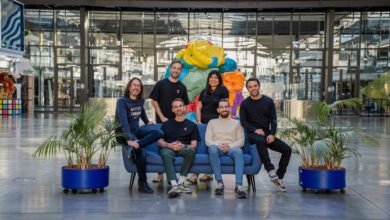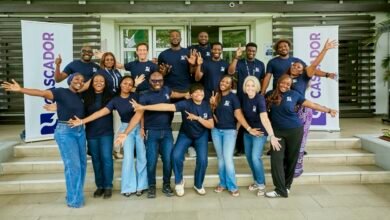

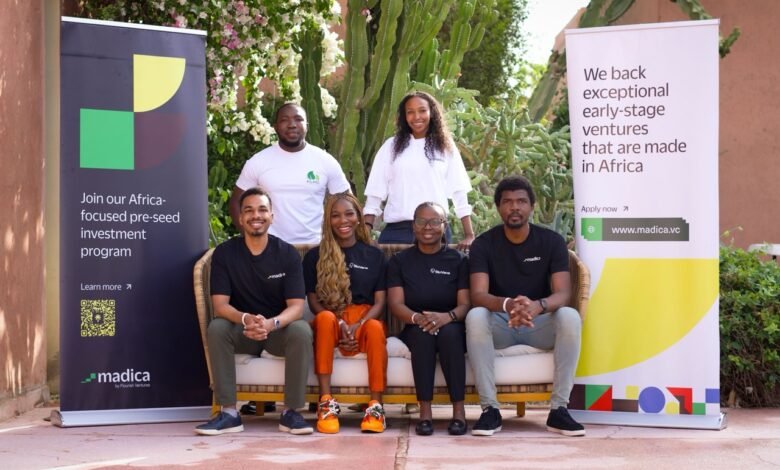

Madica, the pre-seed investment programme backed by Flourish Ventures, has invested up to $600,000 across three new startups in Tanzania, Kenya, and Nigeria.
The three companies, Kilimo Fresh, Hakimu, and Biovana, will each receive up to $200,000. They also gain entry into Madica’s 18-month support programme, which bundles mentorship, executive coaching, and two fully funded immersion trips to technology ecosystems in Africa and abroad. On top of that, the founders get access to Madica’s global investor network.
This is the latest batch from a programme that has been steadily building a portfolio since launching in 2022. Madica previously invested in startups like GoBEBA and NewForm Foods across different sectors and geographies.
What the three startups do
Kilimo Fresh is a Tanzanian agritech startup co-founded by Baraka Chijenga and Justice Mangu. It connects smallholder farmers to urban markets by aggregating, processing, and distributing fresh produce through a technology-enabled supply chain. The problem it is solving is straightforward but massive: post-harvest food waste. Across sub-Saharan Africa, an estimated 30 to 50 percent of food produced never reaches consumers, largely because of fragmented supply chains, poor storage, and weak market linkages. Kilimo Fresh is trying to tighten that chain with technology.
Hakimu is a Kenya-based legaltech startup co-founded by Rawan Dareer, Ahmed Ahmed, and Ahmed Elbashir. The company is building what it describes as pan-African legal infrastructure powered by AI. Legaltech remains a relatively underdeveloped category in African startup ecosystems. Most people on the continent still lack access to affordable legal services, and digital tools that simplify legal processes are scarce. Hakimu wants to change that at scale.
“We’re revolutionising access to justice across Africa,” said Rawan Dareer, Hakimu’s co-founder and CEO. “Having a partner that understands the specific challenges and opportunities of scaling in Africa makes a real difference.”
Biovana is a Nigerian health data startup co-founded by Estelle Dogbo and Dr Jumi Popoola. It operates as a data harmonisation and certification platform designed to unlock African health datasets for use in global pharmaceutical, AI, and clinical research. Africa generates vast amounts of health data, but much of it is fragmented, inconsistent, or inaccessible to researchers. Biovana wants to clean that up and make it usable on a global scale. Notably, it is led entirely by women, which remains rare in African deep tech.
Why this matters
Africa has a well-documented pre-seed funding problem. According to data tracked by Africa: The Big Deal, just $46.5 million went into pre-seed deals across the continent in 2025, across 281 startups. That figure barely moved from 2024, even as the broader African venture capital market grew by roughly 40 percent. Pre-seed funding accounted for just 1.5 percent of total capital invested, far below the 4 to 6 percent typical in the United States.
The number of active pre-seed investors has also been shrinking, from 200 in 2022 to 135 in 2025. And nearly 60 percent of what little pre-seed money flows still goes to just four countries: Nigeria, Kenya, South Africa, and Egypt.
Madica was designed to push back against this pattern. By investing across sectors (agritech, legaltech, health data) and geographies (Tanzania, Kenya, Nigeria), and by prioritising founders who lack established investor networks, the programme is deliberately fishing in waters most VCs avoid.
“Each new investment brings us closer to the portfolio we set out to build, one that reflects the full breadth and diversity of African entrepreneurship,” said Emmanuel Adegboye, Head of Madica.
A fundraising guide for first-time founders
Alongside the investments, Madica released the first edition of a fundraising guidebook series called Zero to Funded: A Founder’s Guide to Pre-Seed Fundraising in Africa. The 75-page guide is aimed at founders who are raising for the first time, often without access to accelerators, strong networks, or anyone who has done it before.
It covers practical ground: common myths that can derail early investor conversations, how to decide whether venture capital is even the right path, how to balance local market realities with what international investors expect, and templates and checklists founders can use directly. In an ecosystem where fundraising knowledge is often hoarded within small circles, making this kind of resource freely available is a meaningful move.
New mentor, Morocco gathering
Madica also appointed Tauriq Brown, former CEO of TooMuchWiFi and a venture builder with experience at Rocket Internet and Mountain Partners, as a mentor. He will provide execution-focused guidance to portfolio founders.
The full Madica team and portfolio are currently gathered in Morocco for an immersion trip running alongside GITEX Africa. The schedule includes workshops on investment readiness, organisational culture, and team building, plus time to meet investors and ecosystem partners.
Looking ahead
Madica continues to accept applications from pre-seed startups headquartered in Africa. The eligibility bar is intentionally accessible: a minimum viable product with some paying customers, full-time founders, and little to no prior institutional funding.
For a continent that needs roughly $120 million annually in pre-seed capital to maintain a healthy startup pipeline, every programme that writes early cheques and sticks around to support founders matters. Madica, with its 18-month commitment and growing portfolio, is trying to be one of the consistent ones.
Madica is affiliated with Flourish Ventures, a global venture capital firm. Eligible African startups can apply through madica.vc.