

Autopax has officially launched the Cheche, a locally assembled electric motorcycle, alongside a network of 12 battery-swapping stations spread across Nairobi and its surrounding areas. The launch, which took place in Karen, brings together three partners: Autopax (Kenya), Kofa (Ghana), and TailG (China) in what they describe as a fully integrated electric transport system.
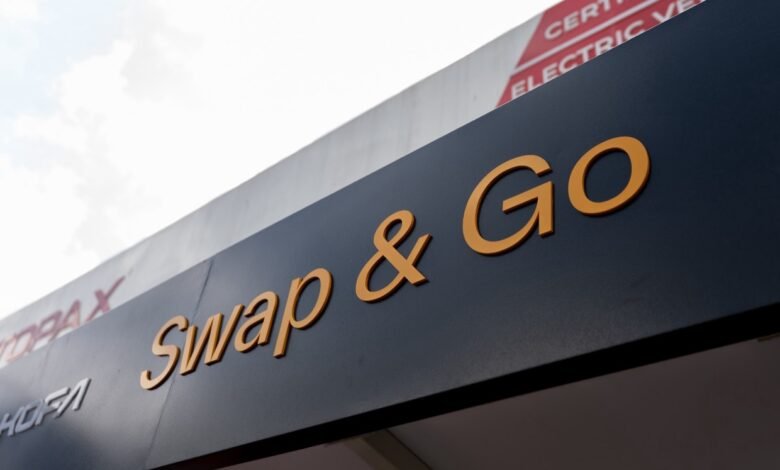
The setup is straightforward. Riders get the motorcycle. Kofa provides the batteries and operates the swap stations. When a battery runs low, riders pull into a station, swap it for a fully charged one in under two minutes, and continue working. No long charging waits. No plugging in at home overnight. The idea is to keep commercial boda boda riders moving throughout the day without downtime.
At launch, the network has approximately 1,200 batteries to serve an initial fleet of around 500 motorcycles. That ratio of roughly two batteries per bike, plus a reserve buffer across 12 stations, is designed to ensure a charged battery is available whenever a rider needs one.
What is the Cheche, exactly?
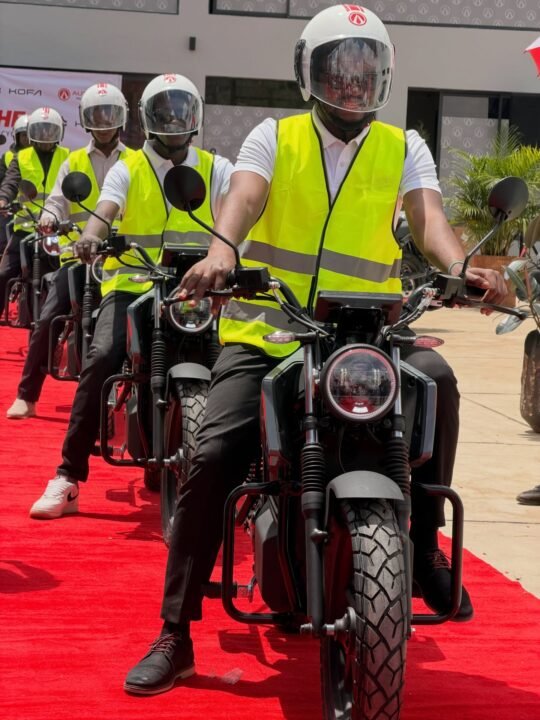
The Cheche is not an entirely new creation. The same motorcycle is known as the “Jidi” in Ghana, where Kofa has been operating it on roads for some time. It was designed by Kofa in Accra and manufactured by TailG, one of China’s largest electric two-wheeler makers. In Kenya, Autopax handles the local assembly, adapting the bike for Kenyan road conditions, usage patterns, and regulatory requirements.
The technical highlights are a dual independent battery system and a Combined Braking System (CBS). The dual battery setup means that if one unit dies mid-ride, the other keeps the bike moving. The CBS distributes braking force across both wheels, which is meant to improve stability, particularly when the bike is loaded. For boda boda riders carrying passengers or heavy cargo on unpredictable Nairobi roads, both features matter more than they sound on paper.
According to the specifications shared when the partnership was first announced in February 2024, the Cheche can carry up to 250kg total load and travel up to 100km on a full charge of both batteries. That range is competitive with what Roam and Spiro offer, though real-world performance will depend on terrain, load, and riding style.
Why this model matters right now
Kenya’s electric motorcycle market is not short of players. Roam, ARC Ride, Spiro, and the Bolt-M-KOPA partnership have all made moves in this space. But the conversation around electric boda bodas shifted significantly in late 2025, when Spiro Kenya found itself at the centre of a major backlash from riders who accused the company of battery repossessions, remote lockouts, and a model that felt more like control than service. Riders compared Spiro’s system to “modern-day bondage” because they could not charge batteries at home, purchase batteries outright, or use any station outside Spiro’s network.
That controversy hangs over every new battery-swapping model that launches in Kenya. The fundamental question Cheche will face from riders is: what happens when I cannot ride for a few days? What happens if I miss a payment? Can my bike be remotely disabled?
Autopax has not publicly addressed these specific questions in detail. But the integrated nature of the model, where the bike, batteries, and stations all come from the same partnership, means riders will be operating within a closed ecosystem. How flexible that ecosystem is, and how much autonomy riders retain, will determine whether Cheche earns trust or triggers the same suspicions Spiro did.
From pilot to deployment?
Autopax is positioning this launch as a shift from pilot projects to scalable commercial deployment. The company had previously introduced the Air EV Yetu, an electric car targeting urban users, so the Cheche marks their entry into the two-wheeler market where the real volume sits. Kenya has over 1.4 million registered motorcycles, and the boda boda economy generates an estimated KES 1 billion in daily income, according to the Kenya National Bureau of Statistics.
The company says it is targeting corporate fleets, logistics operators, and individual riders looking to switch from petrol bikes. The economic argument is persuasive on paper: electric motorcycles can reduce fuel and maintenance costs by up to 70 per cent compared to their petrol equivalents, which is significant for riders operating on thin daily margins.
But the challenge is not just cost. It is infrastructure reliability. Twelve stations is a start, but Nairobi is a large, sprawling city. A rider working in Eastlands who runs low on battery near Ruiru needs to know there is a station within reach. ARC Ride, by comparison, already has around 170 swap stations in Nairobi. Autopax will need to expand station coverage rapidly if it wants to compete.
What comes next
The real test for Cheche is not the launch event. It is the first three to six months of daily operation. Can the 12 stations handle demand during peak hours? Will the 1,200-battery pool be sufficient as the fleet grows? How will the company handle rider complaints, downtime, or mechanical issues?
Kenya’s electric motorcycle market is still young enough that no single model has emerged as the clear winner. But the failures have been instructive. Spiro taught the market that technology alone is not enough. The terms of the relationship between platform and rider matter just as much as the bike itself. If Autopax has learned that lesson, the Cheche has a real chance. If not, Nairobi’s boda boda riders will not be slow to let them know.