
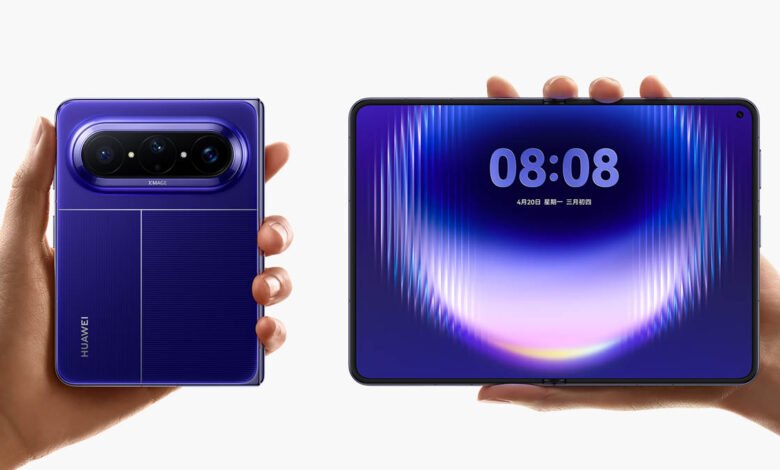

Huawei has officially unveiled the Pura X Max, a wide-format book-style foldable phone set to launch on April 20 alongside the Pura 90 smartphone series. The device represents a meaningful shift in how foldable phones are designed, moving away from the tall, narrow format that has defined the category for years.
More importantly, it arrives months before Apple and presumably Samsung ship their own wide foldables. And based on everything we know, it looks almost identical to what Apple is building.
What is the Pura X Max?
The Pura X Max is Huawei’s second-generation wide foldable. The original Pura X, launched in March 2025, was a clamshell-style flip phone with a 16:10 widescreen ratio. It was the first phone to try a wider aspect ratio in a foldable, when everyone else was going tall and narrow.
The Pura X Max takes that wide concept and scales it into a full book-style design. Think of it as a phone that opens up into a small tablet.
When unfolded, you get a 7.69-inch WQHD+ inner display with a 16:10 aspect ratio. That is close to the size of an iPad mini. When folded shut, there is a 5.5-inch cover screen for everyday tasks like messaging, calls, and quick app checks.
On the back sits a triple camera system with Huawei’s XMAGE branding, and the device is expected to run on the new Kirin 9030 chipset. That same chip will power the Pura 90 series. Reports suggest it features a new 9-core architecture with meaningful performance improvements. The camera system is believed to include Huawei’s Red Maple Quad Camera setup, with a particular focus on telephoto improvements.
Pre-orders are already open in China across multiple configurations: 12GB+256GB, 12GB+512GB, 16GB+512GB (Collector’s Edition), and 16GB+1TB. The phone comes in five colours: black, white, blue, gold, and orange. Pricing has not been officially confirmed, but this is firmly a premium flagship device.
Why does this matter for Apple?
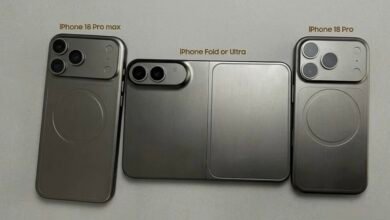
Here is the uncomfortable part for Apple fans. The Pura X Max looks strikingly similar to what is expected from Apple’s upcoming foldable, widely tipped to launch as the iPhone Ultra. Leaked dummy models and render images of the iPhone Ultra show the same wide book-style form factor, a similar aspect ratio, and an inner display that opens to roughly iPad mini size.
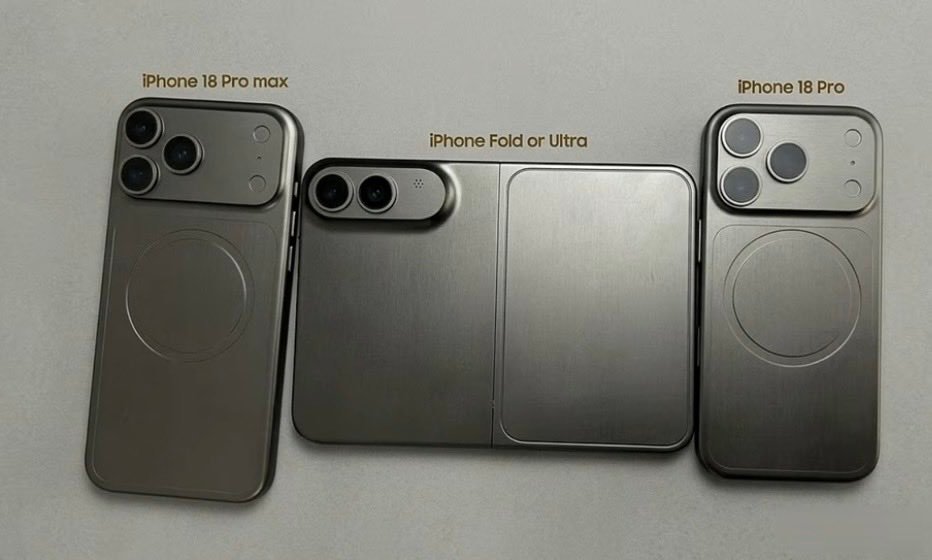
The dimensions are nearly a match. The rumoured iPhone Ultra inner display sits at around 7.8 inches, with a cover screen of about 5.5 inches. The Pura X Max comes in at 7.69 inches and 5.5 inches. Samsung’s rumoured Galaxy Z Fold 8 Wide is also hovering around 7.6 inches with a 5.4-inch cover screen.
These three devices are, in design terms, essentially the same idea executed by three different companies. Huawei just happens to be shipping first by several months.
Apple’s innovation question
This raises a broader conversation that has been building for a while now. What exactly is Apple innovating these days?
Consider the track record. The Vision Pro launched to massive hype but has not taken over the mainstream. It remains an expensive niche product with limited content. The iPhone Plus line was quietly discontinued after failing to find a meaningful audience between the standard iPhone and the Pro Max. The iPhone mini before it suffered a similar fate. Both experiments suggested Apple was testing form factors without fully understanding what customers actually wanted.
Then came the iPhone Air, Apple’s thinnest ever iPhone at 5.6mm. It was a direct response to Samsung’s Galaxy S25 Edge, but it arrived after TECNO had already showcased the Spark Slim in March 2025, a phone that measured just 5.75mm and packed a much larger 5,200mAh battery. The iPhone Air shipped with a single rear camera. At its expected Kenyan price north of KES 180,000, it asks buyers to accept a phone that is thinner but not necessarily better than devices costing a fraction of the price.
Now the foldable. Apple is expected to announce the iPhone Ultra at its September event, with potential shipping as late as December 2026. Pricing leaks suggest it will start above $2,000 (roughly KES 260,000 or more in Kenya) and could reach nearly $2,900 for the top storage option. For that money, you get a book-style wide foldable with two rear cameras, no MagSafe, and what leakers describe as a nearly invisible crease.
That crease-free display, if real, would be a genuine engineering achievement. OPPO however already debuted the creaseless tech with their Find N6 in March. Beyond that for Apple, what is the innovation? The form factor already exists. Google already had that book-style foldable earlier with the Pixel Fold. Huawei is pushing it further now. The wide foldable concept, the aspect ratio, the tablet-like inner screen: none of this is new by the time Apple ships.
The ecosystem argument
Apple’s counter-argument, as always, is the ecosystem. iOS integration, years of software updates, AirDrop, iMessage, Apple Watch pairing, seamless handoff between devices. These are real advantages that matter deeply to people already invested in Apple’s world.
But ecosystem is not innovation. It is lock-in. And for buyers in markets like Kenya, where Android dominates and the Apple ecosystem carries a steep premium, the value proposition becomes harder to justify when the hardware itself is not leading the way.
Huawei’s challenge goes the other direction. The Pura X Max will almost certainly be limited to China at launch, running HarmonyOS without Google Play Services. That is a massive limitation for global buyers. But in terms of pure hardware ambition and willingness to ship new form factors first, Huawei continues to outpace Apple.
What to watch for
The Huawei Pura X Max launches officially on April 20. We will know full pricing, battery capacity, charging speeds, and camera specifications then. The big question is whether Huawei will push this device beyond China. The original Pura X stayed domestic, but with Apple and presumably Samsung entering the wide foldable space later this year, Huawei may see an opportunity to compete globally as it did with the Mate X7.
For Apple, the pressure is now squarely on September. The iPhone Ultra needs to offer something beyond “the same thing but with iOS” to justify its expected price tag. A crease-free display is a start, but form factor alone will not cut it when Huawei has been there, done that, and shipped the t-shirt.