

-Large.jpeg)
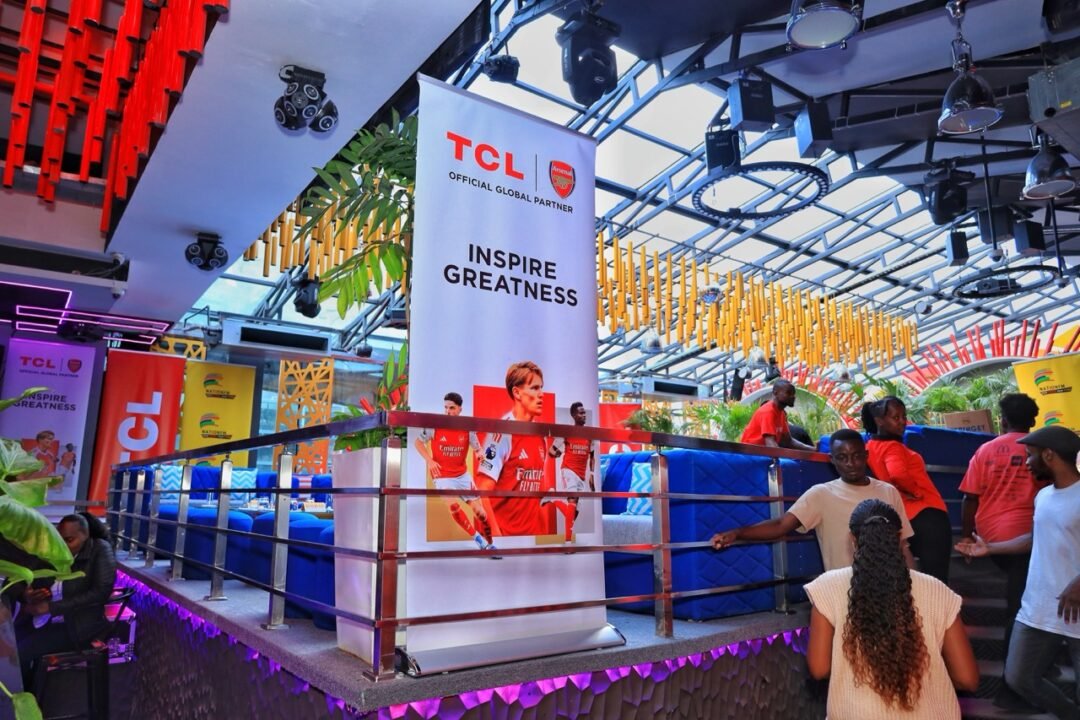
On Sunday evening, TCL Africa turned a Premier League fixture into a product showcase. The Chinese electronics giant, currently the world’s number two TV maker and the fastest-selling TV brand in Kenya, hosted a watch party at The Redroom inside Adlife Plaza in Kilimani. It gathered football fans, content creators, influencers and TikTokers to watch Arsenal take on Manchester City at the Etihad. The match itself delivered drama, with Erling Haaland scoring a 65th-minute winner to seal a 2-1 victory for City and slash Arsenal’s title lead to just three points. But for TCL, the real story was what the game was playing on.
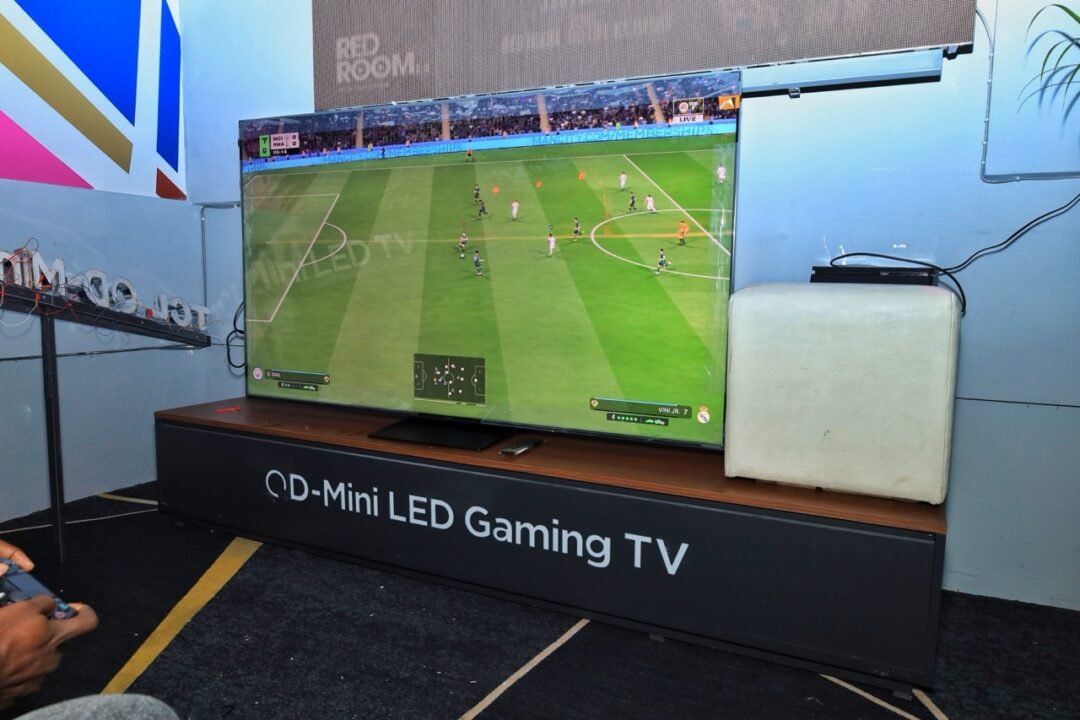
The venue was rigged with TCL’s latest televisions, headlined by its new SQD Mini-LED TV line-up. It was a deliberately chosen setting. Fast-moving football, under harsh stadium floodlights, is exactly the kind of content TCL says this technology is engineered for. And if the TVs could survive a room full of creators turning every goal and every Gabriel-Haaland flashpoint into TikTok content, the pitch was largely delivering itself.
-1-Large.jpeg)
So what is SQD Mini-LED TV, really?
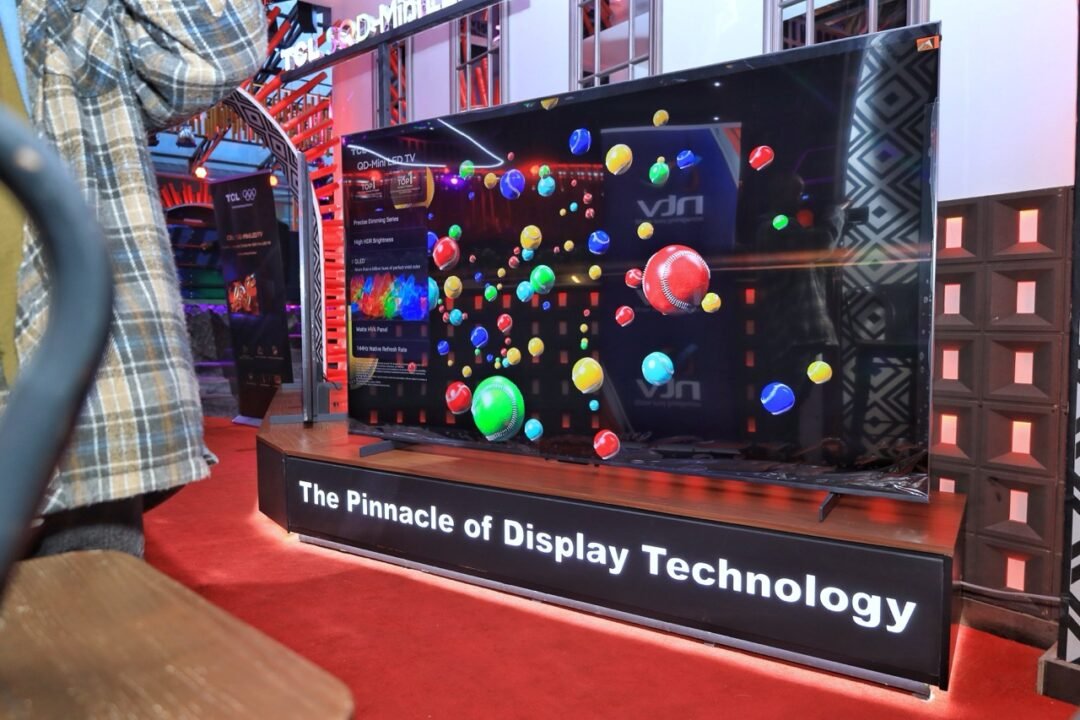
SQD Mini-LED TV stands for Super Quantum Dot Mini-LED TV. To appreciate why it matters, you need to know what it replaces. TCL’s previous flagship, the QD Mini-LED C855 launched in Kenya back in 2024, already paired Quantum Dot colour enhancement with Mini-LED backlighting. SQD Mini-LED TV is the next step in that story. TCL says SQD Mini-LED TV transforms conventional local dimming into its Precise Dimming Series, enabling more precise light control across the screen and stronger performance in both highlights and shadows.
That sounds like marketing language, so here is what it actually fixes. In traditional Mini-LED panels, the tiny LEDs behind the screen can bleed light into areas that are supposed to be dark. This is the halo effect, also called blooming. It is the single most persistent visual flaw in LED television. A bright character against a dark background ends up surrounded by a faint glow, like a smudged highlighter.

TCL has solved the problem from several angles. In flagship implementations, SQD Mini-LED TV panels carry up to 20,000 local dimming zones, meaning the backlight can be controlled in very small, precise sections. Peak brightness reaches up to 10,000 nits on the top-end X11L model shown off at CES 2026. Super Condensed Micro Lens structures focus the light more tightly. A new “All-Domain Halo Control” algorithm decides, frame by frame, where light should fall and where it should not. The result is a cleaner image in the scenes where older Mini-LED sets struggled most: stadium floodlights against dark stands, or bright jerseys against the shadow of a goalpost.
The colour story matters more than the brightness numbers
What actually makes SQD Mini-LED TV interesting is not peak nits, which has been a marketing arms race for years. It is colour stability at high brightness.
According to TCL, adjacent dimming zones in SQD Mini-LED TV panels emit pure white light without interfering with each other, which eliminates what engineers call colour cross-talk. Combined with upgraded Quantum Crystal materials, the display can hold a wide, accurate colour gamut even at very high luminance. TCL says the technology supports up to 100% BT.2020 wide colour gamut in all scenes, BT.2020 being the benchmark broadcasters use for next-generation HDR. Independent hands-on coverage by TechRadar has echoed the same picture of strong colour performance. In plain English, reds stay red, greens stay green, and blues stay blue, whether the screen is showing a bright afternoon kick-off or a dim close-up inside a tunnel.
For sports specifically, this matters more than most viewers realise. Transient response (how quickly the panel keeps up with fast motion) improves, and light distribution stays uniform across the screen. You see the ball, not trailing artefacts around it.
Kenya availability, and what to watch next
SQD Mini-LED sets are already on sale in the country. The 85-inch C8L is listed at around KES 245,000 on TCL Kenya’s official store, while the 55-inch C7L comes in around KES 125,000.
The Sunday watch party was a smart bit of marketing. It put premium display technology in front of the exact audience that decides what “looks good” on Kenyan social media. It also tied a product category that usually feels abstract (dimming zones, nits, colour gamut) to something visceral: a title-race goal, replayed three times, on a very bright screen.
The next question is whether the X11L flagship itself makes it to Nairobi, and at what price. That would give Kenyans access to the very pinnacle of TCL’s global 2026 line-up.




Join the discussion