

For years, Kenya has been the poster child of how to finance smartphones in markets where most people earn daily wages. M-KOPA, Watu Simu, Safaricom’s Lipa Mdogo Mdogo, and a long tail of smaller players turned the country into a global blueprint, as we reported in August. Now Somalia is running the same play, but with a twist that should make every Kenyan device financier slightly nervous.
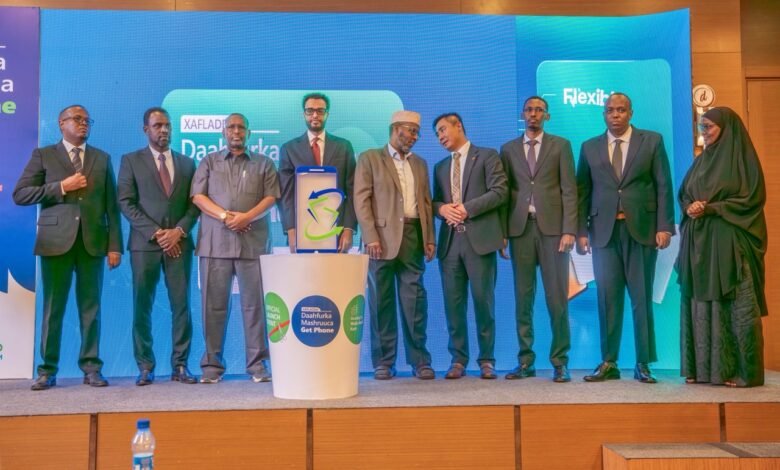
On Tuesday, Hormuud Telecom, Somalia’s largest telco, announced a partnership with Mogadishu-based Get-Phone Limited to roll out what is being billed as the country’s first structured smartphone financing programme. The numbers are eye-catching: a $19 (about KES 2,460) upfront deposit, then daily repayments of $0.60 to $1.60 (roughly KES 78 to KES 207) depending on the tenure of the plan, which spans six, nine, or twelve months. Crucially, Get-Phone says the financing is Sharia-compliant and entirely interest-free.
That’s the part Kenyan readers should pay attention to.
The Kenya comparison
Kenya’s device financing players have been under fire for steep effective costs. Embakasi East MP Babu Owino recently took aim at the sector, arguing that a phone retailing at KES 10,000 ends up costing buyers more than KES 30,000 over the life of the financing plan. The MP wants Parliament to cap markups, calling the current structure exploitation. Industry players counter that the markup prices in default risk and the cost of bringing the unbanked into formal credit. Both sides have a point.

The Hormuud-Get-Phone model sidesteps that argument entirely. With no interest charges and a flat installment structure, the customer pays a transparent total over the chosen term. Whether that total includes a hidden margin baked into the device’s listed price is another question, but on its face, the proposition is fundamentally cleaner than what’s on offer in Nairobi.
What you actually get
The programme bundles the device, 1GB of daily data, and 40 minutes of voice calls into a single daily payment. Hormuud says the average Somali customer already spends about $0.50 a day on data and calls alone. For an additional 10 cents a day, that customer can now walk away with a smartphone too.
The devices on offer are entry-level ZTE handsets: the Blade A36, Blade A56, and A76. These are basic 4G smartphones, the sort of hardware GSMA is currently trying to push to a $40 retail price across Africa. Repayments run through EVC Plus, Hormuud’s mobile money platform, which the Central Bank of Somalia formally licensed in 2021. Somalia processes over 650 million mobile money transactions a year worth roughly $8 billion, most of it through EVC Plus, so the rails are already in place.
Eligibility uses Hormuud’s telecom-based credit scoring, which looks at how long a customer has used their SIM and their EVC Plus spending patterns. There is no formal credit history requirement. If a payment is missed, the device’s services are temporarily restricted and the missed days are tacked onto the end of the repayment period rather than triggering penalties, a notably softer enforcement mechanism than Watu’s IoT device-locking software used in Kenya.
A pilot run in Mogadishu between February and March recorded a default rate below 4 per cent. A clever piece of social engineering helped: customers in urban areas often acted as guarantors for relatives in rural and nomadic areas, extending reach without inflating risk.
Why this matters beyond Mogadishu
The numbers Hormuud is targeting are not small. Phase one aims to ship 10,000 devices by June, scaling to 100,000 by end of 2026 as the programme expands into Puntland and Somaliland. Almost half of Hormuud’s roughly 4 million subscribers are still on 2G feature phones, despite 4G now covering more than 70 per cent of Somalia’s 19 million people. That gap, between coverage and adoption, is exactly what the programme is designed to close.
It’s also notable that Somalia is doing this without being on the GSMA’s $40 smartphone pilot list, which selected DRC, Ethiopia, Nigeria, Rwanda, Tanzania, and Uganda for its 2026 affordability pilot. Somalia’s private sector has decided not to wait for the global coalition.
Cited World Bank and GSMA research suggests the prize is real: a 10 per cent rise in mobile broadband penetration can lift GDP by up to 1.4 per cent in developing economies, and households gaining mobile broadband saw extreme poverty fall by about 7 percentage points after two or more years of coverage in Nigeria.
For Somalia, a country with a GDP per capita of around $467, those gains aren’t theoretical. They are the difference between a market and a real economy.


Join the discussion