

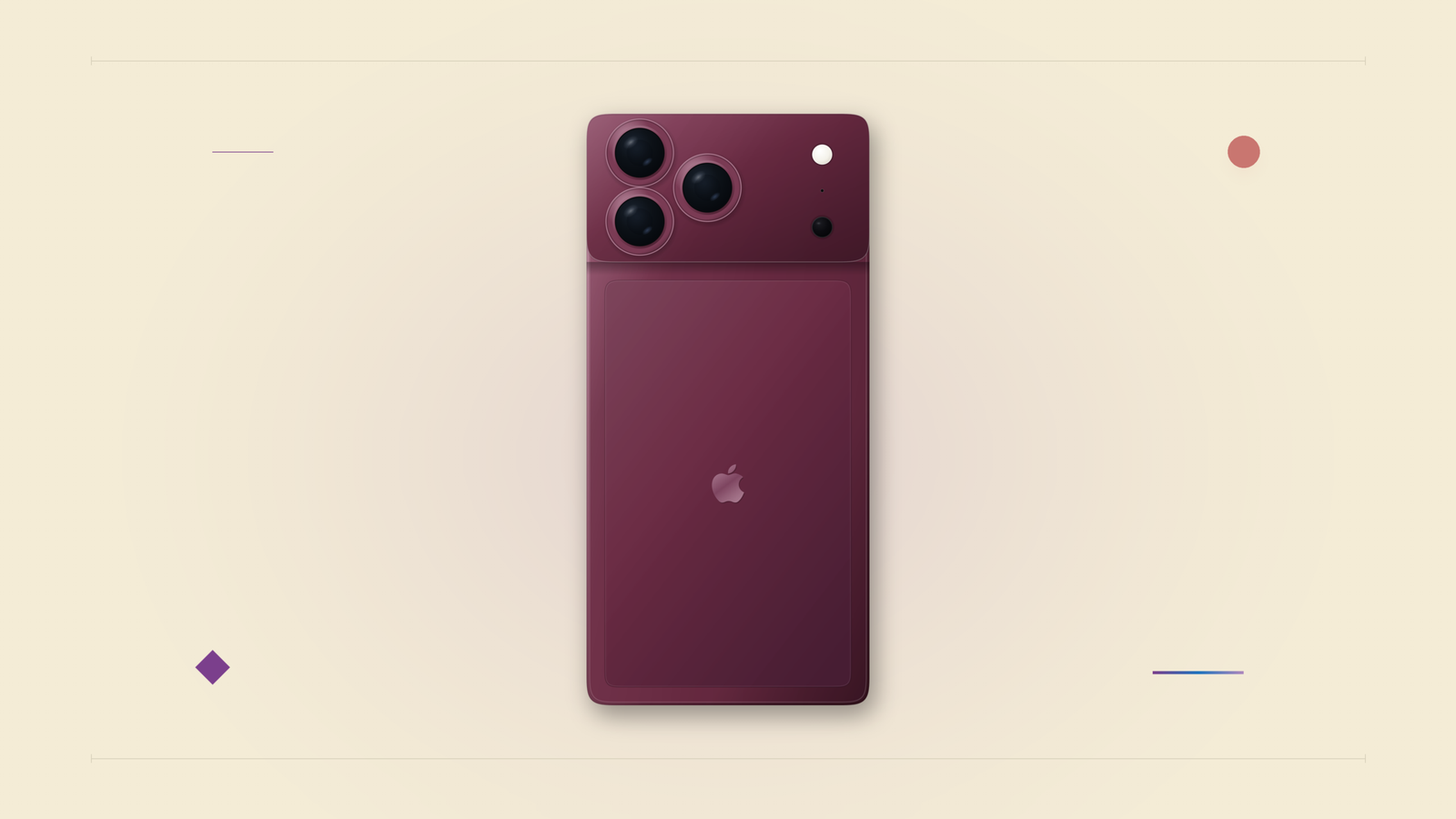
Device financing · how the sum works
Apple’s lease says 30%. Its trade-in desk says 56%.
Apple Upgrade charges no interest. Its monthly price still assumes an iPhone loses value faster than Apple’s own trade-in counter says it does.
01 · The lease
Three numbers run the whole scheme.
Apple Upgrade opened in the United States on 28 July 2026, with Klarna providing the lease. These are the iPhone 17 Pro terms. No deposit, no finance charge.
Per month
24-month term
24-month term
$31.99
About KES 4,140
24 payments
What you pay to use it
What you pay to use it
$767.76
69.9% of the list price
Buyout fee
What it costs to keep it
What it costs to keep it
$331.24
30.1% of the list price
02 · Rent and residual
The monthly payment is a depreciation estimate.
Those two figures are not two halves of a purchase price. One is rent. The other is what Klarna has decided the phone will still be worth when it comes back.
Rent · 24 payments
$767.76 · 69.9%
Residual · buyout
$331.24 · 30.1%
A 24-month lease values a Pro iPhone at about 30% of its price after two years. A 12-month lease says about half after one. The rent is the gap between the two.
03 · The gap
Apple’s own trade-in desk values the same phone at nearly double that.
The iPhone 16 Pro went on sale in September 2024, so it is now about 23 months old. That is almost exactly the age of a phone coming off a 24-month lease.
Klarna lease residual24-month iPhone 17 Pro
30.1%
Apple trade-in offer23-month iPhone 16 Pro
56.1%
Apple offers up to $560 for an iPhone 16 Pro that launched at $999. That is 26 points above what the lease books the same class of phone at, and it is where the missing interest went. Klarna collects $767.76, charges nothing for the wait, and gets back a device it valued at $331. Apple sets the final offer only after inspecting the phone, so $560 is a ceiling rather than a promise.
04 · End of term
Three ways a lease ends. One of them costs extra.
Hand it back
$767.76
You have paid 24 times, you owe nothing more, and you own nothing.
Pay the buyout
$1,099
Your total lands exactly where buying it in a shop would have. The phone is yours.
Upgrade
$0 fee
Hand the phone back and start a new lease on a newer one.
Leaving early is the expensive one. After day 14 you return the device and still pay out the rest, so you finish with no phone and the same bill. Doing nothing is not free either. If you neither return, upgrade nor buy, the lease rolls monthly for up to six months, your payment can rise, and Klarna charges the buyout fee anyway.
05 · One formula, six products
The same sum, applied six times.
Share is what you pay across the full term as a portion of the list price, before any buyout. These are not six separate calculations.
Product / term
List price
Per month
Share paid
iPhone 17e 24 months
List$599
Per month$17.99
Share72%
iPhone 17 24 months
List$799
Per month$22.99
Share69%
iPhone Air 24 months
List$999
Per month$28.99
Share70%
iPhone 17 Pro 24 months
List$1,099
Per month$31.99
Share70%
MacBook Pro 14in 36 months
List$1,999
Per month$38.99
Share70%
iPad Pro 11in 36 months
List$1,199
Per month$24.99
Share75%
A longer term shrinks the monthly figure without improving the deal. It matters more for Macs than phones, because people keep Macs longer. A MacBook Pro used for six years costs its purchase price once. Leased twice across those six years it costs about 140% of that, and you own nothing at the end.
06 · Who actually loses
Two years with an iPhone 17 Pro, two ways to pay for it.
Lease it, hand it back24 payments, own nothing
$767.76
Buy it, trade it in$1,099 less Apple’s offer
$539
$229
What handing the phone back costs over buying it and trading it in. Some of that closes if you count the value of not having $1,099 tied up for two years, but not all. If you want to own the phone the arithmetic flips: the lease plus the buyout is the cheapest route to an iPhone 17 Pro, at $1,099 with no interest and no Apple Card.
07 · If the iPhone 18 Pro joins
What the same ratio would cost on a dearer phone.
Projection · not an Apple figure
$39 to $41
Monthly lease, iPhone 18 Pro, if the 70% ratio holds
Based on a $1,349 to $1,399 price, up from $1,099 today
Based on a $1,349 to $1,399 price, up from $1,099 today
Jeff Pu of GF Securities told clients on 31 July 2026 that the iPhone 18 Pro models could cost $250 to $300 more than the current ones, which start at $1,099 and $1,199. He blamed 2nm silicon and memory prices. That puts an iPhone 18 Pro at $1,349 to $1,399, and at the 70% ratio a 24-month lease lands at $39 to $41 a month. That is $7 to $9 above an iPhone 17 Pro, or $175 to $210 across the term. A Pro Max would be higher again. Apple has not priced the phone and has not said it will be in the scheme.
08 · Measured against Kenya
Set beside Kenyan device financing, this is mild.
Total paid as a share of the device’s retail price, on a scale running to 300%. The Kenyan figures cover credit purchases rather than leases, so this compares cost to the buyer, not contract type.
Apple UpgradeLease and hand back
70%
Apple UpgradeLease and buy out
100%
Kenyan bill, proposedRepayment ceiling
200%
Kenyan daily plansWhat buyers report paying
200 to 300%
The Consumer Protection (Amendment) Bill 2025 would cap interest and ban lending where total repayment is more than twice the credit value. TechTrends reported in August 2025 that most Kenyan buyers on daily payment plans pay two or three times the sticker price.
09 · What to watch from here
None of this is coming to Kenya. The lock code might.
Apple Upgrade is United States only, and there is no Apple retail store anywhere in Africa. A lease needs somebody to carry residual risk, a credit file to underwrite against, and consumer leasing law to enforce the contract.
The part that could arrive first is code. 9to5Mac found a system in the iOS 27 beta that would let an approved financing partner check a device’s payment status and drop it into a Restricted Mode, plus a lock that survives a factory reset. Apple told The Verge it will not use Restricted Mode for Apple Upgrade, and did not say what it is for.
M-KOPA, Watu Simu and Safaricom’s Lipa Mdogo Mdogo already lock handsets when payments stop, and every device on those plans is an Android. Apple gives lenders no supported way to do that to an iPhone. If the lock code ships in iOS 27 this year, financed iPhones become possible here long before leased ones do.
Sources and method
Where every figure here comes from.
01, 02, 04, 05
Apple Upgrade leasing terms, published 28 July 2026. Monthly payments, buyout fees and term lengths as stated by Apple and Klarna. List prices are Apple’s United States prices.
03
MacRumors trade-in value log, 27 May 2026, for the iPhone 16 Pro. Apple quotes a maximum offer and confirms the final amount only after inspecting the device.
06
Tech-ish calculation from the two sources above. The buy-and-trade cost is the $1,099 list price less Apple’s $560 maximum offer. It ignores tax and the time value of money.
07
MacRumors, 31 July 2026, reporting Jeff Pu of GF Securities on iPhone 18 Pro pricing. The monthly range is our own projection at Apple’s current 70% ratio, not an Apple figure.
08
TechTrends, August 2025, on Kenyan daily payment plans. Consumer Protection (Amendment) Bill 2025 for the proposed repayment ceiling.
09
9to5Mac, 28 July 2026, on the iOS 27 beta financing lock. The Verge for Apple’s response.
Currency
United States dollars converted at KES 129.45, the rate on 3 August 2026. Shilling figures are indicative only.
All prices United States, August 2026 · Percentages rounded · Tech-ish analysis
Follow Us




Join the discussion