

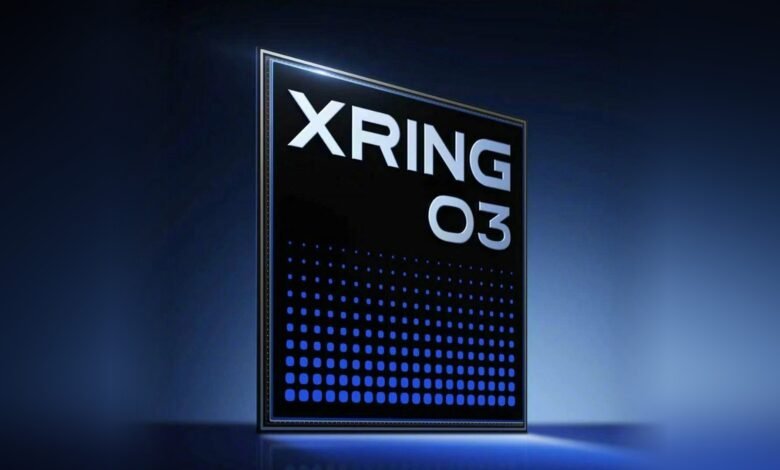
Xiaomi unveiled the Xring O3 today at an event in China. It is the Xiaomi’s second flagship smartphone processor designed in-house. Reuters reports that TSMC, the Taiwanese contract manufacturer that also makes chips for Apple and Qualcomm, will build it on a 3-nanometre process. The chip has already entered mass production. Its first devices are the Xiaomi 18 Fold, a folding phone launching in China in September 2026, and the Xiaomi Pad 9 Pro Max tablet.
The chip: ten cores, 24 billion transistors
A system-on-chip (SoC) is the piece of silicon that runs a phone: processor, graphics, memory controller and AI hardware on one die. Most Android makers, Xiaomi included, buy theirs from Qualcomm or MediaTek. Designing your own is expensive and rare. Apple, Samsung, Huawei and Google do it. Xiaomi joined them in May 2025 with the Xring O1.
The Xring O3 has 24 billion transistors, up from 19 billion in the O1. The CPU has ten cores, six of them large performance cores, with a top clock speed of 4.35GHz. Xiaomi says the new 16-core GPU is 85% faster than the Xring O1’s, and that the chip is the first in any phone to support LPDDR6, the next generation of mobile memory, with bandwidth of 113.8GB/s. The company also claims an AnTuTu benchmark score of 5.22 million, which would be the first time a phone chip crosses the five million mark. These are Xiaomi’s own launch-day numbers. Independent reviews will test them when the phone arrives in September.
There is no Xring O2. The naming jumps straight from O1 to O3.

The Xring O1 sold in small numbers
The Xring O1 shipped in the Xiaomi 15S Pro phone and Pad 7 Ultra tablet, both sold only in China. Xiaomi says cumulative shipments of O1 devices have passed 1 million units, of which roughly 150,000 are smartphones. Xiaomi sells tens of millions of phones every quarter, so the Xring O1 was a proof of concept rather than a volume product. With the Xring O3, Xiaomi expects to ship 200,000 to 300,000 units of the 18 Fold.
The money behind the programme is not small. Lei Jun, Xiaomi’s founder and CEO, committed 50 billion yuan (about $6.9 billion) to chip development over ten years when he unveiled the O1 in May 2025. A company that designs its own chips depends less on Qualcomm’s prices and release schedule, and can tune the silicon for its own devices the way Apple does.
The politics have calmed down, for now
When the Xring O1 launched, we covered how the US had just barred American firms from supplying chip-design software to Chinese companies, a move that threatened to end Xiaomi’s chip programme at one generation. That ban lasted six weeks. The US rescinded it in July 2025 as part of a trade deal in which China resumed rare earth exports. The Xring O3’s existence shows Xiaomi kept its TSMC access too. That access still depends on US policy, and a future dispute could cut it again.
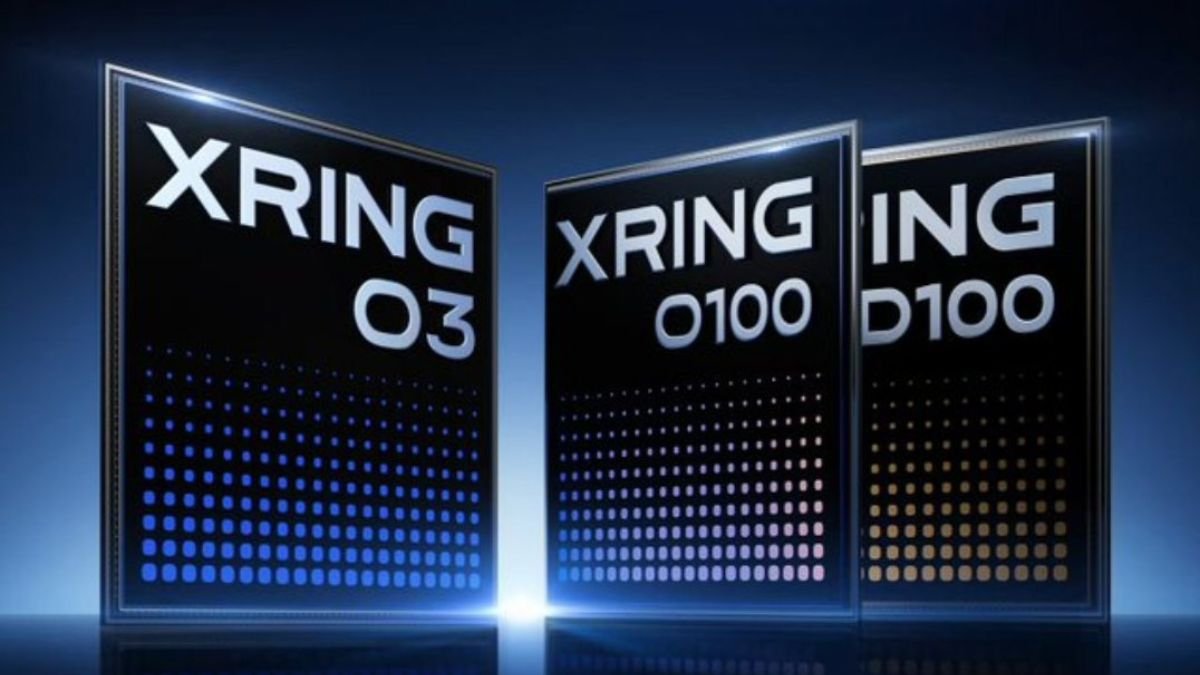
Xiaomi also announced two more chips. The Xring O100 is a 6nm accelerator for running large AI models on devices. The Xring D100 is a 3nm chip for assisted driving in Xiaomi’s electric cars, due for deployment in 2027.
In Kenya
Every Xiaomi, Redmi and POCO phone sold in Kenya runs a Qualcomm or MediaTek chip, and Xiaomi has not announced the 18 Fold or any Xring device for markets outside China. The thing to watch is whether that changes: the first Xring phone sold globally would be the sign that Xiaomi believes its chips are ready for full scale. Let’s wait for September.




Join the discussion