
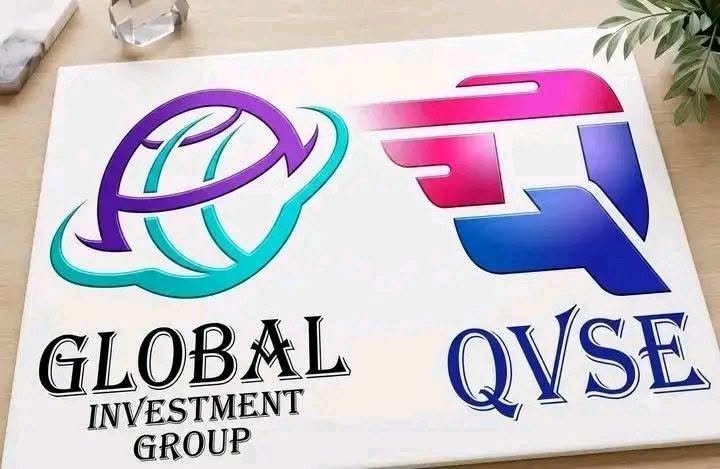
A platform marketed as Global Investment Group is accused of running yet another rug pull on Kenyans. Those who put money into QVSE could not get it out as from 4th September. The company apparently asked for a minimum of about KES 65,000, on a promise of daily returns from shares in Apple, Tesla and Nvidia. Parliament was told it recruited among teachers, small-scale traders and bodaboda riders.
Well, in our research, we’ve found that registering QVSE cost only USD 50.
We obtained the company’s founding documents from the Colorado Secretary of State, and its registration record from the US Treasury’s Financial Crimes Enforcement Network. They show a company incorporated 14 months ago by a single individual, whose only American registration licenses it to cash cheques and transfer money. We found no record of a Kenyan licence for it. Funny, its own material says its US securities registration is “still underway”.
From 4 September, in place of a withdrawal screen, account holders on the platform got a notice from its “Market Surveillance Division”. The notice alleged “severe violations” by customers and cited the USA PATRIOT Act and FINRA Rule 3310. QVSE doesn’t fall under that rule. It is an anti-money-laundering obligation binding FINRA member firms, and QVSE is not one.
A USD 50 company
Quant Vest Stock Exchange Limited was incorporated in Colorado on 9 June 2025 at 9.27pm. The filing fee was USD 50. The entity number is 20251650652.
QVSE tells investors it was founded in April 2022 and is headquartered in New York. The Colorado record begins in June 2025.
One person appears on the Articles of Incorporation. Marc Hudon is named as the incorporator, as the registered agent, and as the individual who delivered the document for filing. All three entries carry the same address as the company, 3190 South Vaughn Way in Aurora, Colorado. The company authorised 10 million common shares. Material promoting QVSE includes a share certificate in Hudon’s name for 10 million shares, which would be the entire company, though we have not been able to authenticate that certificate.
Colorado issued a Certificate of Good Standing, number 17384682, on the day the company was formed. We validated it against the Secretary of State’s checker and it is genuine. Such a certificate confirms a company exists and has paid its fee. It is not a licence to do anything.
The company has filed three documents in its entire life: the Articles, a periodic report notice in May 2026, and on 2 June 2026 a change of registered agent, replacing Hudon with a commercial agent firm in Denver. Fifteen days later the domain qvsewx.com was registered. That domain was taking sign-ups by August 2026.
What the American registration actually covers
QVSE’s marketing rests on one real US filing. A press release issued in its name in September 2025 was headlined “Quant Vest Stock Exchange (QVSE) Maintains U.S. MSB Certification, Reinforcing Trust in International Markets”.
The registration exists. We downloaded the transcript from FinCEN’s MSB registrant search. Number 31000302288613 was received on 10 June 2025, the day after the company was formed. It covers eight activities: check casher, dealer in foreign exchange, issuer of money orders, issuer of travellers’ cheques, money transmitter, seller of money orders, seller of prepaid access, and seller of travellers’ cheques.
None of them covers trading shares or securities, or running an exchange. The number of branches recorded is zero, so the New York headquarters does not appear on the company’s own federal record either.
Every registration transcript FinCEN issues carries the same standard warning, printed at the top: “FinCEN does not recommend, approve, or endorse any business that registers as a money services business. Any such claim and similar claims are false and may be part of a scam or attempt to deceive consumers.” It is boilerplate, applied to every registrant. It is also the opposite of what the September 2025 press release told readers.
What Kenyans were shown
In November 2025 the QVSE homepage ran the Colorado certificate as its main banner, beside live-looking prices for Apple, Tesla and Nvidia.
Elsewhere its materials describe it as “a stock exchange strictly regulated” by the SEC and FINRA. Its user agreement was never finished: the governing law clause still reads “[for example: Delaware]”, placeholder included.
Sign-up ran through invitation codes. The registration form carried an invite code field, and we found two different codes already filled in, in archived captures taken on 21 July and 5 August 2026.
Parliament asked, and then stopped
On 12 August, in the afternoon sitting, Matungulu MP Stephen Mule asked the Departmental Committee on Finance and National Planning for a statement. He told the House that reports indicated the platform targets “every citizen, small-scale traders, teachers, bodaboda operators, and other economically vulnerable groups”, and that members could make one trade a day, after a signal sent at 4pm.
He asked whether either entity is licensed, who owns and runs them, whether anyone had investigated claims that the platform is an unlawful investment or pyramid scheme, and what protection exists for people who have lost money. Temporary Speaker Martha Wangari gave the committee two weeks.
We read every National Assembly Hansard from 28 July to the last published sitting on 27 August. QVSE appears once, on 12 August. We’ve not found evidence of the committee answering the House.
Ghana acted six weeks earlier
On 22 July, Ghana’s Securities and Exchange Commission named Quant Vest Stock Exchange in a public notice listing 23 entities promoting investment products without a licence, under the Securities Industry Act, 2016.
Kenya’s Capital Markets Authority has published nothing about QVSE. We searched its site for QVSE, Quant Vest Stock Exchange and Global Investment Group, and found no notice, no investor alert and no statement about any of them. We have found no record of a Kenyan licence for either name.
That silence overlaps a licensing deadline. The Virtual Asset Service Providers Act came into force in November 2025, the regulations were gazetted in July 2026, and every platform serving Kenyans has until 4 November 2026 to hold a licence from the CMA or the Central Bank. QVSE was operating in Kenya throughout that period.
A certificate of incorporation, a registration number and a page of American acronyms cost very little and prove nothing about whether a company may lawfully hold your money. The CMA and CBK licensee registers are public and free to search, and they are the only place that answer exists. We said the same after CBEX collapsed in April 2025.
Right of reply
What we have directly: the Colorado Articles of Incorporation, the company’s Colorado filing history, its validated Certificate of Good Standing, its FinCEN registration transcript, the Hansard of 12 August, Ghana’s public notice, dated captures of the platform’s own pages, and the domain records.
What we have not seen for ourselves: the share certificate in Marc Hudon’s name; and QVSE’s compliance page and user agreement.
We could not exhaustively search the CMA licensee database, so we say only that we found no record of a licence.
We have not been able to reach QVSE, Global Investment Group or Marc Hudon.







How do we understand as Kenyas the company is legal or not
How do Kenyans keep falling for this? How do lawmakers fail to regulate these? Right now they’ve given people hope for getting their funds back via referral but could this be another loophole to trap more?
I want to say it’s greed. Kenyans need to know that there are no quick get rich schemes that are real. Unless it’s selling chicken and corruption.
Kijani kibichi : get rich or die trying