
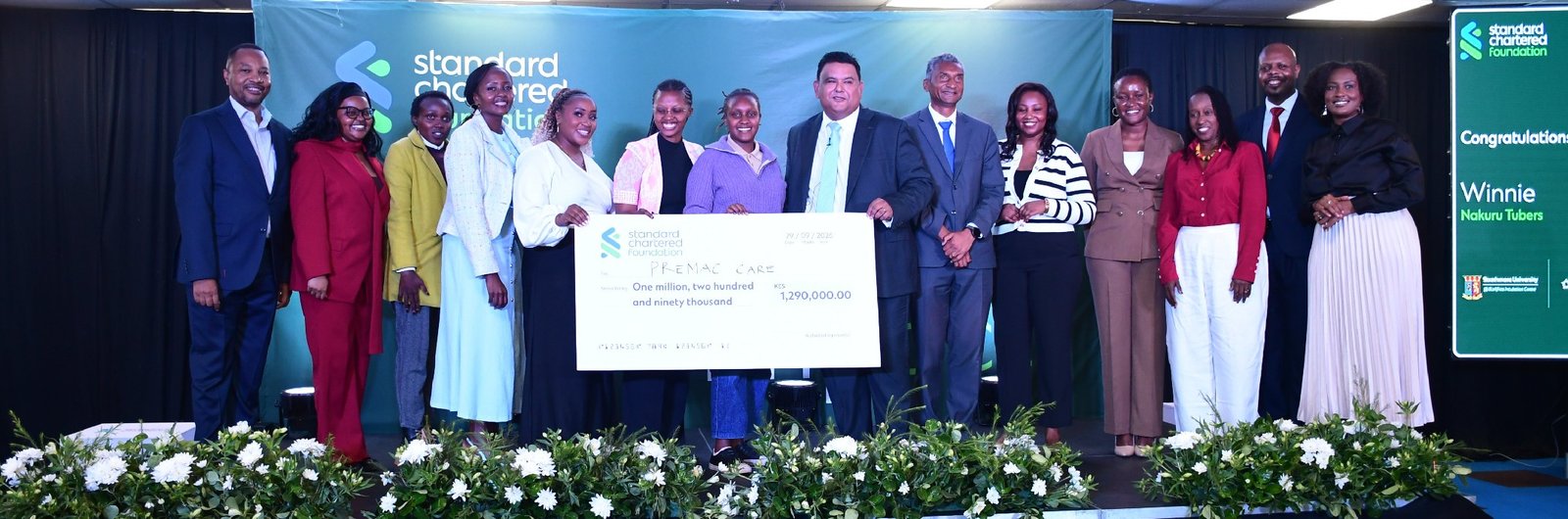
Seven Kenyan women-led startups received a combined KES 9 million in grants after completing the ninth Women in Tech Kenya Accelerator. Each award is about KES 1.29 million. The winners were chosen from 15 founders who finished a 12-week programme at Strathmore University’s @iBizAfrica incubator, which helps young businesses develop their products and plans for reaching customers.
The programme is funded by the Standard Chartered Foundation and run with Village Capital, an organisation that works with startups, and @iBizAfrica. It combines business training, mentorship and introductions to potential investors with grants for selected companies. The cohort’s launch terms described the awards as equity-free, so the founders do not give up a share of their businesses in exchange for this funding.
The seven winners work across healthcare, education and agriculture.
- Premac Care connects families to trained professionals for maternal, newborn and elderly care.
- ChipuRobo makes locally fabricated kits for teaching artificial intelligence and robotics.
- Uptyke Consulting is developing digital lessons that use sign language, audio and interactive content for learners with disabilities.
Agriculture accounts for four of the seven awards.

- Nakuru Tubers uses digital tools to connect smallholder farmers with farm inputs it describes as verified.
- FishBox Africa is developing farm management software and automated feeders for fish farmers, while
- Trident Analytics uses connected devices and software to help aquaculture farmers monitor their operations.
- Seta Farm turns organic waste into mushrooms through a production network intended to create income for women and young people.
What the grants cover
The money is intended for product development and business growth. The judges assessed business models, market opportunity, innovation, growth potential and social or economic impact. Strathmore did not set out a payment timetable or any spending conditions in its announcement, so the award does not tell us how much cash each founder has already received or when it becomes available.
This is the programme’s ninth Kenyan cohort since it began in 2017. It has awarded grants at similar stages before: in 2024, we covered seven startups receiving KES 8.75 million after the seventh cohort. This year’s KES 9 million is the amount shared by the seven winners. The cost of running the accelerator and any investment raised by the companies are separate figures.
The distinction matters because the organisers announced a KES 22.5 million commitment when they opened applications for cohort nine in March. That larger figure was for the programme, which also trains and mentors founders. It was never presented as the amount the seven winners would split. The KES 1.29 million per company is an approximate share of the KES 9 million total.
The grants give each founder capital without selling ownership, and the programme says the winners will receive continued support for six months. What happens next depends on whether those products find paying customers. For now, the announcement establishes who won and the award size; it gives no sales or usage figures with which to judge the businesses’ progress.







Join the discussion