
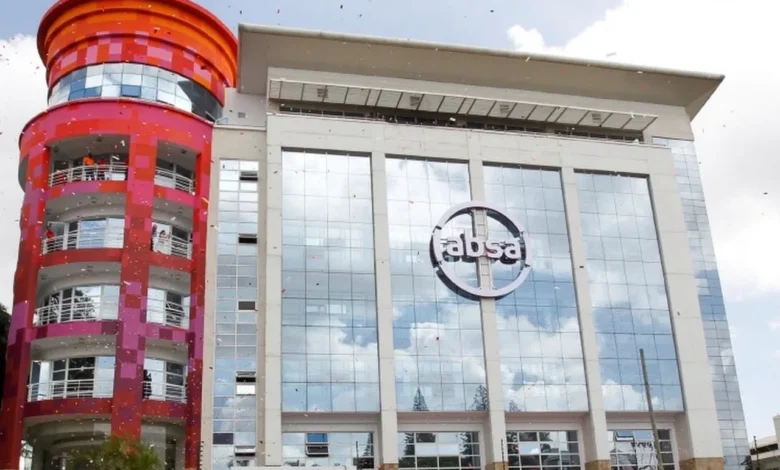
Absa Asset Management, Absa Bank Kenya’s fund management company, has launched a fund that invests outside Kenya. It’s called the Absa Global Multi-Asset Special Fund, and was announced on Thursday 19th November 2026. Absa has put KES 230 million of its own money into it, about USD 1.77 million at that day’s rate of KES 129.97 to the dollar.
It comes in two versions: Kenya shillings and US dollars. You need at least KES 250,000 to join the shilling version, or USD 2,500 (about KES 325,000) for the dollar one. Top-ups after that must be at least KES 100,000 or USD 1,000 (about KES 130,000). Your money is locked in for six months from the day you invest.
Those terms sit on top of the rules for “special” funds.
Why it has to be a special fund
The fund is a unit trust, which pools many people’s money for a licensed manager to invest. In Kenya, the Capital Markets (Collective Investment Schemes) Regulations 2023 put the four ordinary types (money market, equity, fixed income and balanced funds) into tight boxes. They can hold at most 10% of their money in securities listed on stock exchanges abroad, and 5% in unlisted ones. None of them can borrow to invest.
So a fund that wants to invest much more abroad has to be a special fund. A special fund follows the strategy its manager writes into the information memorandum, the fund’s rulebook, and the Capital Markets Authority (CMA) approves each one case by case. It may also borrow, at a ratio the manager has to disclose.
The same rules set a floor for investors. Each one has to put in at least KES 100,000 and keep at least that much in the fund, unless market falls push the value lower. That makes Absa’s KES 250,000 minimum its own choice, two and a half times the legal floor. We think the rule also means you can’t withdraw part of your money and leave less than KES 100,000 behind. The lock-in is Absa’s call too. The rules don’t require one, and by default a fund must buy back your units when you ask in writing. After the lock-in, the manager has three days to pay you once it accepts a withdrawal.
The CMA approved both versions earlier this year. NCBA Bank Kenya is the trustee, which checks the manager follows the rules, and Standard Chartered Bank Kenya holds the assets as custodian.
What the fund buys, and what Absa hasn’t said
The fund can invest in shares, bonds, cash, commodities, precious metals and fixed deposits. Both versions invest abroad. The dollar version keeps your savings in dollars, so in shilling terms you gain when the shilling weakens and lose when it strengthens.
The press release gives no management fee. Nor does it say how much of the fund will go abroad, which markets it will buy into, whether it will borrow, or whether each top-up starts its own lock-in. The strategy and any borrowing limit have to be in the information memorandum, so ask Absa for it before you invest.
Where Absa stands among special funds
Special funds grew faster than any other type of unit trust between March and June 2026, by 24%. At the end of June they held KES 252.8 billion, up from KES 203.5 billion, or 26.6% of the KES 948.7 billion in all Kenyan unit trusts, by the CMA’s figures for the quarter.
Most special fund money sits in one scheme. The main shilling and dollar Mansa-X funds, under the Standard Investment Trust Fund scheme, held KES 184.4 billion, about 73% of it. NCBA and CIC already run global special funds.
Absa’s five existing funds held KES 31.4 billion at the end of June, making Absa Unit Trust Funds Kenya’s eighth-largest scheme. Most of it, KES 25.8 billion, sat in its shilling money market fund.
The KES 230 million seed is small next to those numbers, but we think it matters, because a new fund with no investors would struggle to spread across several asset classes and countries. Absa hasn’t said whether or when it will take that money back out.
Tougher checks may also be coming for special funds. Last month we reported that the CMA wants unit trusts rated for risk, with extra tests for special funds on cash flow, liquid assets and borrowing. No draft rule was public then.
What we think: this fund suits people who already keep emergency money somewhere they can reach, such as a money market fund, and want part of their savings working outside Kenya. The lock-in rules it out for money you might need within six months. Once Absa shares its fees, compare it with the dollar global funds NCBA and CIC run.



Join the discussion