
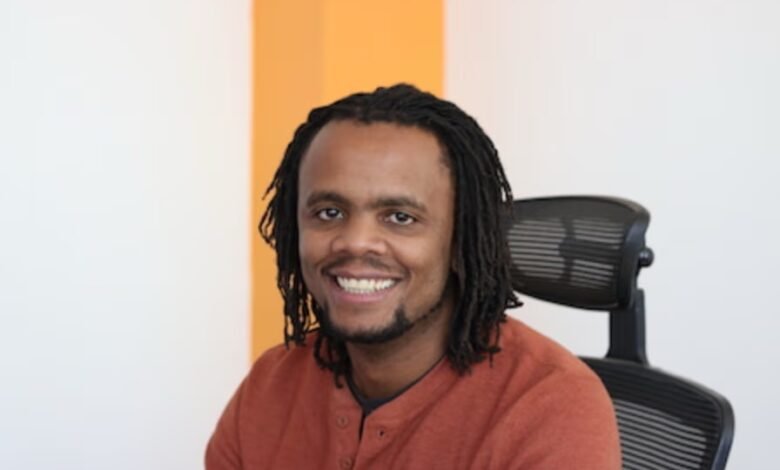
Africa’s Talking co-founder Sam Gikandi says he has gone seven months without a salary. He accuses the International Finance Corporation (IFC), a World Bank Group institution that invests in private businesses, of trying to take control of the company and acquire it at a depressed price.
In his account published on 4th October 2026, given in answers to a business newsletter, Gikandi maintains that no board has removed him as chief executive officer (CEO). He first said publicly on 28th September 2025 that he had been “kicked out” of the company. The dispute is also about who can convene Africa’s Talking’s board, and so who decides the company’s future. Earlier court decisions show competing claims to executive authority, but have not established his allegation of an investor-led takeover.
Africa’s Talking is a Kenyan communications technology company, founded in 2010, whose platform connects developers to mobile operators. Through its application programming interfaces, or APIs, developers can build text messaging and voice calls into their software. They can also use airtime services and USSD, the menu sessions accessed through short codes on phones. Businesses connect through Africa’s Talking without having to build each operator connection themselves.
Gikandi described the financial and personal strain in his statement:

“I am on 7 months without a salary, on the verge of financial ruin, at the mercy of landlords and creditors. No Board has removed me as the CEO yet the World Bank are just sitting there, driving me to the verge of a mental breakdown. All so that they can take control of the Board and acquire the company at a depressed price. Employees are praying and fasting daily wondering when the siege will end.”
His account is about his own salary and says nothing more on whether other employees have been paid. His allegations about IFC’s intentions remain unproven.
The competing claims to leadership
Gikandi has already gone to court over Paul Wamalwa’s authority to act for Africa’s Talking. In a ruling delivered on 15th May 2026, the Employment and Labour Relations Court dismissed his application challenging an affidavit Wamalwa had filed on the company’s behalf.
Gikandi argued that Wamalwa had never been appointed CEO and lacked authority to represent Africa’s Talking. Judge Jemimah Keli noted that minutes from the company’s 27th June 2023 annual general meeting identified Wamalwa as CEO designate. He was performing the role while awaiting formal board appointment. The court found that Wamalwa had authority as a director to represent the company. It also found no basis to doubt his affidavit’s assertion that he was CEO, since Gikandi had not said who the CEO was if not Wamalwa.
The decision concerned representation in an employment case brought by Kevin Karuga, a company lawyer, against Africa’s Talking and Gikandi. It did not deal with Gikandi’s pay or whether he had been removed. A later ruling in Karuga’s case, on 3rd July 2026, records both men’s claims: Gikandi described himself in his court papers as group CEO and chairperson of the board, while Wamalwa swore in March 2026 that he was CEO. Africa’s Talking’s own December 2025 community event page also listed Wamalwa as CEO. In May 2026, Gikandi brought his own petition against Africa’s Talking and Wamalwa in the same court, and it was listed for mention before Justice Monica Mbaru on 28th September 2026. He says that petition contests his removal and the withholding of his pay.
The fight over the board also reached the High Court. A ruling on 30th July 2026 records Gikandi’s attempt to compel a board meeting over alleged operational deadlocks and an alleged failure of the company’s Series A investors to maintain their board representation. His application named Wamalwa, IFC and Orange Digital Ventures US LLC, the venture arm of the telecoms group Orange, as respondents.
IFC challenged how Gikandi had brought the application and invoked the company’s arbitration agreement, which allows disputes to be decided outside court by arbitrators. Gikandi did not file a replying affidavit. In written submissions, he argued that the dispute was about company law and belonged in court, and that IFC had taken no steps to start arbitration. Judge BW Murunga struck out the application because Gikandi had filed a standalone notice of motion without a properly instituted suit to support it. The judge awarded IFC costs.
In his reasoning, the judge also found that the governance dispute fell within the parties’ arbitration clauses and directed them to arbitration. The formal orders only struck the application out; IFC’s fallback requests for arbitration and a stay needed no decision once that was done. The ruling did not settle whether IFC had engineered a takeover or withheld Gikandi’s salary.
How the shareholder dispute developed
In an earlier shareholder case, a ruling on 27th January 2025 records how co-founder and former CEO Bilha Ndirangu and four other applicants disputed her removal as a director in 2023, including the use of employee share-plan votes. She said her removal was retaliation for supporting a whistleblower investigation that implicated Gikandi and others in workplace misconduct. Gikandi, then CEO, and Wamalwa, who was proposed for her board seat, were among the respondents. Africa’s Talking defended the decision under its shareholders’ agreement. The High Court stayed the proceedings and referred that dispute to arbitration.
IFC’s investment disclosure records an equity investment of up to USD 6 million, or about KES 777 million at the 7th October 2026 rate of KES 129.56 to the dollar, signed in April 2018. Under IFC’s role, the disclosure lists “IFC’s experience in corporate governance as company scales.”
An earlier news report that IFC had sued Africa’s Talking was retracted in March 2024 after IFC denied suing the company. The July 2026 ruling does show IFC in a later case, as a respondent opposing Gikandi’s application.
The October account says IFC was approached for a response, but contains no answer to the latest allegations. IFC’s arguments in the court records are about procedure and arbitration, and they do not touch Gikandi’s salary or the price of the company.
For developers and businesses using Africa’s Talking, the practical concern is whether the leadership dispute affects their services. The court decisions address corporate authority and procedure; none of them describes a service outage. The company’s status page showed all systems operational on 8th October 2026, with no incident logged since September. In April, when Truecaller opened its business messaging product to partners, we listed Africa’s Talking among the companies competing for that market.
Gikandi’s allegations deserve answers supported by payroll records and board decisions. The published rulings document a long governance dispute without testing his claims about IFC’s motives, and his own petition, which he says covers his pay, is still before the employment court.







Join the discussion