

For the better part of two decades, search engines like Google, Bing, and DuckDuckGo have been the internet’s front door. Need to settle an argument? Google it. Looking for the nearest nyama choma spot? Google it. Even when you type “Google” into Google, it still makes sense.
But while search remains one of the world’s most universal digital habits, new data from We Are Social and Meltwater’s July 2025 Digital Global Statshot reveals something surprising: Africa is leading the world in search engine use.
Morocco and South Africa lead, Kenya not too far behind
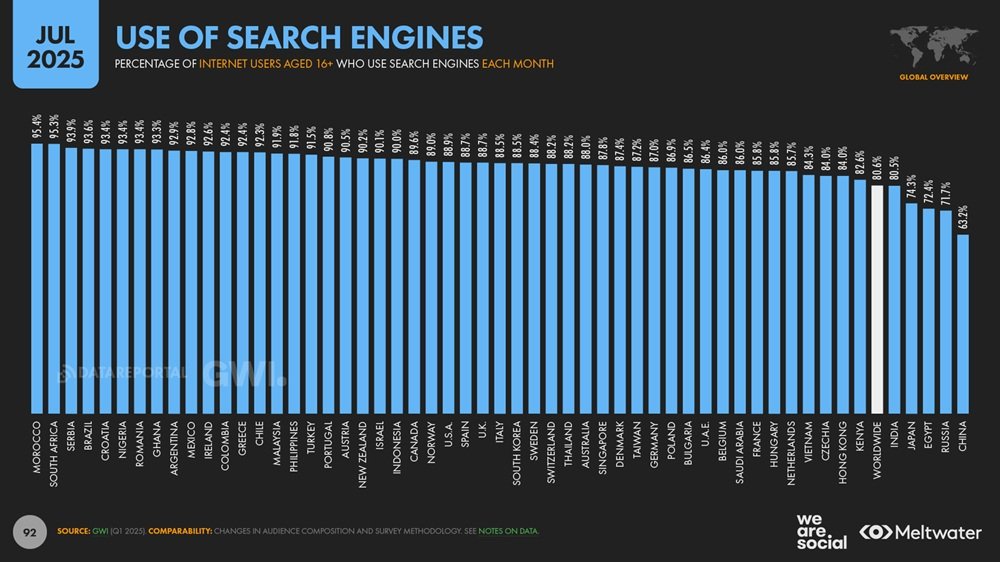
At the very top of the global rankings sits Morocco, where a whopping 95.4% of internet users aged 16+ say they use search engines every month. Hot on its heels is South Africa at 95.3%, followed by Serbia at 93.9%, Brazil at 93.6%, and Croatia/Nigeria/Romania all tied at 93.4%. while Ghana also makes the top 10 with 93.3% alongside Argentina (92.9%) and Mexico (92.8%).
Kenya? We’re a little further down the list at 80.6%, putting us just below the worldwide average of 80.6%. That still means 8 in 10 Kenyan internet users are firing up Google or another search engine every month. And given Kenya’s vibrant online culture, from politics to football debates, that tracks perfectly.

Search is universal across age and gender
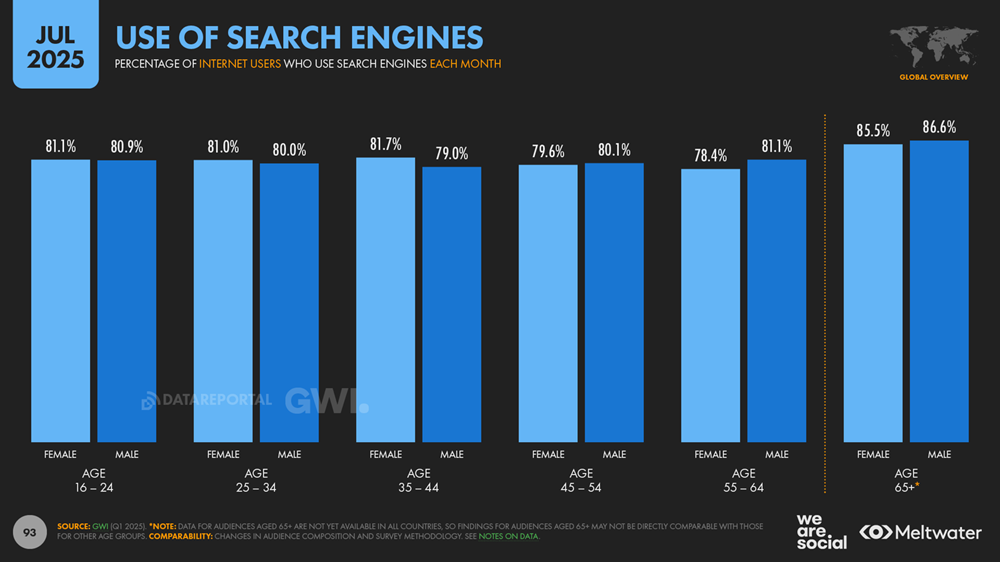
Interestingly, the numbers show that search engines are one of the few digital habits that cut across age and gender almost equally. Whether you’re a Gen Z student in Nairobi, a millennial in Mombasa running an online side hustle, or a retiree in Eldoret trying to figure out how to venture into large scale chicken farming, chances are you’re Googling something every month.
In fact, among older adults globally (65+), search use is even higher, with 85.5% of women and 86.6% of men.
Search is slipping (a little)
Despite Africa’s dominance, the worldwide picture hints at a shift. Back in 2021, 84.1% of online adults said they used search engines monthly. Fast-forward to 2025, and that number has dipped to 80.6%.
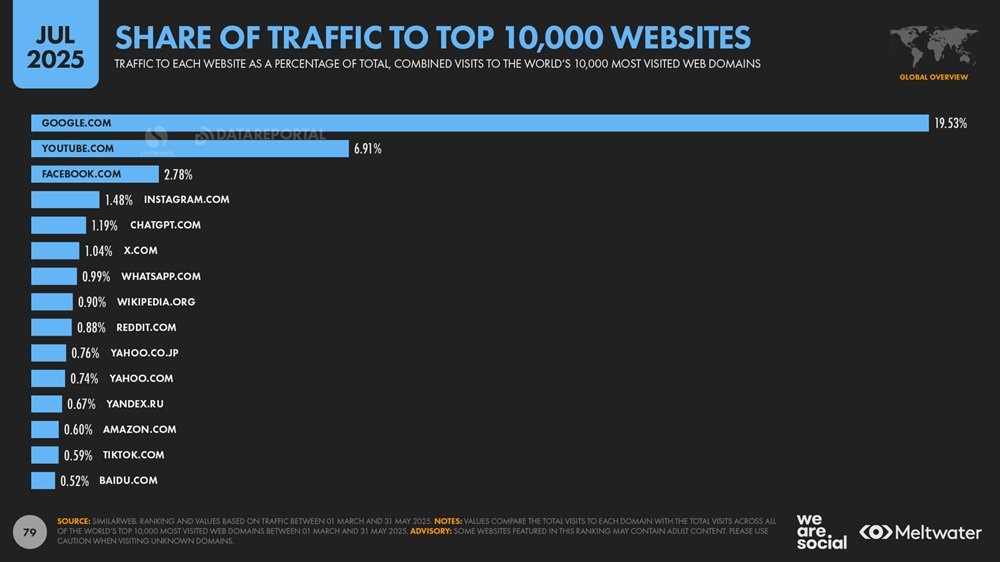
Why the slide? Part of it could be the rise of AI chatbots, TikTok search habits, or even people going straight to apps like Instagram, X or Amazon to look for information and products. But don’t get it twisted: Google is far from dead. In fact, Similarweb estimates Google.com pulls in an average of 83 billion visits every month (with some sources saying over 100 billion). That’s nearly 20% of all traffic to the world’s top 10,000 websites.
So yes, search might be evolving. But it’s still the beating heart of the internet.
Africa’s strong showing in search usage is no small thing. It highlights how central the internet has become for learning, trade, and connection across the continent. From Moroccan students researching for school projects, to South African shoppers comparing deals, to Kenyans debating whether Gor Mahia is truly the greatest football club in East Africa (we’ll let the comments section decide), search is the quiet engine driving it all.
For Kenya, being at 80.6% might look modest compared to Morocco and South Africa, but it still reflects the reality that Google is the country’s digital town square – whether or not AI and new platforms chip away at search’s dominance.









Join the discussion