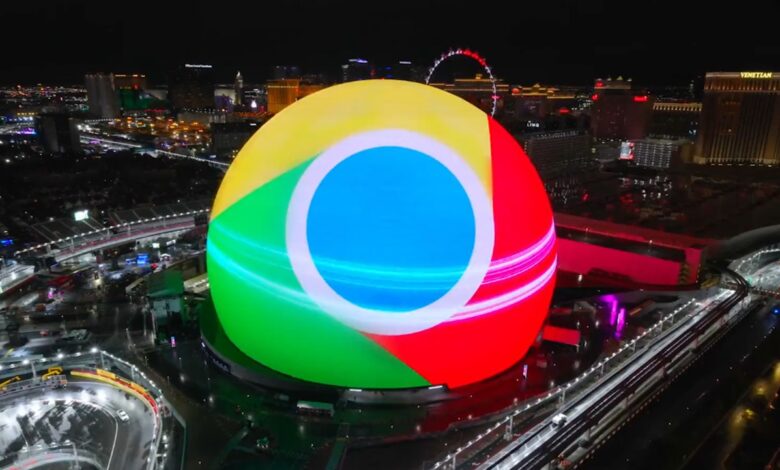
After nearly four years of development, Google is finally rolling out native HTTP Live Streaming (HLS) playback to Chrome on desktop with version 142 and newer, a major upgrade that’s also arriving on Microsoft Edge and other Chromium-based browsers.
The change means that opening a .m3u8 link in Chrome or Edge no longer triggers an automatic file download. Instead, the stream now plays directly in the browser, just like it already does on Chrome for iOS and Android. For developers, creators, newsrooms, and anyone who handles live streams or adaptive video feeds, this closes one of the longest-standing gaps between desktop Chrome and the rest of the ecosystem.
The feature first surfaced publicly in mid-2025 when Windows Report spotted a Chromium Gerrit entry referencing a new flag — ENABLE_HLS_DEMUXER — which hinted at internal testing of a built-in HLS player. At the time, enabling the flag in Chrome Canary successfully unlocked native playback, confirming that Google was actively preparing wider support.
HLS, originally developed by Apple, remains one of the most widely used streaming protocols across services like YouTube, Netflix, and countless live TV platforms. It works by splitting a stream into small segments referenced inside an .m3u8 playlist, allowing efficient adaptive bitrate streaming and lower bandwidth consumption compared to serving full MP4 files.

Before today’s rollout, desktop Chrome users had to rely on extensions like Native HLS Playback, Inline HLS Player, and others — some with 100,000+ installs — to play these streams. The native support now eliminates that dependency entirely.
Beyond convenience, HLS has several real-world advantages:
- Adaptive streaming: Playback adjusts automatically based on available bandwidth.
- Lower data usage: The browser fetches tiny video chunks instead of full files.
- Reliability: Each segment is delivered securely over HTTPS.
- Widespread compatibility: Supported across nearly all modern devices and streaming services.
With Chrome and Edge finally onboard, desktop browsers now match the mobile experience and the industry’s baseline expectations for modern video delivery.
Because this is a core Chromium update, the feature isn’t limited to Google Chrome. Microsoft Edge v142 and newer also ship with native HLS playback, and other Chromium browsers will implement it as they update to the same engine version.
This ensures that everyday users, journalists, developers, and streamers across all platforms—Windows, macOS, Linux, and ChromeOS—get the same seamless playback experience that mobile users have had for years.



. The Mac mini is Apple's small desktop, an aluminium box roughly 5 inches square that ships without a screen, keyboard or mouse. You supply those, which is why it has been the cheapest way into a Mac for two decades. The design is unchanged this generation. ## Where the $899 comes from The previous Mac mini launched in October 2024 at $599 with the same 16GB of memory and 256GB of storage. We [covered that launch](https://tech-ish.com/2024/11/04/m4-mac-line-up-apple-refresh/) at the time, when the M4 Pro cost $1,399. In May 2026 Apple dropped the $599 version, brought it back in late June at $799, and pushed the M4 Pro to $1,599, [changes tracked by MacRumors](https://www.macrumors.com/roundup/mac-mini/). So the same specification has gone from $599 to $799 to $899 in under two years, a 50 percent rise on a machine whose whole pitch is being the affordable Mac. [AppleInsider calls $899](https://appleinsider.com/articles/26/08/25/m6-mac-mini-arrives-in-ram-and-ssd-constrained-environment) the highest starting price it has ever had. The original 2005 model was $499. ## Why the price went up On its earnings call on 30 July 2026, chief executive Tim Cook told analysts: "we reluctantly raised prices, I would say. We did it because we're in what I would characterize as a 100-year flood on the memory pricing." The [full transcript is public](https://www.fool.com/earnings/call-transcripts/2026/08/07/apple-aapl-q3-2026-earnings-call-transcript/). Three companies make almost all the world's memory chips: Samsung, SK hynix and Micron. Since late 2025 they have moved factory capacity towards the specialist memory AI data centres buy, where margins are higher, leaving ordinary memory scarce. [TrendForce reported in July](https://www.trendforce.com/presscenter/news/20260703-13134.html) that contract prices would rise another 13 to 18 percent in the third quarter of 2026, after jumps of roughly 60 percent in the quarter before. Apple's finance chief Kevan Parekh told the same call that memory costs explained more than 100 percent of the company's sequential fall in profit margin. The same pressure is expected to hit the iPhone 18, covered in our [piece on iPhone pricing in Kenya](https://tech-ish.com/2026/08/02/iphone-18-split-launch-kenya-prices/). ## What you get The M6 has a 12-core processor and 12-core graphics, with a dedicated AI accelerator in every graphics core. Apple claims up to 4 times faster AI work and 2 times faster graphics than the M4 Mac mini, on its own July 2026 tests. It is also the only M6 tier Apple plans to make, since it is skipping the M6 Pro and Max to bring the M7 forward, as our [piece on both chips explains](https://tech-ish.com/2026/08/25/apple-m6-m5-ultra-chips-explained/). Base memory stays at 16GB and base storage at 256GB, so the extra $300 buys speed rather than capacity. The M5 Pro model gets Thunderbolt 5, the fast port standard used for external drives and displays, and can be linked to other Mac minis to run large AI models locally. The M6 keeps the slower Thunderbolt 4. Both gain Wi-Fi 7 and 2.5Gb ethernet, and both run macOS 27, which brings the rebuilt Siri that Apple [showed at WWDC in June](https://tech-ish.com/2026/06/02/wwdc-2026-siri-ios-27-cook-last-keynote/) as an English-only beta later this year. Apple said in February that Mac mini production would come to the United States for the first time, at a Houston plant, and Cook confirmed in July that assembly starts there this year. Apple [opened a training centre at the site on 13 August](https://www.apple.com/newsroom/2026/08/apple-opens-advanced-manufacturing-center-in-houston/). ## What this means in Kenya Apple has no store here, so the machines arrive through authorised resellers and importers on their own timelines. At about KES 129.45 to the dollar on 24 August 2026, $899 converts to roughly KES 116,000. Nobody will pay that. Computers enter Kenya at zero import duty, but a 2.5 percent import declaration fee, a 2 percent railway development levy and 16 percent VAT all apply, and VAT is charged on top of the other two. With air freight, our working estimate puts the landed cost near KES 150,000 before any shop takes a margin. The outgoing M4 Mac mini sells locally from about KES 89,000 at [iTey Store](https://iteystore.co.ke/category/mac-mini-m4-m5-in-kenya-apple-desktop-computers) to KES 137,000 at [Price in Kenya](https://www.priceinkenya.com/product/113317-apple-mac-mini-m4). Early Kenyan pricing on new Apple hardware runs high and then falls. The MacBook Neo landed at KES 130,000 against a $599 list price [in March](https://tech-ish.com/2026/03/25/macbook-neo-price-in-kenya-alternatives/), and iPhone 17 prices [dropped sharply three months after launch](https://tech-ish.com/2025/12/30/iphone-17-iphone-air-prices-in-kenya-go-down-crashing-just-3-months-later/). So wait for stock to settle rather than paying the first asking price. If your current Mac still does your work, nothing in the memory forecasts suggests a cheaper Mac mini next year. The thing to watch is whether Kenyan resellers list the M6 before the 22 September shipping date.](/wp-content/uploads/2026/08/Apple-M6-and-M5-Ultra-hero-260825_big.jpg.large_2x-390x220.jpg)


Join the discussion