

In Swahili wisdom, there is a saying that never fails to hold water in the corporate world: “Lisemwalo lipo, na kama halipo, laja.”
Loosely translated, it means “What is being spoken of exists, and if it doesn’t yet, it is coming.” Or, in the common tongue: Where there is smoke, there is fire.
This week, the tech world was choked by a massive cloud of smoke. A bombshell investigative report from Android Headlines claimed that OnePlus, the brand that once told us to “Never Settle”, is being dismantled. The report paints a grim picture of a company in freefall: shipments dropping by 20%, headquarters shuttered without announcements, and western teams gutted to skeleton crews.
The reaction? A swift, firm denial. But only from one specific corner of the map.
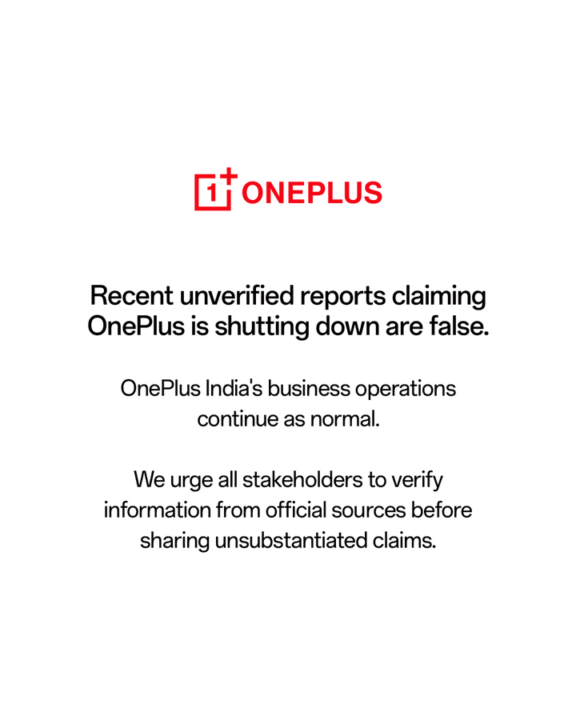
In a brief statement shared on X, OnePlus India CEO Robin Liu dismissed the claims as “misinformation,” insisting that OnePlus India is “operating as usual and will continue to do so.” The company also circulated an official statement reinforcing that position, urging stakeholders to verify information from official sources before sharing “unsubstantiated claims.”
On the surface, that should have settled the matter. And to their credit, for Indian consumers, business might look normal. India has long been OnePlus’s stronghold.
But if you look closer at the denial, the specificity is what should worry you. It was OnePlus India responding. Not OnePlus Global. Not the HQ in Shenzhen.
While Robin Liu is putting out fires in Delhi, the rest of the OnePlus house seems suspiciously dark. If this were merely a malicious rumor, one would expect a coordinated, global rebuttal from Pete Lau or OPPO leadership. Instead, we have radio silence.
I took a look at their global digital footprint, and the “receipts” are worrying:
- OnePlus Europe account on X hasn’t posted since July 2025, but OnePlus USA remains active as of this week.
- OnePlus Europe on Instagram has had no meaningful activity since October 2025, but OnePlus USAA is active.
- OnePlus Facebook: The page has been a ghost town since the turn of the new year, 2026.
While the US and Europe TikTok accounts show some life, the abandonment of primary communication channels like X and Facebook in key Western markets is not a sign of a company “operating as usual.” It is the behavior of a company that has stopped trying to win.
We’ve seen this playbook before
This is where the Android Headlines report resonates, even if you dispute some of its conclusions.
The smartphone industry has a long history of brands insisting everything is fine right up until they aren’t. Nokia, BlackBerry, HTC, LG: all followed the same trajectory. Retreat from Western markets. Consolidation into “core” regions. Quiet layoffs. Reduced marketing spend. Fewer launches. Then, eventually, absorption or shutdown.
At least Asus chairman, Jonney Shih, had the courage not to refute but instead confirm reports from earlier this month that the brand is getting out of the smartphone business. Going forward, Asus will now focus on commercial PCs and physical AI. Although no new smartphones are coming, you will still get maintenance, software updates, and warranty services for existing smartphones.
OnePlus’ deep integration into OPPO’s pipeline was supposed to prevent this. Shared R&D. Shared manufacturing. Shared service centers. In theory, that safety net should have stabilized the brand.
Yet here we are, with India reassuring fans while the rest of the world hears nothing.
The OPPO-fication is complete
We cannot ignore the context. We’ve witnessed the slow absorption of OnePlus into its parent company, OPPO. What started as “sharing resources” became a full merger. The report from Android Headlines suggests that the $14 billion OPPO pledged to save the brand in 2022 didn’t yield the growth they promised.
If OPPO grew 2.8% while OnePlus shrank 20%, the corporate math becomes ruthless. Why pay for a separate PR team in London or a separate HQ in Dallas when the phone is just a rebranded OPPO Reno?
OnePlus India says the rumors are false. They are doing their job protecting the one market where the brand still has a pulse. But for the rest of the world, the writing is on the wall.
When a global tech brand stops updating its social media, closes regional offices without press releases, and relies on a regional CEO to refute global bankruptcy claims, the fire is already burning.
That’s the uneasy feeling surrounding OnePlus right now.
This does not mean OnePlus is shutting down tomorrow. Your phone will not stop working. Updates will continue. Warranties will be honored. OPPO will make sure of that.
But the bigger question, whether OnePlus still has a future as a global brand with independent ambition, remains unanswered.
And until OnePlus headquarters or OPPO itself steps forward to address these concerns directly, the rumours won’t die. Because smoke, especially this much of it, rarely appears without fire.
For a brand built on being loud, bold, and community-driven, silence may be the most worrying signal of all.
Never Settle, OnePlus once said. Right now, the world is watching to see whether that still means anything.
So, is OnePlus dead? Maybe not today. But the OnePlus that challenged the giants? The OnePlus that built a community? That entity seems to have left the building.