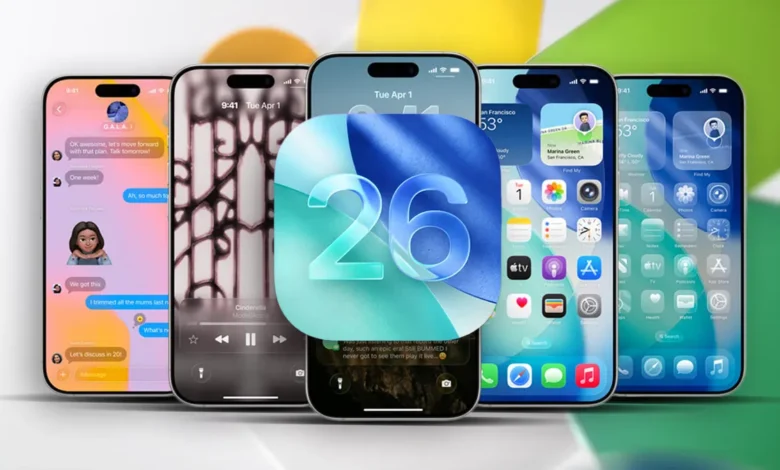
Apple has never been shy about cutting the cord on data tracking, usually to the detriment of advertisers. Now, with the release of iOS 26.3 Beta 3, Cupertino is taking aim at a much bigger, more powerful target: Mobile Network Operators.
A new toggle discovered in the beta software allows users to “Limit precise location from cellular networks.” While this is a massive win for privacy advocates, it requires specific new hardware and carrier cooperation, and unsurprisingly, no African carrier is on the launch list.
Here is the lowdown on the feature that is almost guaranteed to anger law enforcement agencies worldwide.
iPhone users going ghost on the network
Historically, your carrier knows exactly where you are. Even if you turn off GPS, your phone constantly “handshakes” with cell towers, allowing mobile networks (and by extension, governments) to triangulate your position with frightening accuracy. This has become very common in Kenya since the June 2024 protests.
The new feature in iOS 26.3 changes that. It utilizes Apple’s new in-house C1 Modem to obfuscate this data. When enabled, the network gets a general idea of your location for connectivity purposes, but the precise coordinates are masked.
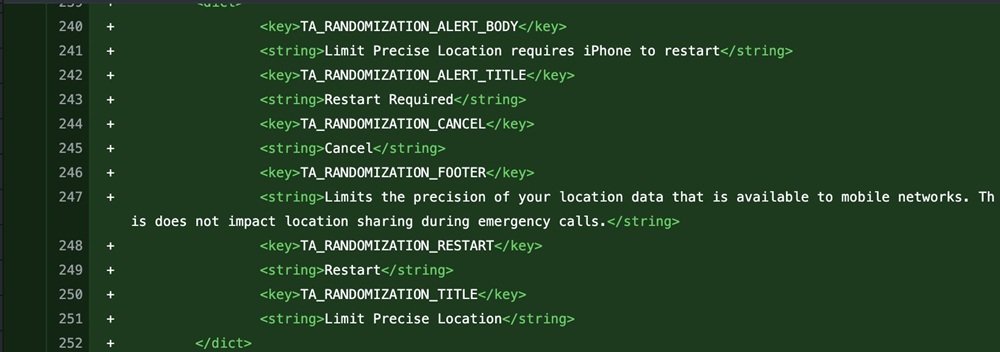
According to Apple’s implementation in the beta:
- Cellular networks receive less precise location data
- Emergency services are not impacted
- Normal location services (GPS, apps, Find My) continue to work as expected
This matters because cellular location tracking via cell tower triangulation and signaling data is often accessed without user-level controls, and in many countries, it’s the data most frequently requested by law enforcement.
Apple has clarified that this does not impact emergency services. If you call 911 or 999, the mask is dropped instantly so first responders can find you.
The C1 modem is a key hardware requirement
You won’t get this feature on your old iPhone 15, the standard 16, or even the premium 17 Pro Max. Because this relies on how the modem talks to the tower, you need a device with Apple’s custom silicon modem (the C1).
Currently, the supported devices are:
- iPhone Air
- iPhone 16e
- iPad Pro (M5)
Looking ahead, supply chain leaks suggest the upcoming iPhone 18 series will fully transition to Apple’s in-house modems, ditching Qualcomm entirely. This means the feature will likely become standard across the lineup by next year.
Carrier support is mandatory, and the list is short
Here is the catch. You can’t just toggle this on; your mobile network provider has to support the protocol. As of Beta 3, the list of supported mobile operators is short and exclusively located in the Global North and Southeast Asia:
- United States: Boost Mobile
- United Kingdom: EE, BT
- Germany: Telekom
- Thailand: AIS, True
Will Safaricom or MTN ever “join the fun”?
This is where things get interesting for us in Africa.
It is an open secret that African regimes have become increasingly repressive regarding digital surveillance. We have seen internet shutdowns and precise tracking of dissidents across the continent. In Kenya and much of Africa, mobile networks sit at the center of:
- SIM registration laws
- Location-based surveillance
- Mobile money compliance (M-PESA, MoMo, Airtel Money)
- Government data access requests, often with limited transparency
A feature that intentionally reduces the precision of cellular location data is likely to raise red flags with regulators and security agencies, especially in countries where telecoms are routinely compelled to cooperate with state surveillance.
It’s one thing for EE or Telekom to sign off on this in Europe. It’s another for Safaricom, MTN, Airtel, or Vodacom to do the same in regions where governments are increasingly sensitive to privacy-limiting technologies. If Safaricom, Airtel, or MTN were to support this, it would severely hamper the ability of local authorities to track individuals via cell tower triangulation without a warrant or emergency cause.
Given the current political climate, it is hard to imagine African regulators like the Communications Authority (CA) of Kenya jumping for joy to approve a feature that makes their job harder. While we would love to see Safaricom or MTN adopt this to champion user privacy in Kenya and neighbouring countries, we aren’t holding our breath. It is far more likely we will see regulatory pushback citing “national security” concerns before we see this toggle go live in Nairobi, Kampala, or Lagos.
That doesn’t mean it won’t happen. But it likely won’t be fast.
For now, if you are rocking an iPhone Air or the iPhone 16e in Kenya, that “Limit Precise Location” toggle will likely remain greyed out.