
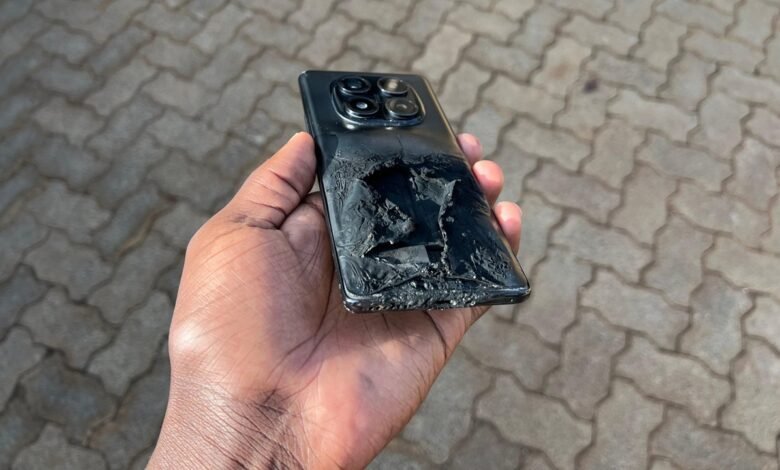

A reported incident involving a Redmi Note 14 Pro user in Ngong, Kenya, has drawn attention after claims that the phone began smoking while charging overnight. According to posts on X dated February 9, 2026, the device allegedly emitted smoke and a strong burning smell around 2 AM, prompting the owner, referred to in some accounts as Alfred, to quickly unplug it and remove it from the premises. No injuries were reported in these accounts.
Several of these posts include photos purportedly showing the device in question, contributing to their rapid spread. Xiaomi Kenya has not issued any official statement regarding these specific claims as of now. However, past smartphone battery incidents have sometimes been linked to factors such as defective units, non-original chargers, overheating, or environmental conditions like high humidity.
Expectedly, the reports have fueled conversations among Kenyan users on X about device safety, especially for budget smartphones. Comments highlight worries over overheating risks during overnight charging and question whether aggressive pricing in markets like Kenya might impact quality assurance. While some posts express alarm, others call for caution until more details emerge.
The reported incident coincides with Xiaomi Kenya’s recent launch of the Redmi Note 15 series, including the Note 15 Pro and Pro+ models, unveiled late January 2026. The new lineup promotes improved battery endurance, durability, and protection features.
The Redmi Note 15 Pro+ features a large silicon-carbon battery with claims of extended life and multi-day usage. In contrast, the Note 14 Pro uses a conventional lithium-ion battery. The timing has amplified discussions about battery reliability in affordable devices.
These reports add to wider conversations about smartphone battery advancements. In a recent video, reviewer Marques Brownlee (MKBHD) discussed why Chinese manufacturers are adopting silicon-carbon anode technology for higher energy density, while companies like Apple, Samsung, and Google have been more conservative.
MKBHD noted challenges like silicon expansion during charging, which can cause stress, swelling, and potential thermal issues. Long-term real-world performance data remains limited, and even minor failure rates could pose risks at scale.
The reported Note 14 Pro case is notable because it involves established lithium-ion technology rather than the newer silicon-carbon approach. If accurate, it underscores that battery safety concerns can arise even with “proven” tech under everyday use, prompting questions about the maturity of emerging innovations for mass-market adoption.
Until further verification or an official response, users are encouraged to follow standard safety practices: use official or certified chargers, avoid charging unattended overnight, and watch for signs of swelling or excessive heat.
We will monitor for any updates, official statements, or additional context. If you have relevant experiences or verified information, feel free to share in the comments.
NOTE: This article is based on reports and discussions circulating on X (formerly Twitter). Techish Kenya has not independently verified the claims or the authenticity of any accompanying photos or accounts. Multiple posts on X describe the incident and share what appear to be images of a smoking or affected Redmi Note 14 Pro device, but these remain unconfirmed at this time.