
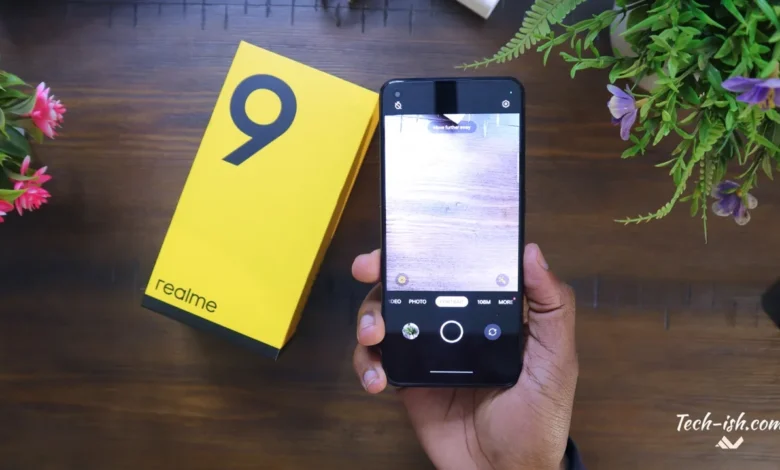

OPPO has commenced a significant restructuring of its India operations, effectively folding the breakaway success story, Realme, back into its corporate orbit. The consolidation, confirmed by multiple industry sources, has triggered a wave of strategic layoffs, particularly targeting sales and service personnel.
This move marks the end of Realme’s era as a semi-autonomous entity and formalises its status as a sub-brand within the OPPO ecosystem—a strategy legally and operationally aligned with their global directive issued earlier in January.
The Human Cost: Integration and Exits
The most immediate impact of this strategic pivot is workforce rationalisation. Reports indicate that a significant number of Realme India employees have been asked to resign by 30 April 2026.
The cuts are not random; they are surgically targeted at duplication. The impacted roles are primarily in:
- Sales and Distribution: Field teams managing offline retail.
- Service Networks: Coordination for repairs and after-sales support.
- Sales Support: Backend logistics and retail management.
Analysis: Why these specific roles? OPPO possesses one of the most formidable offline distribution networks in India. Maintaining a parallel, standalone sales machinery for Realme—which operates in similar price brackets—is financially inefficient. By absorbing Realme, OPPO can utilise a single sales force to push both brands, significantly reducing overheads.
The Structural Shift: A Visual Analogy
To understand this shift, it is helpful to view the relationship through the “Flotilla vs. Carrier” analogy.
The Previous Model (The Flotilla):
OPPO and Realme operated like two separate ships sailing alongside each other. They shared some supplies (manufacturing/supply chain) but had distinct captains, crews (sales teams), and navigation plans (strategies).
The New Model (The Carrier):
Realme has been hoisted onto the deck of the OPPO aircraft carrier. It is now a specialised squadron (sub-brand) on the ship. It still has its own paint job and pilots (brand identity), but the fuel, maintenance crew, and mission control (sales, HR, R&D, Logistics) are all provided by the carrier (OPPO).
From Breakout Star to Strategic Sub-Brand
Realme entered the market in 2018 as “Realme by OPPO” but rapidly spun out to capture the youth demographic with aggressive pricing. It succeeded, often cannibalising sales from its parent company.
However, the macroeconomic landscape of 2026 is vastly different from 2018.
- Market Saturation: The “growth at all costs” phase of the Indian smartphone market has plateaued.
- Regulatory Pressure: Increased scrutiny on Chinese tech firms in India mandates leaner, more transparent operations.
- The BBK Pattern: This mirrors the trajectory of OnePlus, which integrated its R&D and backend with OPPO years prior. Vivo acts similarly with its sub-brand, iQOO.
What This Means for the Market
The integration creates a “Front-End vs. Back-End” dichotomy:
| Front-End (Consumer View) | Back-End (Operational Reality) |
| Distinct Realme branding & logo | Shared Supply Chain & Logistics |
| Youth-centric marketing tone | Unified Sales & Distribution Teams |
| Separate product launches | Centralised R&D & Service Centres |
The Risk: The danger for OPPO is the dilution of Realme’s “rebel” identity. If the product roadmaps overlap too heavily, or if consumers perceive Realme merely as “budget OPPO,” the brand equity built over the last eight years could erode.
The Opportunity: Conversely, a unified front allows OPPO to negotiate better terms with retailers and component suppliers, potentially allowing them to price devices more aggressively against rivals like Xiaomi and Samsung.
Conclusion
For the consumer, the change may be imperceptible—Realme phones will still be on shelves. But for the industry, this is a signal that the era of experimentation via fragmentation is over. Consolidation and efficiency are the new drivers of the Chinese smartphone strategy in India.
The “speedboat” has officially returned to the mothership.