
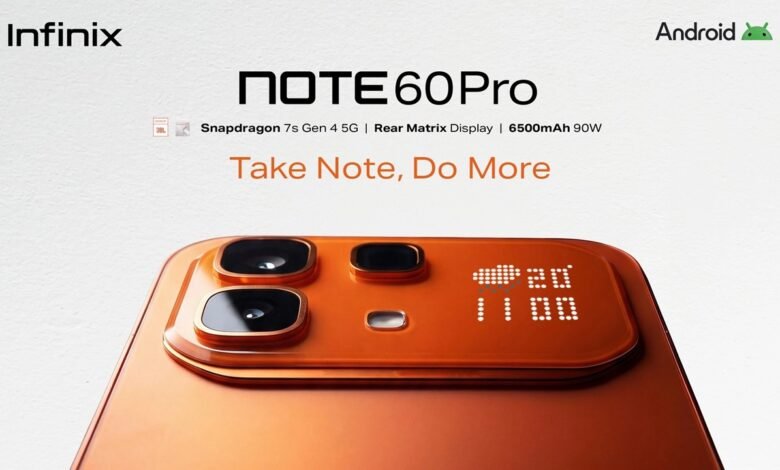

For years, if you picked up an Infinix phone, you could almost predict what powered it: a MediaTek chip humming quietly under the hood. It worked. It sold. It dominated emerging markets.
Now? That script just flipped.
Infinix has officially partnered with Qualcomm to bring Snapdragon platforms to its NOTE 60 series, which was recently teased at the CES 2026, marking the first time in years that Infinix smartphones ship with Snapdragon silicon. And no, this isn’t a casual experiment. This is a positioning shift.
And if you care about performance, gaming, AI, or even Infinix’s long-term ambitions, this matters.
From MediaTek loyalist to Snapdragon convert
Infinix hasn’t been allergic to Snapdragon. Last year, it quietly tested the waters with the XPad GT tablet powered by the Snapdragon 888 5G. The results? Apparently good enough to greenlight expansion into smartphones.
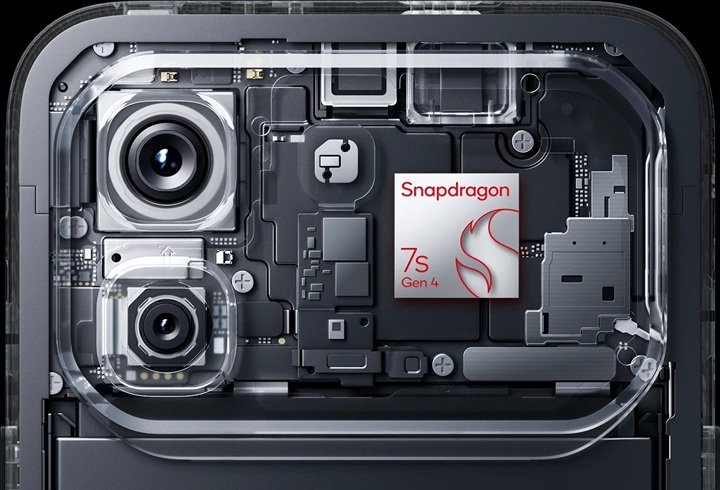
Now, select models in the NOTE 60 series will run on Snapdragon platforms. Specifically, the NOTE 60 Pro runs on Qualcomm’s Snapdragon 7s Gen 4 chipset and Adreno 810 GPU, which Infinix says marks “a shift in the company’s core hardware strategy toward deeper chipset integration and system-level optimization.”
That’s corporate language for: We’re not just swapping chips. We’re changing direction.
According to the official release:
“System-level optimization between hardware and software forms a key part of the integration. Aligning firmware, power management frameworks and performance tuning with Snapdragon architectures enables more stable workload handling across gaming, imaging and AI-assisted applications.”
Translation: fewer stutters, better thermals, smarter AI tricks, and potentially longer battery life.
Why Snapdragon? Why now?
Qualcomm still carries enormous technical weight across CPU, GPU, AI, and ISP development. Snapdragon’s AI engine, ISP pipeline, and Adreno GPUs are often better optimized at the app and developer level globally, especially in gaming.
And let’s be honest: in many African and Asian markets where Infinix dominates, Snapdragon-powered phones are aspirational. Walking into a shop and asking for a Snapdragon phone carries psychological value. This partnership feels like Infinix stepping into a new tier.
Tony Zhao, CEO of Infinix, framed it this way:
“We are excited to collaborate with industry leader Qualcomm Technologies. This important step for Infinix advances our mission for a tailored user experience through in-depth hardware-software integration, utilizing Snapdragon platforms and technologies to deliver greater innovation and quality for customers globally.”
Qualcomm’s SVP of Product Management, Chenwei Yan, added:
“We are thrilled to collaborate with Infinix as we work together to bring industry-leading Snapdragon technologies to more mobile users worldwide. Expanding Snapdragon integration into Infinix's mobile portfolio marks an exciting milestone—one that highlights our shared commitment to delivering breakthrough innovation, elevated performance, and more seamless user experiences.”
The messaging is clear: performance, AI, gaming, and premiumization.
But who really wins here?
Infinix wins
This is a classic positioning upgrade. Infinix has already built massive channel density across Africa and parts of Asia. It already leads in markets like the Philippines and Pakistan, and ranks among the top three in Indonesia and Saudi Arabia.
In Africa? Infinix, alongside its sibling, TECNO, is practically royalty. By integrating Qualcomm’s Snapdragon, Infinix raises its performance ceiling. It can:
- Push harder into gaming-focused midrange phones
- Strengthen AI and computational photography
- Improve long-term software stability
- Signal “premium intent” to global markets
And let’s not ignore the US angle. Infinix has flirted with US entry before (remember the Infinix GT 20 Pro noise?). A Qualcomm-powered lineup makes regulatory approvals, carrier negotiations, and brand credibility much smoother.
Snapdragon is a passport.
Qualcomm wins
Don’t mistake this as Qualcomm simply gaining another customer. Infinix is a distribution infrastructure. Qualcomm has long been strong in flagship and upper-mid devices globally, but channel penetration in fast-growing emerging markets in Africa and Asia is still competitive territory. Infinix offers deep retail networks, aggressive pricing models, strong youth-focused branding, and rapid market conversion strategies.
Through Infinix, Qualcomm can push Snapdragon platforms deeper into markets across Africa and Southeast Asia where competitive dynamics are still evolving.
And what about us, the users?
This is where things get interesting.
If Infinix executes properly, budget and midrange buyers could benefit from better frame consistency in gaming, more efficient thermal management, improved ISP performance for computational photography, stronger on-device AI capabilities, and potentially better long-term software update coordination.
The press release specifically highlights “elevated, consistent, and stable performance across core areas, including power efficiency, immersive gaming, advanced imaging, and integrated AI experiences.” If that translates from print to pocket reality, mobile gamers on a budget should be excited.
But hey, silicon alone doesn’t fix everything. Optimization, update cadence, and pricing will determine whether this becomes a revolution or just a logo swap.
Infinix has scale. Qualcomm has silicon authority. Together? That’s platform-market alignment.
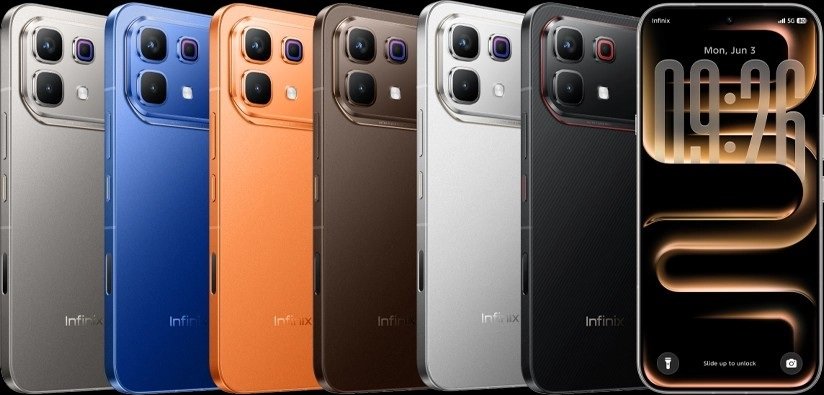
This partnership doesn’t just hype the NOTE 60 series. It signals Infinix’s intent to climb tiers. Not slowly, but structurally. And it signals Qualcomm’s intent to tighten its grip on high-growth regions.
The real test begins when the NOTE 60 series hits shelves. If pricing stays aggressive and performance matches the promise, this won’t just be another midrange refresh cycle. It might be the moment Infinix stops being seen as “great for the price” and starts being seen as “great.” Period.
And that, in emerging markets like Kenya, is a very big deal.