


Ahead of the February 26th by-election polls, the Independent Electoral and Boundaries Commission (IEBC) dropped a presser that has sent ripples through Kenya’s tech-savvy electorate. The message? Administrative control measures are coming for your mobile devices. While the Commission claims it’s all about protecting the secrecy of the ballot, many of us see the writing on the wall, and it looks a lot like a dry run for a total tech blackout in 2027.
Here’s the thing: while the IEBC is busy playing cat-and-mouse with Androids and iPhones, they’ve completely ignored the next frontier of wearable tech.
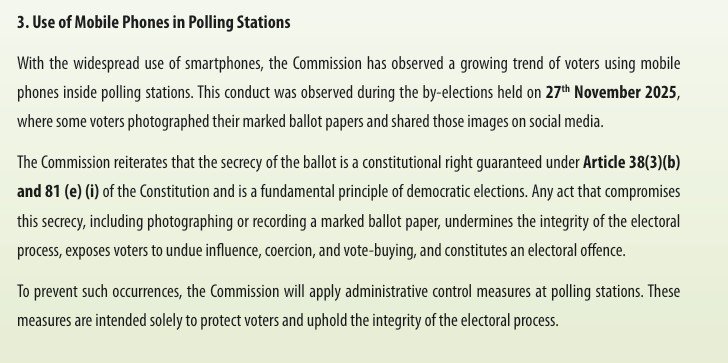
IEBC has raised concern about voters using smartphones inside polling stations, specifically those who photographed marked ballot papers during the November 27, 2025 by-elections and shared them on social media.
The Commission reiterated that ballot secrecy is protected under Articles 38(3)(b) and 81(e)(i) of the Constitution. Photographing or recording a marked ballot paper, it argued, undermines electoral integrity and exposes voters to coercion and vote-buying.
So far, so reasonable. But here’s where it gets delicate.
IEBC says it will apply “administrative control measures” at polling stations to prevent such occurrences. It does not ban phones outright. It clarifies that phones are not prohibited at polling stations, only photography or recording of marked ballot papers is restricted. For a commission that was moving in the direction of tech with the recent adoption of iris scanning for voter registration, placing restrictions on the use of the most popular technology in polling stations is a backward move.
In theory, that’s a narrow limitation. But in practice? It’s a policy that sits on a razor’s edge, especially with the 2027 general elections looming. There’s a massive difference between protecting a voter’s privacy and gapping the public’s right to verify results.
Kenyans have made it clear: 2027 will be the Live Stream Election. The plan is to have smartphones at every tallying center, ensuring that the numbers on the paper match the numbers in the cloud. Citizens have openly discussed plans to livestream results from polling stations on platforms like TikTok and Facebook as an extra layer of transparency. By tightening the screws on phones now, the IEBC is setting a dangerous precedent. If they can justify controlling devices inside the booth today, what’s to stop them from banning recording at the tallying centre in 2027?
For many Kenyans, smartphones are not distractions. They are accountability tools. Sure, while voting must remain secret, results must also be verifiable. And this is where Kenyans want smartphones in and around polling stations come what may.
The tension arises when measures aimed at protecting secrecy begin to feel like they might limit verification. Because let’s be honest, in Kenya, electoral confidence is fragile. And fragile trust does not respond well to restrictions, even well-intentioned ones.
The IEBC’s administrative measures feel a lot more like control than coordination. Article 24 of the Constitution requires any limitation of rights to be reasonable and proportionate. Is it proportionate to restrict the most powerful tool for citizen oversight just because a few people took ballot selfies?
Enter the smart glasses loophole
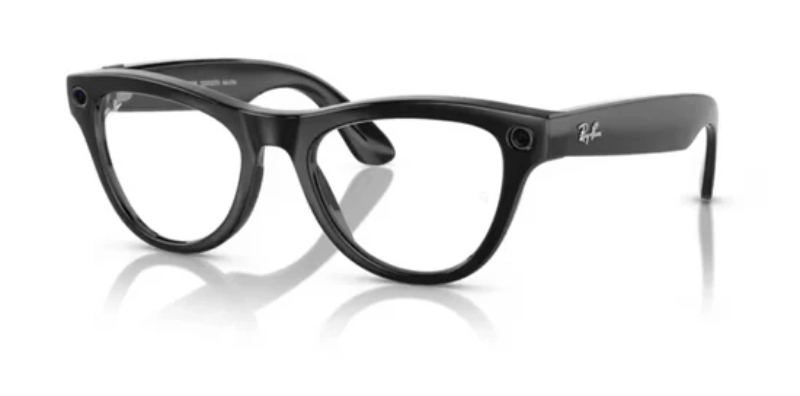
Here is where the IEBC’s plan hits a technical snag. While the Commission is worried about people fumbling with smartphones in the voting booth, they seem to have forgotten that cameras are no longer just glass rectangles in our pockets. They’re on our faces.
We recently saw a Russian creator cause a stir in Kenya and Ghana by filming women unknowingly using smart glasses. It was a privacy nightmare, sure, but it was also a proof of concept. If the IEBC decides to ban smartphones or force voters to surrender devices at the door in 2027, we’ll use smart glasses and other technologies at our disposal.
Let’s be honest: your average police officer at a polling station in Muminji Ward isn’t going to be able to tell the difference between a standard pair of prescription spectacles and a pair of $300 smart glasses capable of 1080p POV recording. You walk in, you look around the voting room, you click the temple of your glasses, and snap.
The 2027 hardware war
The IEBC is trying to solve a 21st-century transparency demand with 20th-century control tactics. By attempting to gag the use of phones, they aren’t stopping the recording; they’re just forcing it underground or onto the bridge of our noses.
Kenyans aren’t afraid of rules; they’re afraid of opacity. If the Commission wants a credible election, they need to lean into transparency, not move away from it. Because if they take away the phones, the smart glasses are coming out. If they take away smart glasses, something else will come out.
And trust us, the “Point of View” footage of the 2027 elections is going to be a lot harder to police than a simple smartphone. Your move, IEBC. Do you want an open process, or are we all just going to start wearing very expensive sunglasses to the polls?