


For years, moving money across African borders has felt like sending a parcel from Nairobi to Lagos via London. It was slow, expensive, and fundamentally broken. But yesterday, the landscape shifted.
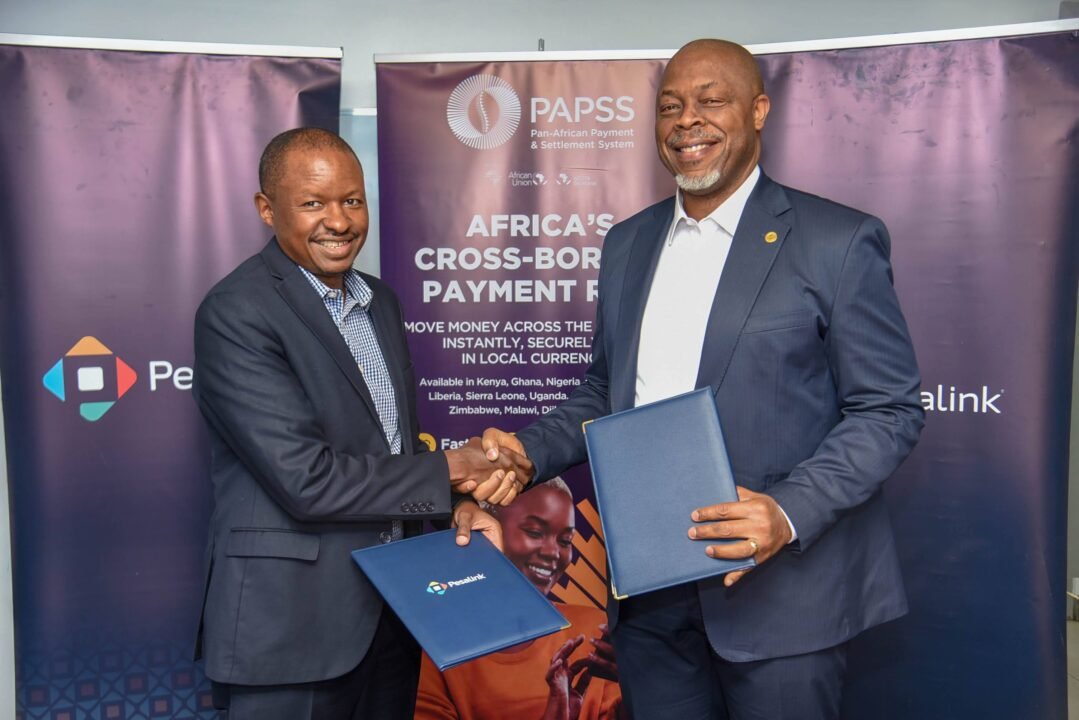
Pesalink, the interbank switch owned by the Kenya Bankers Association, officially plugged into the Pan-African Payment and Settlement System (PAPSS). The integration connects over 80 Kenyan financial institutions directly to a continental network of over 160 banks.
The promise? Instant, 24/7 cross-border payments settled directly in local currencies like KES and Naira, bypassing the US Dollar entirely.
While the press release is filled with corporate applause for “regional financial integration,” a closer look under the hood reveals a much more aggressive reality. This move democratises trade for the average Kenyan SME, but it also exposes the historical sluggishness of local banks and threatens to wipe out an entire generation of remittance startups.
The Mechanics
To understand why this matters, you must understand how broken the old system was.
Historically, if a Kenyan hardware supplier wanted to buy goods from Nigeria, their KES could not speak directly to the Nigerian Naira. The money had to be routed through a “correspondent bank” in New York or Europe.
- The KES was converted to US Dollars (incurring a forex spread).
- The correspondent bank took a SWIFT processing fee.
- The Dollars were converted into Naira (incurring another forex spread).
- The money arrived 3 to 7 business days later.
According to the World Bank, this convoluted journey ate up 7–8% of the transaction value.
The Pesalink-PAPSS integration acts as a continental middleware. Now, the transaction is routed from the sender’s Kenyan bank directly to the Pesalink switch, forwarded instantly to the PAPSS central clearing layer, and deposited into the receiver’s Nigerian bank in Naira. Settlement happens in seconds. The foreign exchange risk and netting are handled internally by PAPSS, backed by the African Export-Import Bank (Afreximbank).
The M-Pesa Paradox
While Pesalink CEO Gituku Kirika rightly championed this as a way for banks to offer faster, cheaper payments, the tech ecosystem is left asking one glaring question: Why is Pesalink only thinking this big now?
Pesalink was launched in 2017 with the ultimate structural advantage. Backed by the entire commercial banking sector, it had the capital and the regulatory clearance to completely own the digital payments market in Kenya. It had the opportunity to out-smart Safaricom’s M-Pesa.
Yet, nearly a decade later, M-Pesa still commands a near-monopoly.
The failure to dethrone M-Pesa boils down to two factors: institutional sluggishness and a distinct lack of out-of-the-box thinking. Traditional banks are risk-averse, designing products around compliance and fee protection rather than user experience. While M-Pesa was turning every shopkeeper into a human ATM and building an inescapable merchant ecosystem, banks were still forcing users through clunky USSD menus and worrying about cannibalising their own internal transfer fees.
Pesalink built a faster horse; M-Pesa built the car. Plugging into PAPSS is the first time in years that the Kenyan banking consortium has shown the kind of lateral, ecosystem-level thinking required to actually change the game.
The Fintech Graveyard
There is no denying the democratising power of this infrastructure. For the Kenyan freelancer working for a South African firm, or the SME trading under the AfCFTA, the frictionless movement of KES is a massive victory.
But every victory requires a sacrifice, and in this case, it is likely the African fintech ecosystem.
For the last five years, “fixing African cross-border payments” has been the most lucrative pitch in venture capital. Hundreds of startups have raised millions by building complex rails – often leveraging stablecoins or blockchain networks – to bypass correspondent banks and lower that 8% fee.
The Pesalink-PAPSS corridor threatens to render many of these startups entirely useless.
If instant, low-cost, local-currency clearing becomes a foundational public utility hardcoded into every native bank app, the core value proposition of an independent remittance app evaporates. Startups that merely act as “toll booths” for moving money will face an existential crisis. To survive this democratisation, fintechs will have to pivot drastically. They can no longer monetise the movement of money; they must build software on top of the movement; offering specialised services like trade financing, instant credit, or cross-border escrow.
The Bottom Line
The Pesalink and PAPSS partnership is a monumental technical achievement that finally makes intra-African trade viable for the little guy. It forces Kenyan banks to look beyond their local borders to find value. But as the dust settles, it serves as a stark warning: when foundational infrastructure finally wakes up and innovates, the startups built in its blind spots are the first to get crushed.