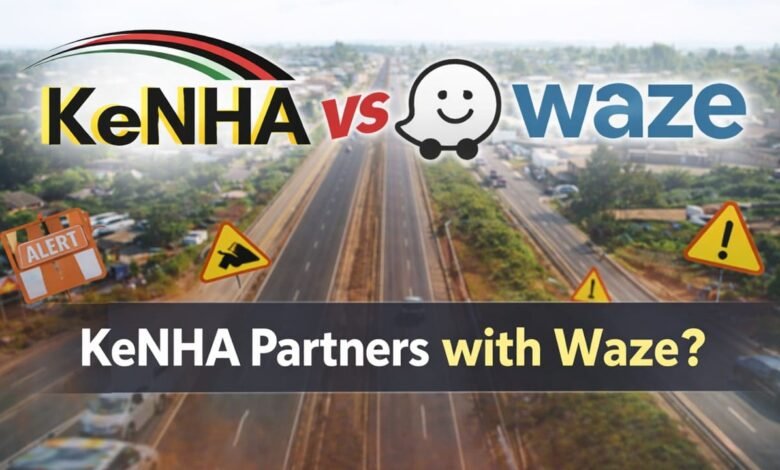

The Kenya National Highways Authority (KeNHA) took to social media this week to proudly announce a groundbreaking partnership with the navigation app Waze. The goal? To “make Kenya a moving country.”
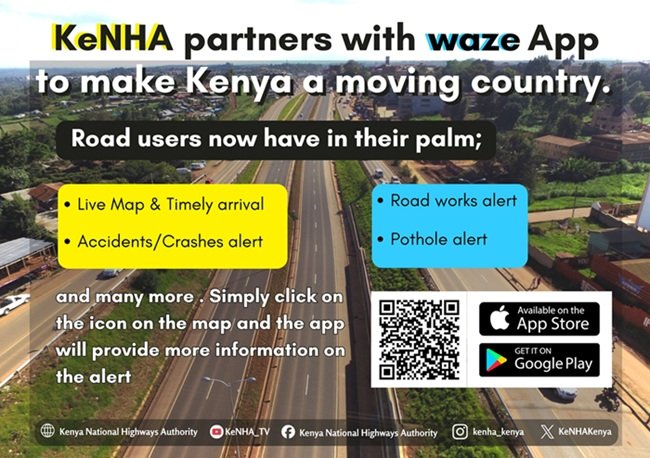
According to KeNHA, this collaboration means road users now have access to live maps, timely arrival of information, accident alerts, roadworks alerts, and pothole alerts right in the palm of their hands. Given how poor the Waze experience has been in Kenya, this sounded like a much-needed improvement.
Below is a graphic that KeNHA shared on social media announcing this alleged partnership with Waze. Scanning the QR code takes you to the Waze website, where you can download the app. But you can also get it straight from the Apple App Store or Google Play Store, depending on the device in your hand.
There’s just one massive problem with this announcement: KeNHA is taking credit for features that are already natively built into Waze.
Let’s get one thing straight. If you open Waze right now and get an alert about a massive pothole on Waiyaki Way or a stalled truck on the Southern Bypass, it is not because KeNHA is sitting in a control room feeding data to Google.
It is because another Kenyan driver, likely frustrated by that very same pothole, tapped their screen to warn the rest of us.
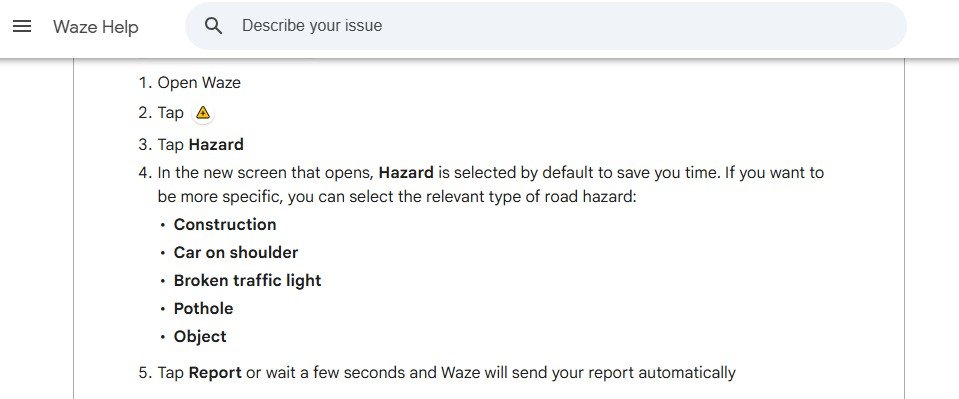
Waze is fundamentally built on user-generated road hazard reporting. The ability to flag constructions, crashes, police traps, and potholes has been a core feature of the app for years, not just in Kenya, but globally. It is hilarious and, honestly, a bit insulting to our intelligence that KeNHA is trying to pass off a free, global app feature as a newly minted, localized partnership.
It makes me wonder: was there a budget allocated for this “partnership” announcement? Because if public funds were used to market a free app’s standard features, we have bigger problems than just bad PR.
What a real partnership looks like
The timing of KeNHA’s announcement is what really raised my eyebrows. It comes suspiciously close on the heels of a legitimate, actual partnership between Waymo and Waze.
In that scenario, Waze is actively using Waymo’s autonomous vehicle cameras to automatically map and integrate new pothole data into the Waze system. That is what a tech partnership looks like. It involves data integration, API sharing, and actively improving the user experience through shared hardware and software ecosystems.
Below is a sample screenshot of what Waze users will see in the app, courtesy of the partnership with Waymo, which is nothing close to the supposed KeNHA and Waze partnership back here.
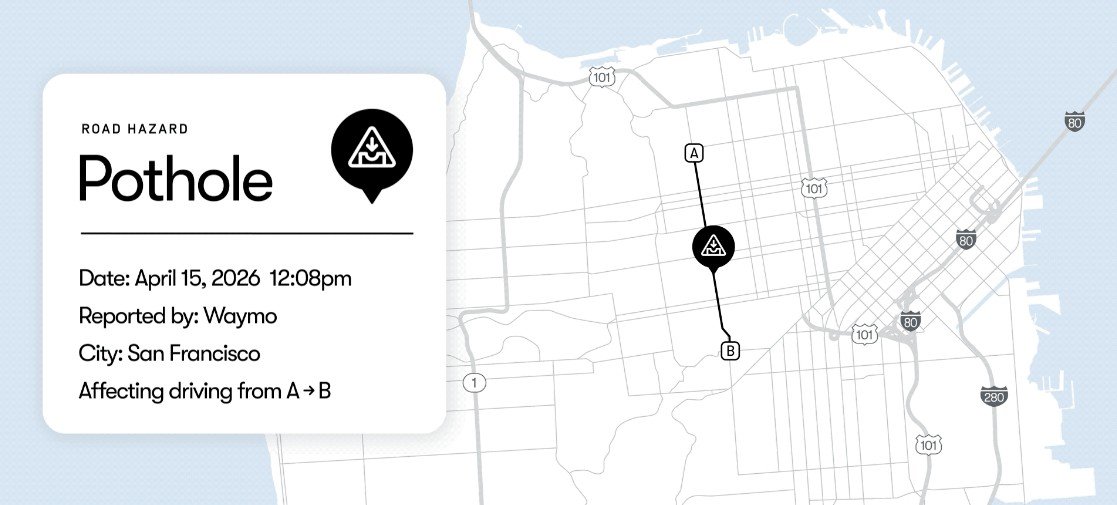
Is KeNHA providing Waze with real-time, digitized APIs of their roadwork schedules? Are they feeding live government traffic camera data into the app? No. They are simply pointing at an app that already works and saying, “Look what we did for you.”
Of course, unless there’s something they are not telling us, because I looked around and couldn’t find anything about this partnership beyond the graphic shared on social media.
We are smarter than this. When you see a hazard alert on Waze today, don’t thank KeNHA. Thank the active community of Kenyan drivers who are looking out for each other.
It’s completely fine for government agencies to encourage citizens to use helpful digital tools. But framing it as a partnership to score cheap PR points is a big lie. KeNHA should focus on actually fixing the potholes we are busy reporting on Waze, rather than taking credit for the app we use to dodge them.