
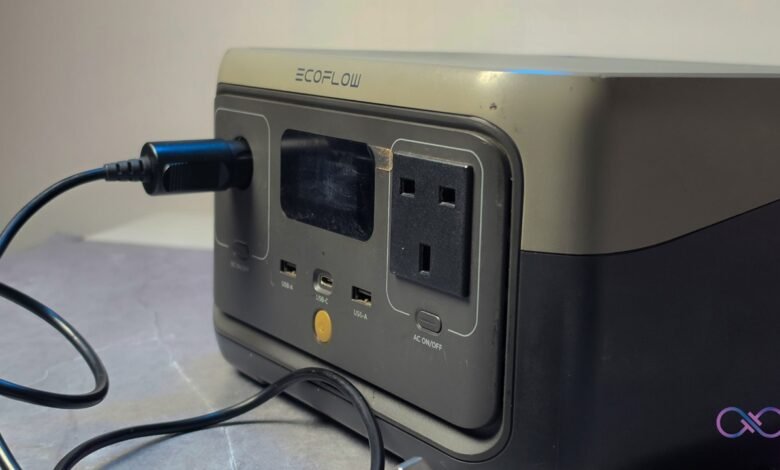
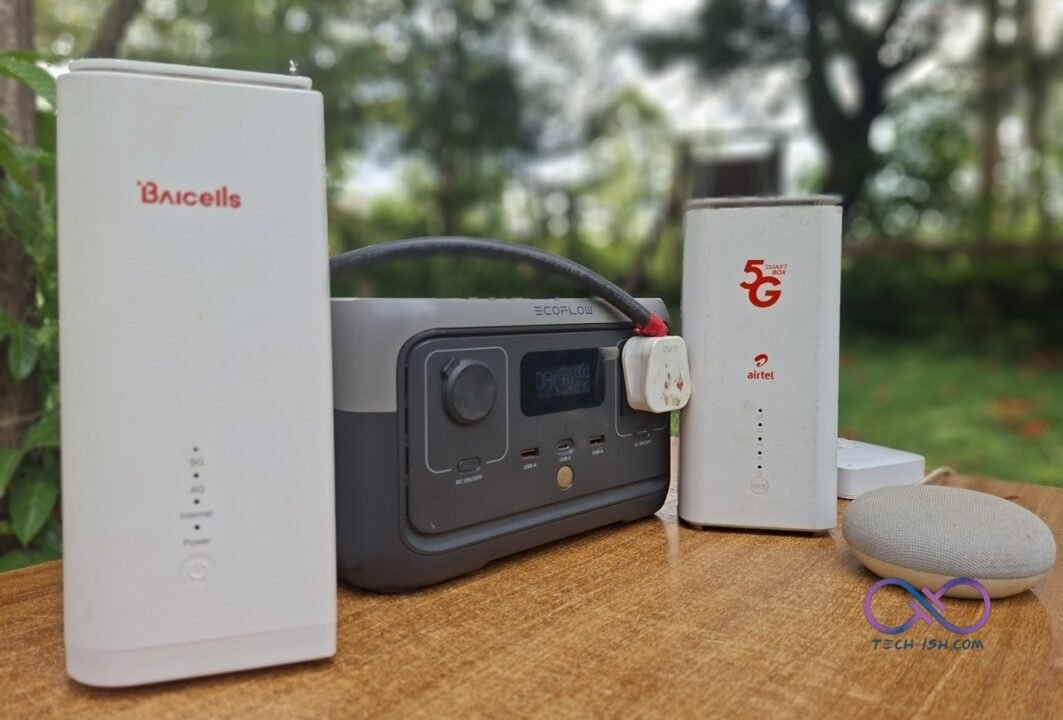
I’ve spent the last 365 days with the EcoFlow River 2. It has saved my workflow multiple times. It has kept my laptop alive during long Kenya Power outages, the latest one as recent as April 2026. It has powered my Airtel 5G and Safaricom 5G routers when the grid disappeared without notice, and lived in my workspace as a silent, reliable companion. It is, by almost every objective metric, a fantastic piece of tech.
And yet, if I could go back, I would not buy it again.
The specs that look great on paper
The EcoFlow River 2 (my unit’s model number is EFR600) comes with an 80,000mAh (256Wh) LiFePO4 battery rated for over 3,000 charge cycles before dropping to 80% capacity. That chemistry alone makes it more durable than many older portable power stations that relied on NCM batteries.
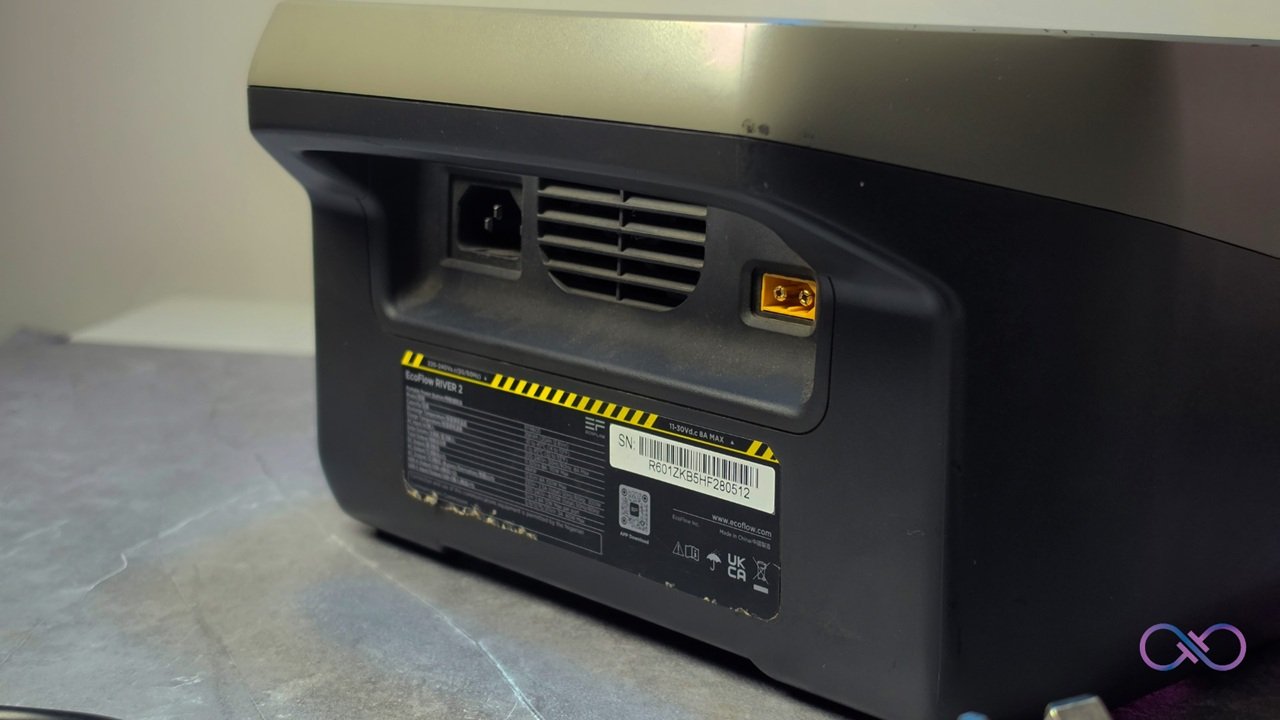
It delivers 300W AC output, with EcoFlow’s X-Boost mode pushing that to a maximum of 600W for compatible devices. In my case, the label indicates a maximum output of 484W, which comfortably handles a laptop, router, and a few small accessories. For light-duty work setups, it is more than adequate.

Charging is one of its strongest features. The EcoFlow River 2 goes from 0 to 100% in about 60 minutes via AC input. In practice, it charges absurdly fast compared to older power stations that would take four to six hours. You can also charge it via a car outlet or solar panels (up to 110W solar input), although I have never had the opportunity to test solar charging.
There is Wi-Fi and Bluetooth connectivity, and the EcoFlow app is surprisingly mature. From the app, you can:
- Monitor input and output in real time
- Toggle AC and DC outputs
- Adjust charging speed
- Enable or disable X-Boost
- Set AC timeout behaviour
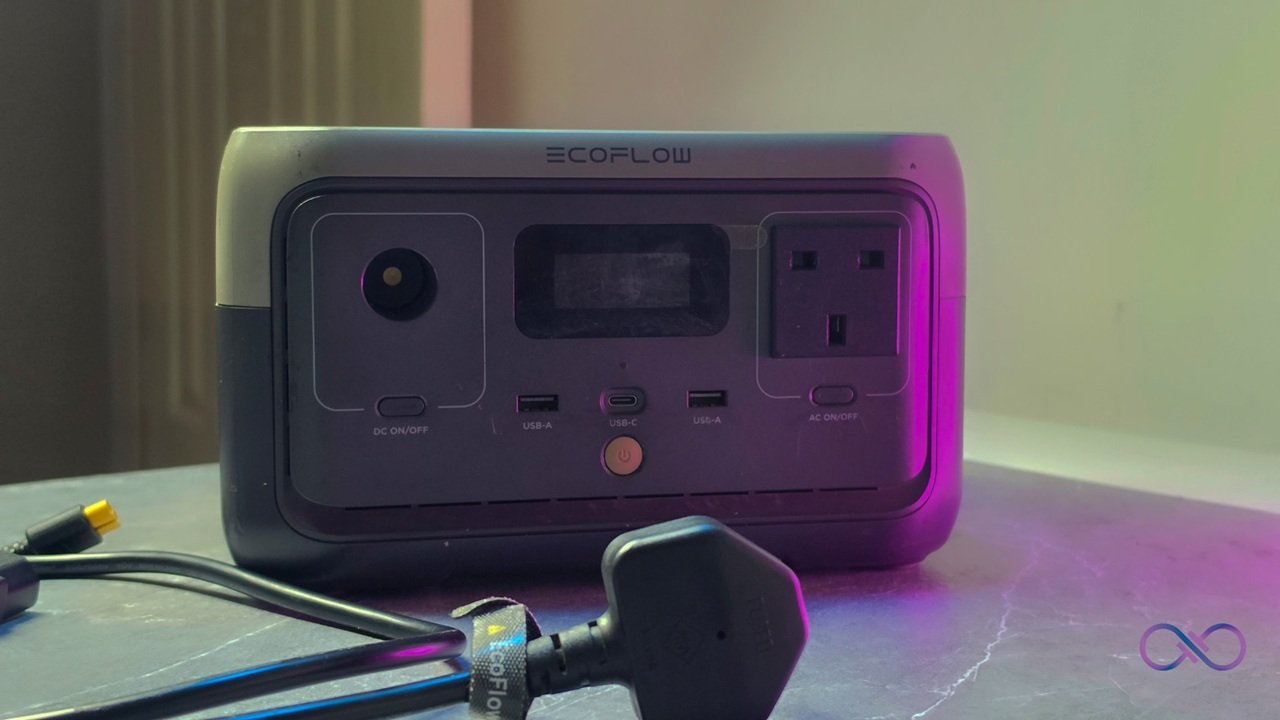
The small LCD screen on the unit shows battery percentage, estimated time remaining, input and output wattage, and Wi-Fi status. It is clean, legible, and genuinely useful during outages when you want to calculate how long you can keep working before everything goes dark.
Port selection is practical. You get one AC outlet, one USB-C port (up to 60W, bi-directional), two USB-A ports, and a 12V car output. The USB-C port alone makes it modern. You can charge your laptop directly without even touching the AC outlet. It is also lightweight at around 3.5kg, making it easy to move between rooms or carry around the compound.
All of this sounds like a solid buy. So why the regret? Because 80,000mAh is small once real life enters the chat.
Real-world performance in my setup
My primary reason for buying the River 2 was simple. When there is no power in the village, like the case as of this writing (see the tweet below), I still need to work. On a laptop alone, the River 2 lasts about six hours. That is respectable. But that is not how I work. My typical setup during a blackout includes a laptop, a Safaricom 5G router (previously Airtel 5G router), and a couple of phones charging intermittently.

Hii kwa scrape metal watachukua kweli?😂


When the router’s internal battery dies after roughly 3 hours, it joins the River 2 as a full-time load. At that point, I get anywhere between three and five total hours before the River 2 runs out. For a proper workday, I need at least nine hours. Ideally, closer to 10 to 12 hours for peace of mind.
That is where the regret sits. Not in the performance or build quality, but in the capacity.
At the time of purchase, the River 2 cost me KES 30,000. Bigger units like the EcoFlow River 2 Pro were selling north of KES 60,000. While my budget screamed the River 2, it became clear that my workload needed the Pro.
In hindsight, I should have waited and found the extra money. The River 2 is not underpowered. It is just undersized for my use case.
The rocky start and surprisingly solid support
The first day I unboxed it, things went wrong immediately. It arrived with about 45% battery. I started testing it using that out-of-the-box charge. Then I plugged it in to charge, and nothing happened.
A brand-new unit that refuses to charge is not the kind of excitement anyone wants. My first instinct was to return it. I went to the Jumia Kenya office that delivered the unit to me, but I was not satisfied with how the issue was being handled.
Instead of escalating through the marketplace, I contacted the seller directly: Sapphire Trading and Marketing. That is how I got in touch with Maxwell.
He was calm, reassuring, and practical. No defensive tone. No corporate script. Just “Send it in, we will check it, and either fix or replace it.”
I shipped it back. They fixed it and returned it within a few days. I paid for shipping, which was not ideal, but the turnaround was fast and professional.
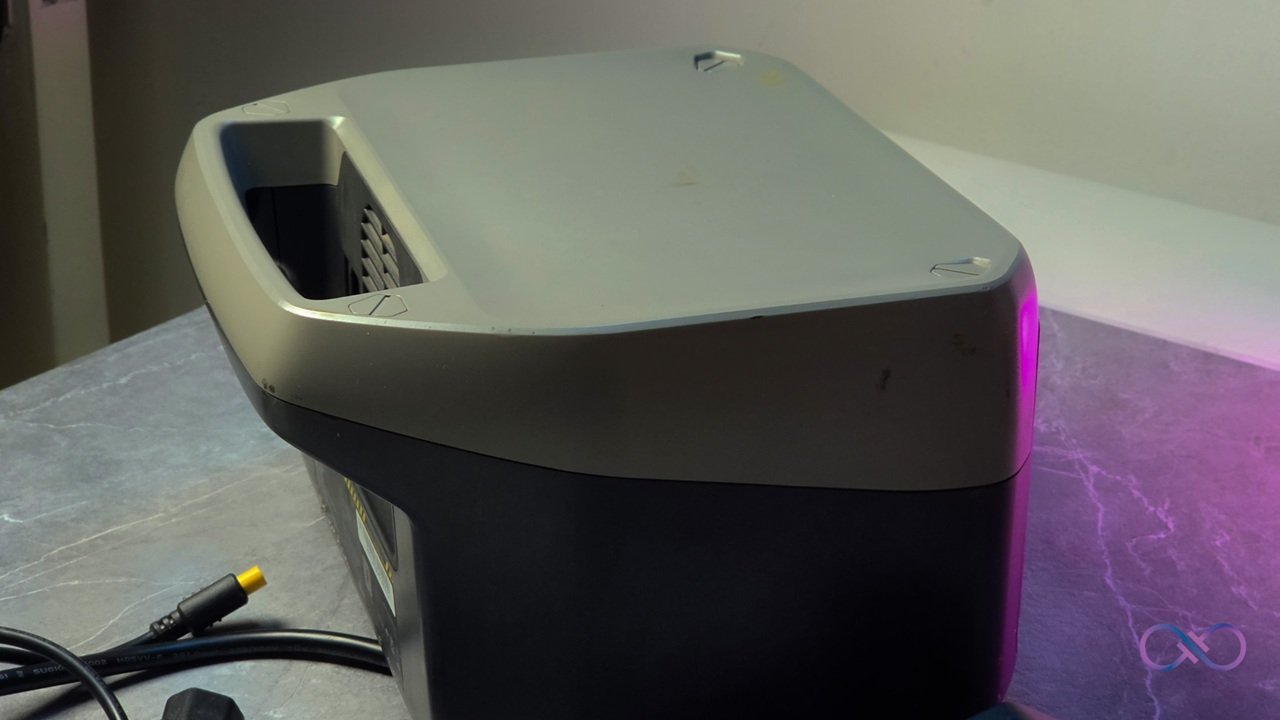
Months later, another issue appeared. The AC output began switching off automatically every five to ten minutes. The setting did not indicate any timeout behaviour, yet the AC would cut out. At first, I could turn it back on manually. Eventually, it required a full power cycle to restore the AC output. But then it would go back to the same behaviour a few minutes later.
That got annoying quickly.
Once again, I sent it back to Sapphire. This time, it stayed there for over a week as Maxwell coordinated with their technician. He even patched me through directly so I could explain the issue myself. After their fixes, it was shipped back from Nairobi, and it has been stable since. And nope, this time I didn’t pay for the shipping costs back to me.
Customer support does not usually get praise in Kenyan tech retail, although most of it is justified as per the CA’s consumer complaints data. In this case, Maxwell and his team deserve it.
The strange regulatory detail
One odd thing I noticed recently on the sticker at the back: it states that connection and use of the communications equipment is permitted by the Nigerian Communications Commission. I’m not sure whether this was always the case before the unit shipped back to Sapphire for a checkup since I never checked.
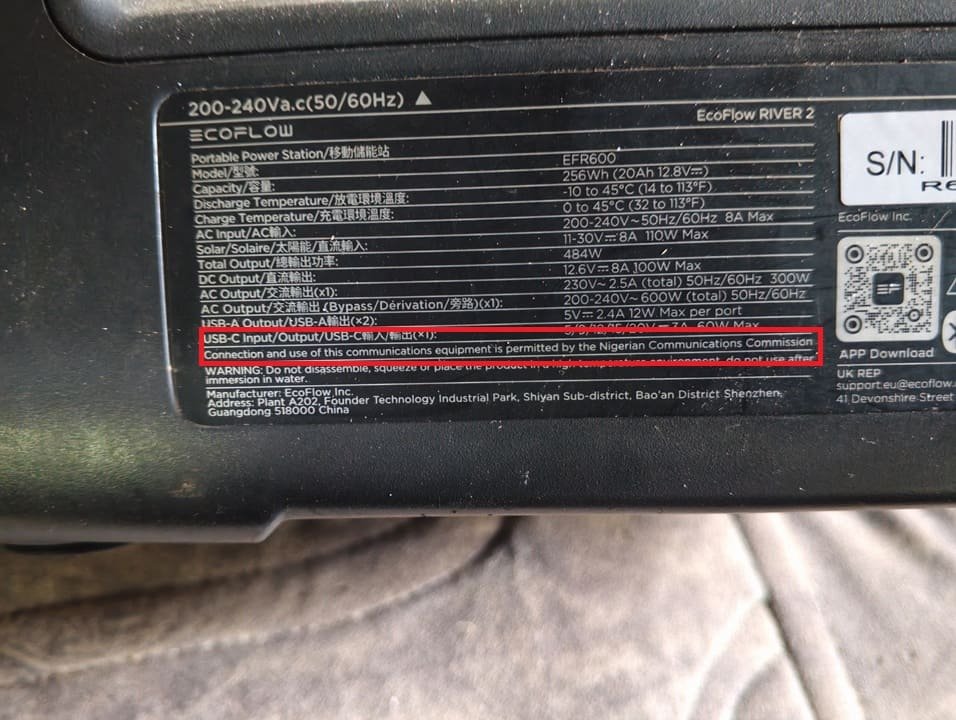
But either way, this unit is being used in Kenya, where the Communications Authority of Kenya regulates such devices. Why an NCC notice is printed on a unit sold here is unclear. It likely indicates a regional import batch or broader certification coverage, but it is a curious detail nonetheless.
Final thoughts after one year
The EcoFlow River 2 is not a bad product. It is well-built, fast-charging, portable, app-connected, and powered by durable LiFePO4 cells. For light users, students, or short outages, 256Wh is genuinely sufficient. But if your livelihood depends on staying online during extended blackouts, capacity matters more than convenience.
If you only need to charge phones, routers, cameras, and maybe run a laptop briefly, this unit is excellent. If you want to run a full remote work setup for an entire day without anxiety, the River 2 will feel small very quickly.
I regret buying it, not because it failed me, but because I underestimated my own needs. When I upgrade, it will likely be to a higher-capacity Pro model or something in that class. Whether I stick with EcoFlow or explore other brands remains open.
For now, the River 2 continues to sit on my desk, ready for the next blackout. It just does not last as long as I need it to.



Join the discussion