

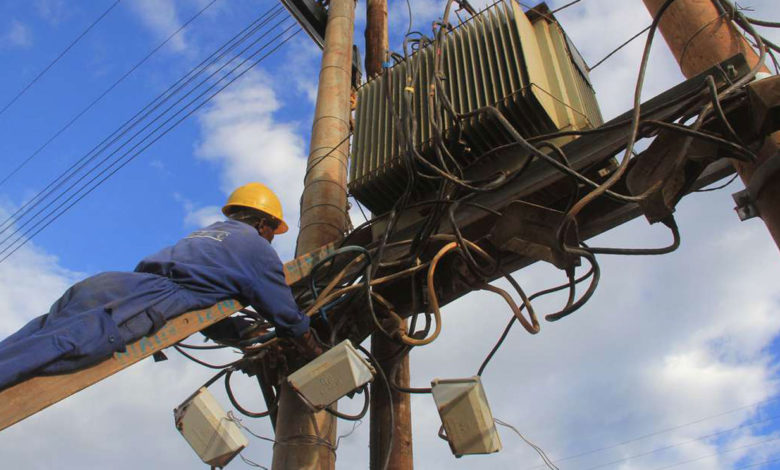
The Ministry of Energy and Petroleum has withdrawn Kenya Power’s application for a retail electricity tariff review. In plain terms, the base rates you pay for power are not going up for now. Energy Cabinet Secretary Opiyo Wandayi announced the decision on 3 June, saying it was meant to shield households, businesses and industries from higher costs while keeping the sector financially stable.
Kenya Power, listed on the Nairobi Exchange as KPLC, had filed the application on 31 March 2026. It was not asking only for itself. The utility submitted on behalf of the wider sector, including KenGen, KETRACO, the Geothermal Development Company and REREC, under the Energy Act. The proposed tariffs were meant to run for three years, from July 2026 to June 2029. The withdrawal came barely a week after EPRA postponed the public participation forums that were due to start in late May.
The relief is real. Understanding what it covers, and what it leaves out, matters just as much.
Unchanged tariff, moving bill
The freeze applies to the base energy charge set in the 2023 tariff schedule. That schedule was due to expire at the end of June 2026, which is why a fresh application was on the table in the first place. We have already broken down how those bands work: lifeline users who consume under 30 units a month pay the lowest rate, and the price per unit climbs as you use more. You can read that explainer here.

What the freeze does not touch is the stack of charges that move every single month. Your bill carries a Fuel Energy Cost Charge, a Foreign Exchange Fluctuation Adjustment, a Water Resource Management levy, the Rural Electrification Programme levy, an EPRA levy, an inflation adjustment and VAT. EPRA resets the fuel and forex figures monthly through gazette notices. In April 2026 the fuel charge alone was 347 cents per unit, or KES 3.47, and the forex adjustment was 123.41 cents. In May the fuel charge eased to 306 cents. You can see the April breakdown here.
These are pass-through costs. EPRA simply passes the actual cost of generation and currency losses on to consumers. So your token value can still shrink next month even with the base tariff frozen. On many bills, the energy charge is less than half of what you actually hand over. That is the part the word “unchanged” quietly hides.
The bill the utilities now carry
A frozen tariff is good news for any household budgeting for the year. It is harder news for the companies that run the grid. The proposed tariffs were meant to expand the funding pool for upgrading the transmission and distribution network, which is ageing and loses a meaningful share of power between the plant and your meter. Business Daily reports that the withdrawal is set to derail those funding plans, raising questions about how the utilities deliver key projects if other money is not found. The full report is here.
That is the real tension. Consumers get certainty. The funding gap is real, and pulling the application does not make it disappear.
The cost drivers nobody froze
The withdrawal leaves the structural issues exactly where they were.
Kenya’s bills stay high partly because the country still leans on expensive thermal generation and dollar-denominated power contracts. That is what feeds the fuel and forex lines on your bill every month. Freezing the base tariff does nothing to change that mix.
The monopoly question is shifting on its own track. In May 2026 the government gazetted open access regulations that let large consumers buy power directly from producers, loosening Kenya Power’s long-held grip on supply. The catch, flagged by the World Bank, is that big industrial users currently cross-subsidise households. If they leave the grid, domestic users could end up paying more, not less.
Nuclear power is often raised as the long-term fix. Kenya has named KenGen to own and operate its first plant, but the timeline points to the mid-2030s and the cost runs into hundreds of billions of shillings. It is a baseload bet for the next decade, not relief for this year’s bill.
What to actually watch
The base tariff is frozen, and that part is genuine. But a frozen tariff is not the same as a cheaper bill. Watch the monthly fuel and forex lines, because that is where your token value will keep moving. Watch for a fresh tariff application too. The law lets Kenya Power try again every three years, and the funding gap the increase was meant to fill has not gone anywhere.





Join the discussion