
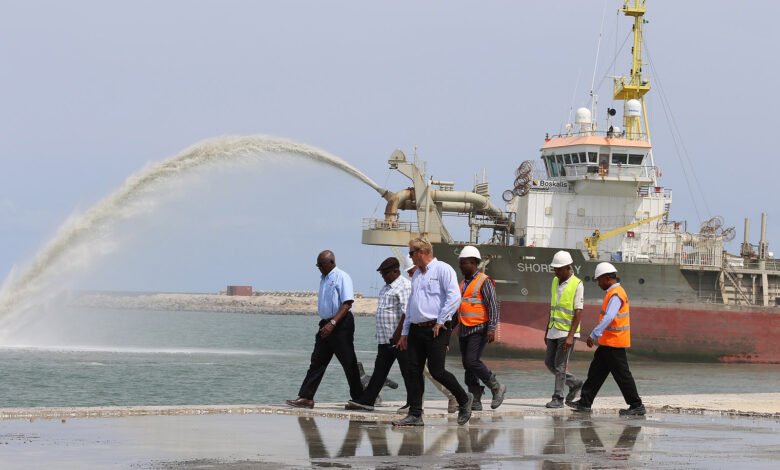
Aliko Dangote’s oil refinery outside Lagos is preparing to sell shares to the public, and Kenyan money is being counted on to help fill the order book.
Reuters reported on 4 August that Dangote Petroleum Refinery & Petrochemicals FZE is targeting about US$5 billion, roughly KES 647 billion at current rate of KES 129.38 to the dollar, in an offer expected to close in October. A source with knowledge of the plan told Reuters correspondents Duncan Miriri and Chijioke Ohuocha that Kenya’s capital markets could supply as much as US$500 million of that total, about KES 64.7 billion, with pension funds named as the most interested buyers. If the raise comes to a total of US$5 billion it would be the largest share sale ever completed in Africa.
Dangote’s company operates a single refinery at Ibeju-Lekki in Lagos. It cost around US$20 billion (KES 2.59 trillion) to build, started running in 2024, and hit its full capacity of 650,000 barrels a day earlier this year. Nigeria’s state oil firm NNPC owns just over 7% of it.
The shares will list on the Nigerian Exchange in Lagos, and that is the only listing planned. Reuters’ source said a cross-listing on other African exchanges is not on the table at this stage.
Kenyans will not be buying the shares themselves
Because there is no Nairobi listing, the Nairobi Securities Exchange and other interested bourses would have to build what Reuters’ source called “structured solutions”. In practice that means global depositary receipts or exchange-traded instruments: certificates issued locally that track the price of the Nigerian shares and carry the right to future dividends, without being the shares.
Frank Mwiti, chief executive of the Nairobi Securities Exchange, has been the most vocal African exchange head on the deal. After a closed-door meeting of five African exchange bosses in Lagos on 1 April, Mwiti said the aim was to structure a pan-African listing.
Dangote described a Kenyan route in a May interview with IFC President Makhtar Diop. “In Kenya, we put up a vehicle, and all investment will be done there,” he said. He said investors could exit at any time because they would hold a certificate, and that dividends would be calculated and paid in dollars.
The exact shape of that Kenyan vehicle has not been published. Any such instrument would also need approval from Kenya’s Capital Markets Authority before it could be sold here.
KES 64.7 billion is a large number for Nairobi
The Nairobi Securities Exchange crossed KES 4 trillion in total market value for the first time on Monday 3 August, about US$31 billion. So the KES 64.7 billion Reuters’ source floated is equal to roughly 1.6% of everything listed in Nairobi, and the full US$5 billion raise is worth about 16% of the entire Kenyan market.
For a closer comparison, the Kenya Pipeline Company IPO in March raised KES 112.374 billion, the biggest Kenyan share sale since Safaricom in 2008. Kenyan retail investors took only 2.56% of that offer. Institutions did the heavy lifting, which is why pension funds are the ones being courted now.
The argument over what the refinery is worth
A US$2.5 billion private placement in mid-July valued Dangote’s business at around US$40 billion (KES 5.18 trillion). Investors bought 6% at US$0.35 a share across two tranches, the offer was oversubscribed 3.7 times, and buyers included the Africa Finance Corporation. Those shares are locked up for 365 days.
Turkey’s Tupras Refinery runs the same total capacity as Dangote’s across four refineries and is worth about US$12 billion. HF Sinclair in New York refines 678,000 barrels a day and is worth about US$16 billion. Comparing those numbers, Dangote is asking for two to three times what comparable refiners fetch.
Dangote’s counter-argument is that the refinery earns in hard currency and can pay dollar dividends, which is rare for an African industrial asset. Whether buyers accept that is the negotiation.
The Lamu connection
Kenya’s interest is not only financial. Dangote has selected Lamu Island for a 700,000-barrel-a-day refinery costing up to US$17 billion (KES 2.2 trillion). Kenya’s 2026/27 budget set aside KES 21.5 billion for fuel stabilisation efforts seen as part of seed capital for the Lamu Dangote refinery. President Ruto has put Deputy President Kithure Kindiki in charge of a government committee steering it.
One thing to note with care: Reuters’ source on the IPO said they didn’t know whether money raised in October would go towards Lamu. Separately, Edwin Devakumar, Dangote Industries’ vice president for oil and gas, told Reuters in July that Lamu would be funded through internal cash, bonds and IPO proceeds. The company has named the IPO as part of the Lamu funding mix. The source briefing Reuters on the share sale could not confirm the details.
Kenya has not refined its own crude since the Mombasa refinery stopped processing over a decade ago, which is why every litre is imported and why pump prices swing with events far away. We covered that issue when diesel hit a record KES 242.92 in May, and again when the government zig-zagged fuel VAT from 16% to 13% to 8% inside 48 hours. Petrol in Nairobi currently sits at KES 214.03 and diesel at KES 222.86.
What is not settled
Nigeria’s Securities and Exchange Commission has not approved anything yet. The application is in, and SEC Director-General Emomotimi Agama told BusinessDay the regulator does not expect delays. No prospectus, price or subscription window has been published, and the size of the stake on offer has not been disclosed.
The SEC also ordered a halt on 23 June to unauthorised marketing of the offer. That order gave brokers 24 hours to refund money they had already collected from clients. Agama has since said the investigation is closed and sanctions are being applied.
The refinery is also in court with its own government. In suit FHC/L/CS/857/2026 at the Federal High Court in Lagos, Dangote is asking the court to void fuel import licences and says NNPC delivers about five crude cargoes a month against the 13 needed to run at full rate. NNPC denies withholding crude and accuses the refinery of seeking a monopoly. That case was adjourned to 7 October, the same month the share sale is meant to close.
For Kenyans, there are three dates are worth noting. The Nigerian prospectus is expected in September and will carry the price and the offer size. The court hearing is on 7 October. And nothing can be sold in Kenya until the Capital Markets Authority approves a local instrument, which hasn’t happened. Until those three are complete, there is no Kenyan offer to apply for, and anyone asking you to pay for one now is not selling you shares.




Join the discussion