

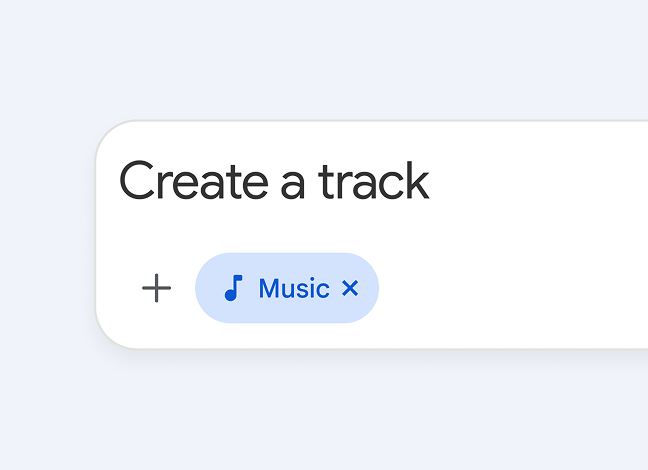
Google’s Gemini app added music generation in February 2026, powered by DeepMind’s Lyria 3 model. Describe a song and Gemini composes a 30 second track with lyrics, vocals and cover art. Switch to the Thinking or Pro models and Lyria 3 Pro will stretch that to about three minutes.
We have been testing it. In five separate generations, the finished track included a spoken line that had nothing to do with our prompts: “Purchase your track today.”
If you have ever browsed a stock music library, you know exactly what that is.
What that phrase actually is
Stock music marketplaces like AudioJungle, Pond5 and PremiumBeat let anyone stream free preview versions of their catalogues. To stop people ripping those previews and using them without paying, the libraries bake audible watermarks into the files. Sometimes it is a voice saying the site’s name every few seconds. Sometimes it is a sales line, the audio equivalent of the diagonal “Getty Images” text stamped across a preview photo. The watermark only disappears when you buy a licence and download the clean file.

So a watermark like that has no business appearing in a supposedly original AI composition. Lyrics about heartbreak, sure. A spontaneous advert telling you to purchase your track? That phrase exists in one context: unpaid preview audio.

So their model just scrubbed the web, and got those free tracks without paying for licenses and reworked them to generate outputs based on different prompts.
Here's an example.

Why models regurgitate watermarks
AI models do not store songs, but they learn statistical patterns from whatever audio they were trained on. When a specific element appears across thousands of training examples, models can memorise and reproduce it. This is not a new phenomenon. In the Getty Images v Stability AI case, experts on both sides agreed that Stable Diffusion spat out Getty watermarks precisely because it was trained on watermarked images, and the UK High Court found that the resulting outputs infringed Getty’s trade marks, even if the finding was narrow.
Hearing a stock library’s sales tag in generated music is the audio version of that same fingerprint. It is consistent with watermarked preview tracks, the free ones nobody paid to license, having ended up somewhere in the training pipeline.
What Google says
Google insists it has been careful here. In the Lyria 3 launch post, the company said it has been “very mindful of copyright and partner agreements” while training the model, that Lyria is built for original expression rather than mimicking artists, and that filters check outputs against existing content. Google also admits those filters “might not be foolproof” and offers a reporting channel for violations. Every Gemini track carries SynthID, Google’s inaudible watermark identifying AI output. There is some irony in a company watermarking its own output while that output appears to leak someone else’s watermark.
To be fair to Google, what we observed does not prove the training data was unlicensed. Google has partner agreements it does not publicly itemise, and it is possible some watermarked audio entered the dataset through a licensed aggregator, scraped video content, or sloppy data cleaning rather than deliberate freeloading. These outputs are strong circumstantial evidence that watermarked preview audio is in there, and Google owes users an explanation of how.
Why it matters
The music industry is already at war with AI companies over exactly this question. Suno admitted training on copyrighted songs and is still fighting label lawsuits even as it raises hundreds of millions. Warner settled with Suno, and Universal settled with Udio, both on the condition of licensed models going forward. Google has positioned Lyria as the responsible alternative. Audible watermarks in its output undercut that story.
There is a local angle too. Google has been pushing its AI subscriptions hard in Kenya, and we already covered how the company dropped Google One AI Pro to KES 0 for the first month, down from KES 3,700, to get people onto exactly these tools. Paying subscribers get higher Lyria generation limits. If you are paying for AI music, you deserve to know the model making it was trained cleanly.




Join the discussion