

Made by Google lands on Wednesday 12 August in New York, at 6pm Eastern. Do the arithmetic for Nairobi and that is 1am on Thursday morning. Set an alarm, or read the recap over breakfast like a sensible person.
This is the event where Google shows off its own phones. The Pixel line is Google’s own hardware, designed in-house instead of left to Samsung or Xiaomi, which is why Pixels get Android updates before anyone else and why they are the phones Google uses each year to demonstrate whatever it wants to claim about cameras and AI. Watches and earbuds usually turn up too. Think of it as Google’s version of Apple’s September iPhone show.
Press invites went out on 7 July. Google’s own store has since led with a teaser page reading “The next generation. Google Pixel 11. August 12.” Underneath it, in Google’s own words, pre-orders open that day.
So we have a name, a date, a city and a pre-order day, all straight from Google. The rest is leaks. Decent leaks, mostly, but leaks.

Four phones are expected, according to 9to5Google: the Pixel 11, the 11 Pro, the 11 Pro XL and the 11 Pro Fold. A Pixel Watch 5 should appear alongside them.
Do not hold your breath for the Fold. Google announced the Pixel 10 family on 20 August last year, put the ordinary phones on sale eight days later, and made everyone wait until 9 October for the Pixel 10 Pro Fold. Nobody expects a different pattern this time.
Google has not said when the phones actually reach shops. The French deals site Dealabs, quoting the leaker billbil-kun, says 20 August. PC Guide calls billbil-kun often reliable on this sort of thing, and the date would give the Pixel 11 the same eight-day wait the Pixel 10 had.
The chip is the interesting part
Tensor is Google’s own processor, and the G6 is this year’s. Taiwan’s Economic Daily News reported on 13 July that TSMC will build it on a 2nm process, picked up by 9to5Google. If that is right, the Pixel 11 beats the next iPhone to 2nm by about a month.
Smaller node, tighter transistors, usually better battery life and less heat for the same work. That would matter here, because Tensor chips have a history of running warm and holding a signal badly, and Kenyan buyers have complained about both. Leaks also point to a MediaTek modem replacing the Samsung one. All of it needs reviewers with retail units before anyone can say it worked.
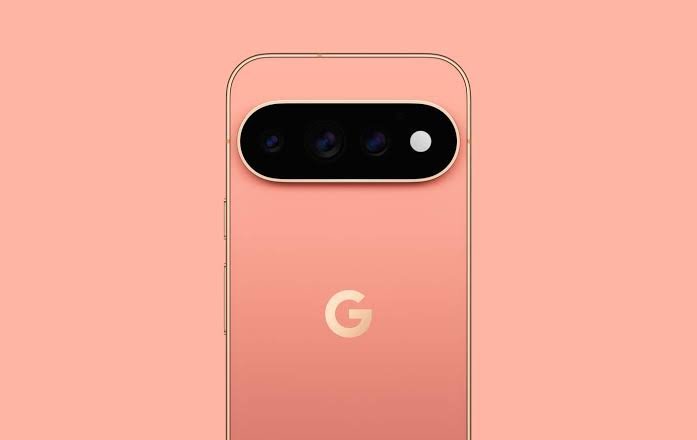
There is also a small circular light in the camera bar in Google’s teaser video, cycling through colours, sitting where the flash used to be. Leaks call it Pixel Glow and reckon it is a notification light for when the phone is face down. If you had an Android phone before about 2018 you will remember blinking LEDs. They vanished when screens grew to the edges of the body, and Google appears to want them back.
Prices are climbing, and Google is not really the culprit
billbil-kun’s European figures put the Pixel 11 at EUR 999 and GBP 879. That is EUR 100 and GBP 80 more than the Pixel 10. The same leak says 128GB is gone entirely, so 256GB becomes the cheapest you can buy, which quietly pushes the entry price up again. American pricing has not leaked yet.
Blame the memory shortage. AI data centres are hoovering up the DRAM and NAND that phones need for RAM and storage, and Counterpoint Research now puts memory at roughly 40 percent of the parts cost of an $800 phone, up from about 14 percent in early 2025. We have been following this since late 2025, and Samsung pushed up prices across its new foldables this month for exactly the same reason. Nobody is escaping this one.
Which brings up the question nobody has answered. Gemini Intelligence is Google’s badge for its best phone AI, and it arrived on 22 July on Samsung’s Galaxy Z Fold 8 and Flip 8, not on a Pixel. Google’s own requirements, published on android.com and written up by 9to5Google, demand at least 12GB of RAM. Leaks cannot agree on whether the base Pixel 11 has 8GB or more. We asked the same thing back in May and nobody has answered it since. If the cheapest Pixel 11 turns up with 8GB, Google’s own phone misses Google’s own bar.
What any of this means if you are buying here
Not a lot, immediately.
Google still does not sell Pixels in Kenya. No Google Store, no local warranty, no service centre when something breaks. Pixels get here through importers paying duty at the border or in someone’s suitcase, which is why the Nairobi price sits so far above the American one.
The route has narrowed too. Safaricom’s Masoko stocked Pixels from 2024 and pulled the brand off its site by May this year without saying why. That leaves independent retailers, and we have already said what we think of their pricing on older Pixels.
The warranty gap is not theoretical. Google spent much of this year dealing with a bootloop fault that killed devices from the Pixel 6 through the Pixel 10 and was replacing them for owners in supported countries. If yours died in Nairobi, you paid.
So the 12th is not really your date. The useful one comes a few weeks after, when Pixel 10 stock starts sliding down the price ladder and the phone finally makes sense at Kenyan prices. That is the moment to watch if you have wanted one.
When the keynote wraps, two numbers will tell you most of what you need. How much RAM is in the base Pixel 11, which decides whether Google’s cheapest phone can run Google’s own AI features. And whether 128GB really is dead. We will update this piece on 13 August.


Join the discussion