

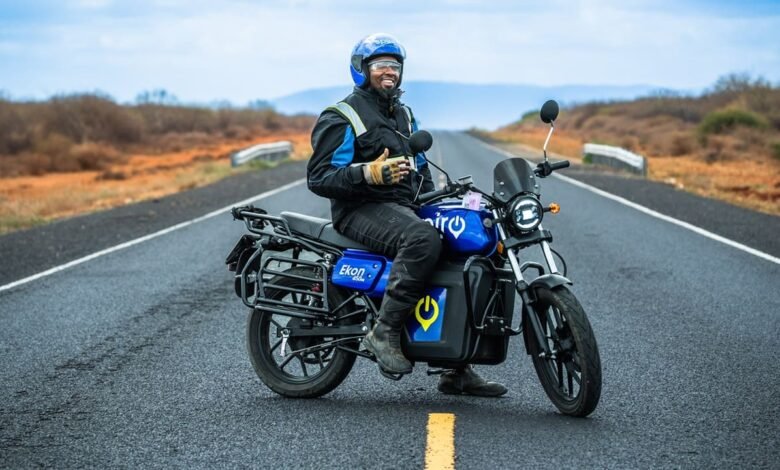
Spiro, the company that runs Africa’s largest network of battery-swapping electric motorcycles, has raised an extra $55 million (about KES 7.1 billion) from a Chinese investor called NewTrails Capital. The money closes Spiro’s latest funding round at $270 million (about KES 35 billion). That makes it the largest funding round an African two-wheeler EV company has ever announced.
Founder Gagan Gupta has told Bloomberg that the round takes Spiro close to a $1 billion valuation. Spiro has not published a precise figure, so this is the company’s own estimate, not a confirmed or audited valuation. If it holds, Spiro would become a “unicorn,” the term for a private startup worth $1 billion or more. Very few African companies reach it. The current list is almost entirely fintech: Flutterwave, Moniepoint, OPay and Interswitch. Spiro would be a rare hardware and infrastructure name on it.
What Spiro actually does
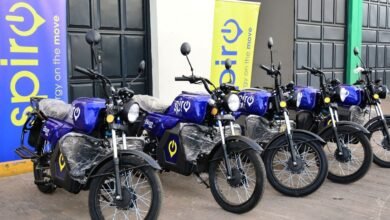
If you have not come across Spiro before, here is the short version. The company sells electric motorcycles to boda boda riders, then keeps the most expensive part, the battery, on its own books. Instead of plugging the bike in overnight, a rider pulls into a Spiro station, swaps an empty battery for a fully charged one in a few minutes, and pays per swap. The bike is yours. The battery stays Spiro’s, rented by the kilometre.
We have written before about how this works on the ground, including Spiro’s Nairobi assembly plant and its new Nairobi research base. The pitch to riders is cost. Spiro says running one of its bikes can cut a rider’s daily transport spend by up to 40% compared with a petrol motorcycle, because swapping a battery is cheaper than buying fuel.

The round, explained
The $55 million is not a new round. It is the final piece of the $215 million raise Spiro announced on 1 June, which was led by Impact Fund Denmark, a Danish state-backed development fund, and Equitane, Spiro’s Dubai-based parent company. Adding NewTrails brings that round to $270 million.
TechCabal reports the deal takes Spiro’s total disclosed funding to roughly $557 million (about KES 72 billion). That figure is hard to pin down precisely, because Spiro’s rounds mix equity and debt, and different outlets count them differently. What is clear is that no African e-mobility company has raised more.
Why the Chinese money is the real story
The identity of the new backer is the most interesting part. NewTrails Capital is a Chinese fund with offices in Shanghai, Shenzhen and Nigeria. It describes itself as a growth-stage investor in emerging markets, aligned with China’s Belt and Road Initiative, the state-backed programme that finances infrastructure across Africa, Asia and beyond. The fund has almost no public track record, so we could not independently verify much about it beyond Spiro’s own description.
What NewTrails says about its plans is clearer. Founding partner Yufan Zhang framed the deal around Chinese supply chains, saying his firm wants Chinese manufacturing and financing to play a bigger role in Africa’s shift to electric transport. Spiro confirmed the partnership will help it build more of its bikes locally, “in particular with Chinese suppliers.”
In plain terms, Chinese capital is now funding an African EV company that already relies on Chinese-made parts. That brings two real benefits: cheaper components and more money to scale. It also deepens the continent’s dependence on Chinese supply chains for a technology that several African governments now treat as strategic. Both things are true at once, and readers should hold both.
A note on the numbers
A word of caution on Spiro’s headline figures. The company says it has 100,000 electric motorcycles on the road, 2,500 swap stations and more than 30 million battery swaps to date. These are Spiro’s own numbers, repeated across press coverage but not independently audited.
We have noted before that Spiro’s earlier operational reports pointed to a deployed fleet closer to 34,000 across its East African markets, with 100,000 standing as a target rather than a confirmed count. The real figure is likely somewhere in between. Treat the big numbers as ambitious claims, not verified facts.
Kenya sits at the centre
Kenya is central to all of this. Spiro assembles bikes on Mombasa Road in Nairobi, runs an all-women motor assembly line, and recently chose Nairobi for its first African research and development centre. It is also one of Spiro’s busiest markets, where the company says it holds more than half of all registered electric motorbikes. The demand is real. The International Energy Agency reports Kenya sold more than 25,000 electric motorcycles in 2025, over three times the year before. There is an environmental case alongside the cost one. An independent lifecycle assessment of Spiro’s Kenyan operations, commissioned by the company, found its bikes cut climate impact by about 72% over their lifespan compared with petrol motorcycles.
The growth has not been free of friction. Some Kenyan riders have complained that because Spiro controls both the battery and the software, it can switch a bike off remotely, which raises a fair question about who really owns the machine. Spiro says deactivation only happens after a long period of inactivity, never while a bike is moving, and only after it has tried to reach the rider.
New boss, more markets
The funding also lands two weeks after a leadership change. Spiro named Anant Badjatya, who previously built an 1,800-station battery-swapping network in India, as group CEO. Kaushik Burman, the former CEO, now runs the mobility division. Spiro currently operates in seven markets: Kenya, Rwanda, Uganda, Togo, Benin, Nigeria and Cameroon. It has named the DR Congo, Ethiopia, Malawi and Mali as its next targets.
For now, the practical takeaway is simple. Spiro has more money than any African e-mobility company before it, a model that riders are genuinely adopting, and a clear path to a $1 billion valuation. The two questions worth watching are whether its deployment numbers eventually match its claims, and how much its growing reliance on Chinese capital and parts shapes the company that comes out the other side. The hard part now is not raising the money. It is spending it well across seven very different markets.





Join the discussion