

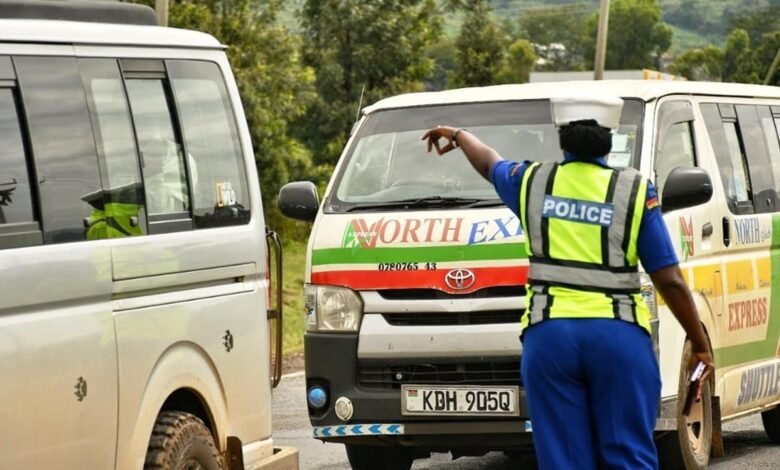
For the first time in Kenya’s history, the NTSA wanted to inspect your personal car. Every privately owned vehicle older than four years was meant to start sitting an annual roadworthiness test from 1 July 2026, the same test matatus and lorries already go through. Then, a few days before that start date, the Authority blinked.
Kenya already inspects its public service vehicles. It already inspects its commercial vehicles. Those are the exact vehicles we watch overload, speed, lose their brakes and kill people on our roads, week after week. If inspection has not fixed the matatu, what is it going to fix about your Vitz?
This is not an argument against inspection. Anyone who uses these roads wants the wreck with no brakes and the lorry with no tail lights gone. The argument is narrower, and harder to wave away. An inspection certificate was never the thing standing between Kenya and safer roads. Enforcement was. Honesty was. And on the evidence in front of us, the NTSA has neither of those under control.
What just happened
The National Transport and Safety Authority did not scrap the rules. It paused enforcing them.
On 26 June, the Authority said inspections would go ahead on 1 July for school transport and commercial vehicles, while enforcement for private cars would be “announced separately.” Two days later it went further. It told traffic officers not to enforce the mandatory inspection requirement on private motorists during road checks, until further notice. The Standard reported that police had been formally notified not to demand an inspection certificate from private vehicles at road checks.
School bus operators got a reprieve too. They will not be penalised yet for missing reflectorised red stop signal arms or telematics units. Commercial operators will not be penalised yet for missing telematics either. You are still expected to book your inspection through eCitizen. You just cannot be stopped on the road over it for now. The Authority also asked the public to ignore “inaccurate and misleading information” and trust only its official channels.
In other words, the rule still exists on paper. It is frozen at the roadside while the NTSA works out whether it can actually deliver it.
Where this came from, step by step
This did not arrive last week. It has a paper trail, and the timeline matters because it shows a policy that was pushed quietly and then met reality all at once.
- 2023: The NTSA first floated draft motor vehicle inspection rules that would have pulled private cars into the net, opening them up for public participation. The idea has been circling for years.
- 13 February 2026: The government gazetted the Traffic (Motor Vehicle Inspection) Rules, 2026 as Legal Notice No. 13 of 2026. This is the actual law. It was published with almost no public noise.
- April 2026: The High Court dismissed an earlier petition by the Road Safety Association of Kenya, which had challenged an earlier version of the rules over a fault in the NTSA’s email submission system during public participation. The court ruled that public participation must be meaningful, not perfect.
- 26 June 2026: With the 1 July start date days away, the NTSA issued a public notice confirming the rollout, then immediately began carving out exceptions for private cars.
- 28 June 2026: The Authority told police not to enforce the private-car requirement, and gave school and commercial operators relief on the new tech requirements.
- 28 to 29 June 2026: Lawyer Charles Mugane filed a fresh High Court petition to stop the rules entirely, arguing the NTSA skipped meaningful public participation and that the fees and penalties are unlawful. The Law Society of Kenya, Katiba Institute and the Kenya Human Rights Commission were named as interested parties.
So the sequence is: gazette quietly, switch on fast, meet an uproar, retreat. We have watched this exact sequence before.
What the rules actually say, and what you would pay
Any vehicle more than four years old from its date of manufacture has to pass an inspection once a year. That sweeps in private cars, government vehicles, PSVs, school vehicles, locally assembled vehicles, and any vehicle that has been in an accident or structurally modified. Agricultural tractors, golf carts, motorised pedal cycles and all-terrain vehicles are left out. Because most cars on Kenyan roads are imported used units already older than four years, this is, in practice, almost everyone.
On cost, the widely quoted “KES 2,000” is not one fee. According to the fee schedule in the rules, all vehicles attracts a KES 1,000 booking fee paid to the NTSA through eCitizen, plus up to KES 1,000 charged by the inspection centre. That is KES 2,000 in total. Motorcycles and three-wheelers pay KES 500 in total, made up of a KES 200 booking fee and up to KES 300 at the centre.
The penalties are heavy. Driving without a valid inspection sticker can attract a fine of up to KES 20,000, up to six months in jail, or both. The rules also create a path to permanently remove a damaged vehicle from the road. You book on eCitizen, a passing car gets a sticker, a failing car gets a defect report with 14 days and one free re-inspection, and police are meant to verify your sticker using the free NTSA mobile app.
The case the NTSA makes
To be fair to the Authority, the safety logic is real, and its Director General laid it out clearly on Nation’s Fixing the Nation programme.
The DG, Nashon Kondiwa, explained what an inspection is supposed to produce. First, a check that the car in front of the inspector is the car on the registry, the chassis number, the weight, even the colour, partly to flag stolen vehicles that otherwise never meet the State. Then the mechanical checks: brakes, suspension, and headlight alignment. Then emissions, because the air in Nairobi, in his words, is not fair on anyone. Then use-based requirements, like the reflective markings now demanded on commercial vehicles so you do not drive into a stalled lorry at night.
He also pushed back on the idea that this is a money grab. He pointed out that the KES 1,000 inspection fee had barely moved in nearly three decades, while the price of a kilo of sugar went from a few shillings to over a hundred. He said the NTSA had even considered pricing inspection by engine size, which would have taken larger vehicles up to KES 5,000, but capped it at KES 2,000 “because of the economy”. Someone, he argued, has to buy the brake testers and emission analysers, and private investors will not do that without a return.
And he made one claim, which we checked. He said private vehicles cause more road deaths than PSVs. On the raw numbers, he is right. NTSA’s own data, reported by the Daily Nation, shows motorcycles causing the most deaths, followed by commercial vehicles, then private vehicles at 1,078, with PSVs well behind at 522.
The part the NTSA cannot answer
The DG walked into this himself, on air.
Asked what would change for private cars when PSVs already go through inspection and are still dangerous, he conceded the core point. When asked about some PSVs less than a year old already carrying those illegal blinding light strips, and 20-year-old PSVs where you simply “hope for the best” on the brakes, and that all of them are NTSA-inspected. His answer was that inspection alone is not enough, that enforcement and “user behaviour” are the real battle.
The head of the Authority agrees that the missing ingredient is enforcement, not inspection. And yet the proposed solution is more inspection.
This is not a theoretical gap. Speed governors are already mandatory on PSVs and commercial vehicles, and we have already covered how routinely they are tampered with. The NTSA already revokes operator licences, but usually after a tragedy rather than before one. The matatu that kills people next month will, in all likelihood, have a valid inspection sticker on its windscreen. The certificate is not the thing keeping anyone alive.
And then there is the bit none of us need a report to confirm. We watch it on the road. An matatu gets stopped, an officer collects his cash through the window, and the matatu is waved on. That happens to vehicles that are already inside the inspection regime. Adding your car to the same regime does not remove that transaction. A new sticker to check, a new reason to be stopped, a new thing to negotiate away for a few hundred shillings.
The DG even admitted, on the same programme, that the NTSA does not know how many vehicles are actually on Kenyan roads. The Authority that wants to inspect every private car annually cannot tell you how many cars exist. It frames the whole exercise as a matter of national security while conceding it lacks the most basic number in the system it regulates. In a separate interview, the same DG admitted he does not even know who the investors behind the matatu industry are. This is a regulator that cannot see the sector it already controls, asking to control a much larger one.
There is also a simpler path the NTSA keeps stepping around. Every car on a Kenyan road must carry insurance, renewed every year under the Traffic Act. That renewal is already a compulsory, annual, and increasingly digital touchpoint with every single vehicle, logged in an insurance system that knows exactly how many cars are covered. Comprehensive policies already put a car through a valuation and inspection before cover is issued. And when the Treasury wanted a recurring payment from motorists in 2024, it did not build anything new. It planned to collect through insurers at the point of cover. So the annual moment exists, the database exists, and a network of private assessors exists. A regulator that cannot count the cars on the road could start by reading the insurance register. An insurance valuation is not a full brake, lights and emissions test, granted. But the touchpoint is there to build on, not to duplicate behind a new paywall.
Why the trust is not there
The deeper reason to be wary is that we have just watched the NTSA build the fee before it built the system, and fail.
In March 2026 the Authority switched on an automated Instant Fines system, roughly 1,000 cameras firing SMS fines at motorists with no human in the loop. When we covered the launch, we flagged the unanswered questions around fairness, appeals, and whether government and diplomatic plates would be quietly exempted while ordinary drivers carried the whole burden. A court had the same questions. As we later reported, Justice Bahati Mwamuye froze the system on 12 March, and the NTSA withdrew it entirely on 27 March, after the lobby group Sheria Mtaani argued it bypassed the police, the prosecutor and the judiciary and treated every registered owner as an automatic culprit.
That is the same shape as this. A digital enforcement idea, rushed live, then stopped by a judge within weeks. The inspection rules are now sitting in the same courthouse, on the same public-participation argument, facing the same fate.
This pattern is not new either. We have written about how the real problem behind the NTSA’s number plate backlog is not production but where its money goes, and about whether the Authority’s 1,000 new road cameras might really be aimed at tracking stolen cars. The intentions are always digital and ambitious. The execution keeps tripping over the basics. It is worth remembering that the current DG is a former chief information officer, the man who digitised the NTSA.
We made almost exactly this argument in a different lane a few weeks ago, when we wrote that you cannot map your way out of disorder, that a slick layer on top of a broken service just renders the brokenness in higher resolution. The same is true here. You cannot inspect your way out of corruption. You fix enforcement first, then the inspection means something.
And then there is the money
Kenya has more than six million registered vehicles. By Citizen Digital’s arithmetic, if every qualifying vehicle paid the KES 1,000 booking fee and KES 1,000 inspection fee, the State stands to collect on the order of KES 12 billion a year.
Kenyans have seen this film recently. In the Finance Bill 2024, the Treasury proposed a motor vehicle tax of 2.5% of a car’s value, with a minimum of KES 5,000 and a maximum of KES 100,000, payable every year through your insurer. The country rejected it, and Parliament dropped it before the whole Bill collapsed in the protests of June 2024. An annual, compulsory payment tied to simply owning a car was killed off two years ago. A KES 2,000 annual inspection fee, also compulsory, also tied to owning a car, lands in the same place and feels like the same thing, now just marketed for safety.
This also lands on top of a tax load motorists already carry. To put a used car on a Kenyan road, you first pay one of the heaviest import tax stacks in the region: 25% import duty, excise of 20 to 35% by engine size, 16% VAT layered on top of both, plus an import declaration fee and a railway levy. Together these routinely add more than half the value of the car before you have driven a metre. Then you pay at the pump. On a litre of petrol, around KES 72, more than a third of the price, is tax and levies, including a KES 25 Road Maintenance Levy that exists specifically to fund roads and raised about KES 120 billion in the year to June 2025. Then you pay annual insurance. Then levies on your electricity, and on much else.
A safety check the government itself calls a public good is now being billed separately, per car, per year, on top of all of that. If roadworthiness saves lives, it can be funded from the road money that already exists, the way other public goods are funded, instead of turning the inspection lane into its own toll booth. The DG’s own defence, that private investors must recover the cost of the machines, is an admission that this was built as a business, not a service.
Even the DG seemed to half-acknowledge the revenue thinking. On the programme he floated auctioning attractive number plates as a way for the NTSA to make money, suggesting that there are easier ways to raise funds than forcing everyone through inspection. Mugane’s petition puts it more bluntly, calling the rules a revenue collection strategy disguised as a compliance issue, and noting the fees are routed through the same eCitizen platform the Auditor-General has repeatedly flagged.
What this comes down to
The rules are paused, not gone. Before they come back, these are the questions sitting unanswered.
How does annual inspection make roads safer when the PSVs and lorries already inspected are still unroadworthy and still killing people? What stops a new private-car sticker from becoming a new roadside bribe instead of a safety check? How will 17 government inspection centres, with no private centre yet licensed, handle millions of cars without queues that breed exactly the corruption the system is meant to remove? Why should a regulator that cannot count the vehicles on the road, and whose last automated enforcement system a judge threw out within a fortnight, be trusted to run a far bigger one? And how is a compulsory annual KES 2,000 charge meaningfully different from the motor vehicle tax the country already rejected? Why build a separate paid queue when every car is already insured every year, in a database that could be read instead? And why must a safety service be charged per head at all, when motorists already fund the road sector through a KES 25 per litre fuel levy and one of the heaviest import tax regimes in the region?
Until those questions have real answers, this is not a road safety programme. It is a fee. We have already watched the NTSA build the fee before it built the system, more than once this year, and we have watched the courts send it back each time. There is no reason yet to believe this round ends differently. Inspection done properly could genuinely make Kenya’s roads safer. This is not that, and pretending otherwise helps no one but whoever collects the money.
Watch three things from here: whether the court suspends the rules outright, whether the NTSA can show enforcement actually improving on the PSVs it already controls, and whether a single private inspection centre ever gets licensed in a way anyone can see and verify. If none of that moves, the next time your car is waved down, the only thing that will have changed is the price of being let through.



Join the discussion