

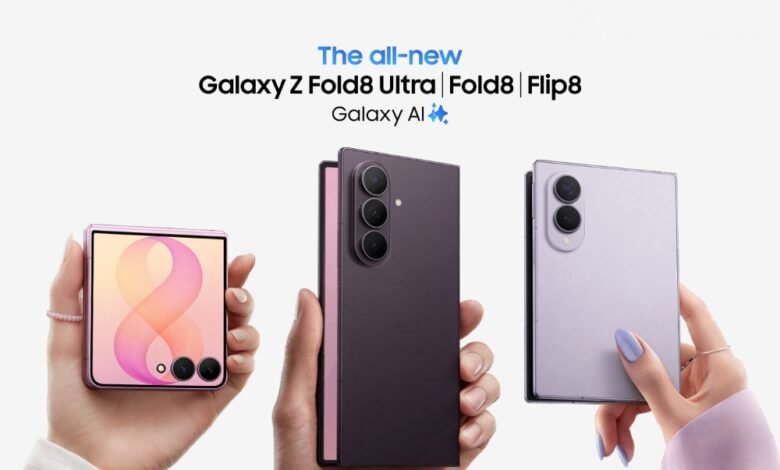
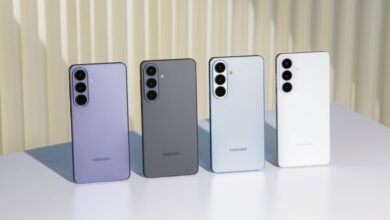
Samsung held its second Galaxy Unpacked of 2026 in London today, and unveiled three foldable phones, two smartwatches and its first pair of smart glasses. Pre-orders opened immediately in selected markets. The phones and watches go on general sale on 7 August. We previewed the event last week, and the biggest change is the one Samsung teased without naming: the word “Fold” now describes two phones with completely different shapes.
Here is what the new devices cost at launch, using Samsung’s own figures.
| Device | US price | Straight KES conversion |
|---|---|---|
| Galaxy Z Fold8 Ultra (256GB) | $2,099.99 | ~KES 271,000 |
| Galaxy Z Fold8 (256GB) | $1,899.99 | ~KES 246,000 |
| Galaxy Z Flip8 (256GB) | $1,199.99 | ~KES 155,000 |
| Galaxy Watch9 (40mm, Bluetooth) | $379 | ~KES 49,000 |
| Galaxy Watch Ultra2 (47mm) | $699 | ~KES 90,000 |
Those shilling figures are straight currency conversions at roughly KES 129.3 to the dollar. They are not what you will pay in Nairobi. Add import duty, VAT and retailer margin, and local prices land well above them. More on that further down.
Two Folds, two different shapes
Last year’s Galaxy Z Fold7 was tall and narrow when shut, like a TV remote. This year Samsung split that idea in two.

The Galaxy Z Fold8 Ultra is the direct continuation of that design. It keeps the tall, narrow body, a 6.5-inch cover screen and an 8-inch main display. It measures 4.1mm thick when open and weighs 215g, which makes it the thinnest Fold Samsung has built. It carries the 200MP main camera, a new 50MP ultra-wide, a 10MP 3x telephoto, and a 5,000mAh battery. That battery is a 600mAh jump over the Fold7 and the largest in the Fold line so far.
The Galaxy Z Fold8 is the genuinely new thing, and the name is misleading. It is shorter and wider than any previous Fold. Closed, it is 123.9mm tall and 81.9mm wide, which is roughly the proportions of the old BlackBerry Passport. Open, the 7.6-inch screen sits at a 4:3 ratio, closer to a small tablet than a phone. Turn it sideways and Samsung says it suits reading. It weighs 201g, the lightest Fold yet, and packs a 4,800mAh battery.
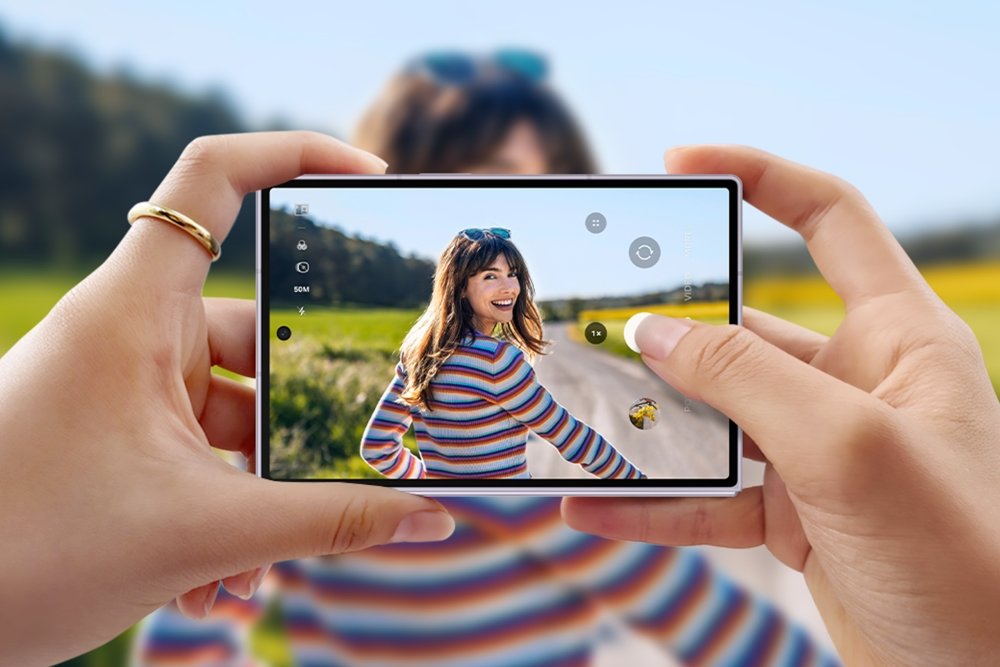
The trade-off on the cheaper Fold8 is the camera. It has two rear lenses only, a 50MP wide and a 50MP ultra-wide. There is no telephoto, so zoom is digital only. The Ultra keeps the three-camera system. That is the main reason for the $200 gap between them.
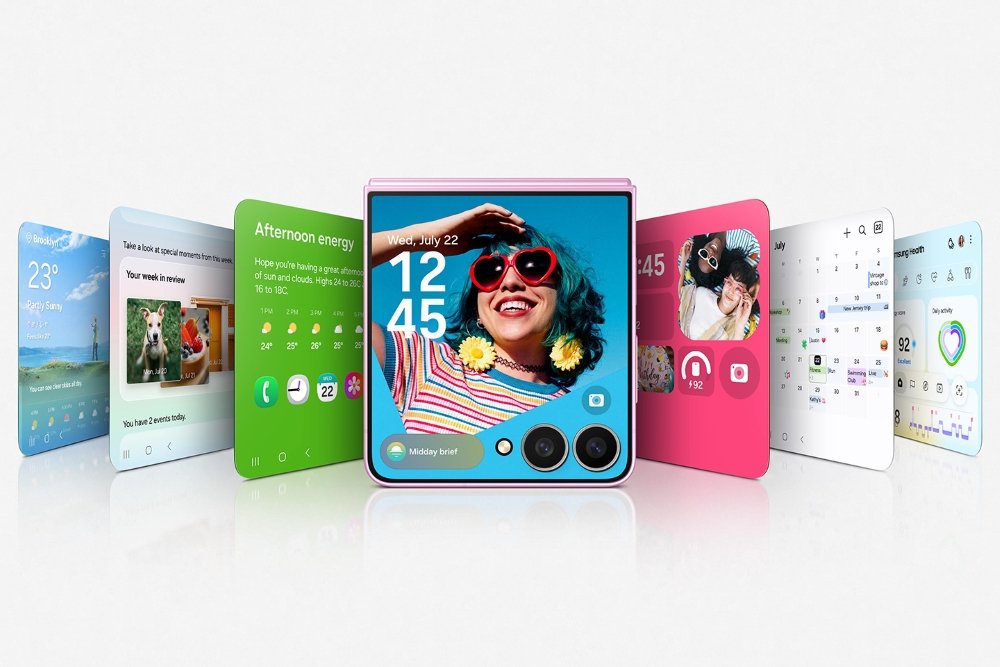
The Galaxy Z Flip8 is the smallest change of the three. It is 6.1mm thick unfolded and 180g, Samsung’s slimmest and lightest Flip. The cover screen now runs apps properly rather than just widgets, and Samsung’s Now Brief summary card lives on it. Battery stays at 4,300mAh and charging stays at 25W, both unchanged from the Flip7.
The crease, and what Flex Titanium actually does
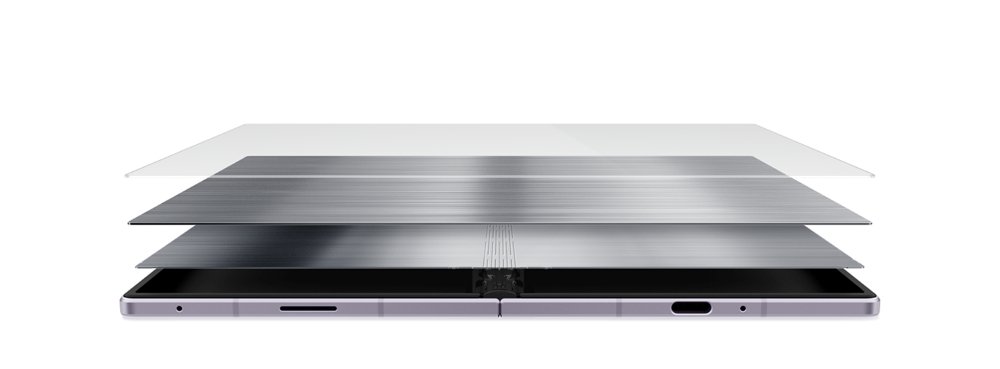
Every foldable has a visible line down the middle of the inner screen where it bends. Samsung’s fix this year is called Flex Titanium. It is a titanium-alloy film layered over a reinforced titanium plate, sitting underneath the display. The plate spreads the pressure of folding across a wider area instead of concentrating it at the hinge, which Samsung says reduces how visible the crease becomes over time and lets the phone be thinner without getting more fragile.
Samsung also retuned the magnets, hinge and screen tension so the phones open with less effort. That sounds like marketing filler until you have wrestled a Fold open one-handed.
One number has not moved. All three phones are rated IP48. That means full dust protection and submersion in fresh water up to 1.5 metres for half an hour. It is not the IP68 rating on ordinary flagships, and Samsung explicitly says it is not for beach or pool use. Foldables still have a hinge, and a hinge still lets things in.
Why everything costs more
The Fold8 Ultra is $100 more than the Fold7 it replaces. The Flip8 is $100 more than the Flip7. The Watch9 is $30 up on the Watch8, and the Watch Ultra2 is $50 up on last year’s Watch Ultra.
The cause sits inside the phones. AI data centres are consuming the world’s supply of DRAM and NAND flash memory, and phone makers are competing for what is left. Counterpoint Research estimates that memory now makes up around 40% of the bill of materials for an $800 smartphone, up from about 14% in early 2025, with the combined DRAM and NAND cost in one such phone rising roughly 4.6 times to $291. The Korea Herald reported that this squeezes Samsung in both directions at once, since the same shortage is delivering record profits to its chip division while eroding margins in its phone division.
Ben Wood of CCS Insight told CNBC he was surprised the increases were not larger, which suggests Samsung is absorbing part of the cost rather than passing all of it on. Samsung has reason to hold the line. Apple is widely expected to launch its first foldable iPhone later this year, and 2026 is the first year Samsung will not have the premium foldable category largely to itself.
Watches, and the glasses
The Galaxy Watch Ultra2 gets an 800mAh battery, 35% larger than the previous Ultra, and a display that peaks at 5,000 nits. Samsung claims that is the brightest on any smartphone-paired smartwatch based on its own market survey as of June 2026. It is rated 10ATM and IP69K and certified to EN13319, the dive-instrument standard, so it now tracks depth, dive time and water temperature. Deeper diving features built with equipment maker Mares arrive later this year.
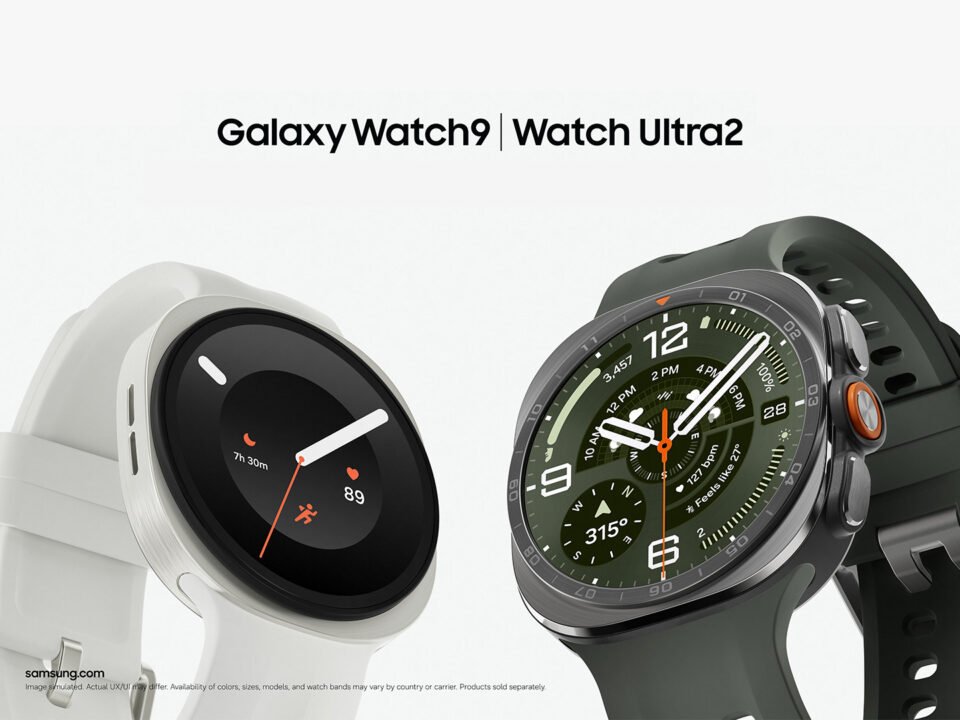
The Galaxy Watch9 comes in 40mm and 44mm, with a 390mAh battery in the smaller size, 20% up on the Watch8. Both watches run Wear OS 7 with One UI 9 Watch on Qualcomm’s new Snapdragon Wear Elite chip, and both carry Samsung’s refreshed health features including sleep apnoea detection with new FDA clearance, Vitals overnight monitoring, a Heart Health Score and a Fitness Index. We covered how this generation of Samsung health tracking behaves day to day in our Galaxy Watch 8 Classic review.
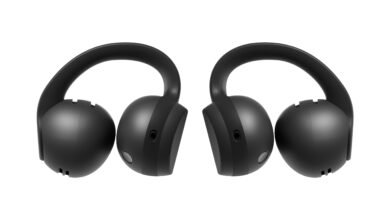
Samsung closed the event with its intelligent eyewear, built with Gentle Monster and Warby Parker and running Google’s Gemini on the Android XR platform. It has a camera, a Snapdragon AR1 Gen1 chip, up to nine hours of battery and a case holding seven more charges. Samsung gave it no product name, no price and no date beyond “soon.” Press at the event were allowed to handle the frames but not wear them. TechCabal has been tracking the project, where it is widely referred to as Galaxy Glasses.
All the new devices ship on Android 17 with One UI 9. If you own an older Galaxy and want to know when your turn comes, we maintain a One UI 9 update tracker, and we have explained how One UI 8.5 and One UI 9 differ if the version numbers are confusing.
What this means in Kenya
Samsung has named no African market in any of today’s announcements, and there is no Samsung Kenya launch. That is now the pattern rather than the exception. We explained last year why Samsung skipped Kenya for the Fold7 and Flip7, and we later mapped where Kenyans were actually buying them. Expect the same route this year: independent importers, stock landing a few weeks after 7 August, and warranty cover that depends entirely on which shop you walk into.
For price expectations, the Fold7 currently sells in Nairobi between roughly KES 161,000 and KES 210,000 depending on the retailer and storage. Given a $100 higher global price and duty on top, budget above that for the Fold8 Ultra.
Two things to check before you pay, both of which only matter if you are buying grey-market stock.
First, the chip. The Fold8 and Fold8 Ultra use Qualcomm’s Snapdragon 8 Elite Gen 5 everywhere. The Flip8 does not. Samsung is shipping it with the Snapdragon in the US and Canada and with its own Exynos 2600 in the UK and South Africa, which means the Flip8 you buy in Nairobi depends on which market your importer sourced it from. Ask for the model number before paying.
Second, there is no charger in the box, and the fast-charging figures Samsung quotes assume you have one. The Folds need a 45W adapter to hit their stated speeds and the Flip8 needs 25W.
The practical position for most readers is simple. These are luxury devices in a market where Samsung is not selling them, sold by importers whose stock and warranty terms vary. If you want one, wait for local stock in late August, confirm the model number and the warranty in writing, and treat the shilling prices in this article as a floor rather than an estimate.


Join the discussion