


Samsung has confirmed its next Galaxy Unpacked. The event happens on Wednesday, 22 July 2026, in London, and it will be streamed live on Samsung.com, the Samsung Newsroom and Samsung’s YouTube channel. The stream begins at 2pm BST, which is 4pm Kenyan time (EAT). That is the whole of the officially confirmed information, and it comes straight from Samsung’s own invitation, published on its Global Newsroom on 8 July.
The teaser tagline is “A New Shape Unfolds.” The invitation video shows a tall, narrow ticket that gets shortened into a squat, wide rectangle. Samsung is signalling a new foldable shape without naming a single product.
What is actually confirmed
Three things, and only three things:
- The date, the city and the time.
- That the announcements are Galaxy devices, with an emphasis on foldables and “intelligent capabilities.”
- That reservations are open on samsung.com/unpacked, with pre-order perks in Samsung’s main markets.
Samsung has not confirmed a single product name, a single specification, or a single price.

The hardware everyone expects
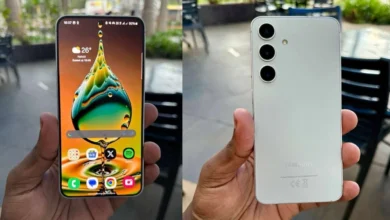
A Galaxy Z Fold 8. This is the “new shape.” Leaks describe it as shorter and wider than any previous Fold, closed into something closer to a passport than a TV remote. The inner screen is reported at roughly 4:3, so it behaves like a small tablet when opened rather than a stretched phone. Reported dimensions put it around 123.9mm tall and 81.9mm wide when folded. It is tipped to carry two rear cameras rather than three.
A Galaxy Z Fold 8 Ultra. This is the important naming detail, and most coverage gets it wrong. The Ultra is not the new wide phone. The Ultra is the tall, narrow, familiar shape that Fold 7 owners already know, moved up a tier with a triple camera, a bigger battery and higher storage options. So the number you recognise is going on the unfamiliar phone, and the phone you recognise is getting a new suffix. Expect confusion in shops.
A Galaxy Z Flip 8. The clamshell. Reported as slimmer and lighter, with a redesigned hinge said to reduce the crease. Reports suggest chip allocation splits by region between Qualcomm’s Snapdragon 8 Elite Gen 5 and Samsung’s own Exynos 2600.
A Galaxy Watch 9 and a Galaxy Watch Ultra 2. The Ultra 2 is expected to fix the original’s main weakness with a substantially larger battery.
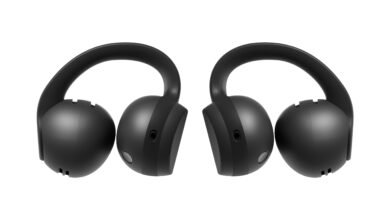
Possibly, Samsung’s first smart glasses. Google and Samsung showed audio-only Android XR eyewear on stage at Google I/O in May, built with Gentle Monster and Warby Parker, running Gemini. Google has said the audio glasses arrive in the autumn. Unpacked is the obvious place to give them a name and a price. It is not the place you will be able to buy them.
The software, which is what most of you actually care about
One UI 9, built on Android 17, is widely reported to ship first on the new foldables. Samsung itself said in May only that the “full experience” of One UI 9 would arrive with upcoming Galaxy flagships later this year. It has not tied that promise to 22 July in writing.
Here is the part that matters if you already own a Galaxy: 22 July is an announcement date, not your update date.
The One UI 9 beta has been running on the Galaxy S26 series since May. Internal test builds have been spotted across the S25, S24 and S23 lines, plus several A-series phones. But the stable rollout to existing devices is widely expected to begin around September, and later still for carrier-locked models and for regions outside Samsung’s first wave, which historically includes most of Africa.
We have been tracking every one of those builds in our One UI 9 and Android 17 update tracker, and that is the page to watch rather than the Unpacked stream. If you own last year’s flagship, we have laid out when the Galaxy S25 is likely to get the stable One UI 9 update. If you are on a 2023 device, One UI 9 is the last major update your phone will ever receive. And if the version numbers themselves are confusing, we have explained the difference between One UI 8.5 and One UI 9 in plain terms.
There is one more catch. Google’s Gemini Intelligence, the agentic AI layer that Samsung will almost certainly market heavily on stage, has a hard hardware floor: a current flagship chip, at least 12GB of RAM, and Gemini Nano v3. That rules out the Galaxy S25, the Galaxy Z Fold 7 and every mid-range Galaxy sold in Kenya. We broke down the eight specifications that decide whether your phone gets Gemini Intelligence when Google published them. Getting One UI 9 and getting the AI features Samsung demos on stage are two different things.
Apple is running a version of the same split this month, which we covered in our guide to the iOS 27 public beta and the iPhones it supports.
The price problem, and why it lands hardest here
Foldables are expensive everywhere. In Kenya they are expensive and awkward, and the reason is worth spelling out.
Samsung Kenya did not officially launch the Galaxy Z Fold 7 or Z Flip 7 here. We reported that at the time. The phones reached Kenya through independent retailers importing them on their own account, which means there is no single official Kenyan price, no official Kenyan warranty terms, and no Samsung Kenya trade-in scheme. What you get instead is a spread. Checking listings today, the same Galaxy Z Fold 7 sells for KES 161,000 at Phone Place Kenya, roughly KES 182,000 to KES 188,000 at several others, KES 185,000 to KES 210,000 at Price Point, and up to KES 224,999 at Silkroom. That is a gap of more than KES 60,000 on one phone.
Now add this year’s component costs. Leaked European pricing relayed by WinFuture and reported by GSMArena puts the Fold 8 Ultra at €2,199 for 256GB, up €100 on the Fold 7, rising to €2,799 for 1TB, up €280. The wide Fold 8 is tipped at €1,999, the Flip 8 at €1,299. A separate leak from Korean outlet SEDaily puts US prices at $1,899 and $2,099.
Those increases are not arbitrary. Memory prices have surged industry-wide because DRAM makers shifted capacity toward high-bandwidth memory for AI servers. Omdia’s latest analysis found memory now accounts for close to 60% of the total bill of materials on smartphones under $400. IDC expects global smartphone shipments to fall roughly 14% this year while average selling prices rise, and says prices in some emerging markets have already gone up 40% to 50%. Samsung, SK hynix and Micron are now facing a US class-action lawsuit alleging they coordinated to restrict supply and inflate those prices. The companies deny wrongdoing and nothing has been proven in court.
Set that against the actual Kenyan market, where sub-$200 phones drive the volume and itel, Infinix and TECNO dominate the shelves. A KES 200,000-plus foldable is not a mass-market product here.
What to do on the day
If you are shopping, watch for two things: whether the wide Fold 8 actually makes the closed phone usable in a way the tall Fold never managed, and whether Samsung Kenya says anything at all about bringing these devices in officially this time.
If you already own a Galaxy and you only want the new software, you can skip the stream. Our tracker will have it first.




Join the discussion