
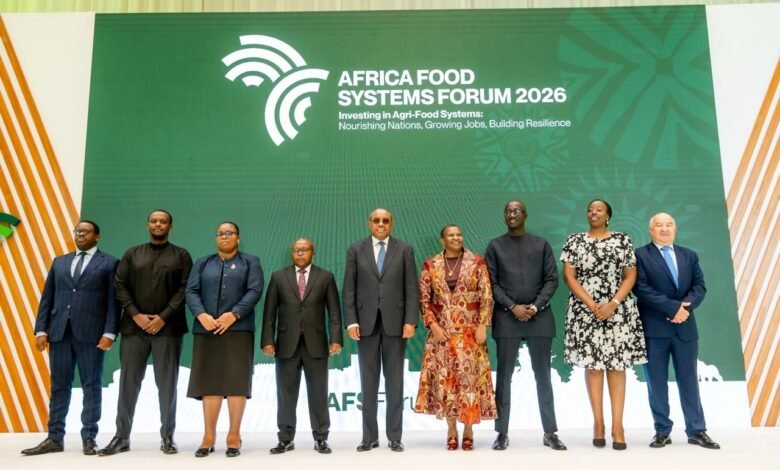
Paul Kagame is set to open the 20th Africa Food Systems Forum in Kigali on 31 August. Organisers are expecting more than 5,000 delegates from over 50 countries. The main summit runs from 1st to 4 September at the Kigali Convention Centre, with sessions either side of it and a food festival to close.
This year’s theme is “Investing in Africa’s Agri-Food Systems: Nourishing Nations, Growing Jobs, Building Resilience”. The programme covers five priorities: investment and finance, food security and nutrition, climate resilience, youth and digital innovation, and trade and markets.
From Oslo to Kigali
The Africa Food Systems Forum began in 2006 as the African Green Revolution Conference in Norway. It moved to the continent in 2010 as an annual gathering and spent years as the African Green Revolution Forum, or AGRF, before taking its current name. AGRA, the Nairobi-based Alliance for a Green Revolution in Africa, organises it with the host government.
Kigali is the sixteenth summit, and marks 20 years since that first meeting in Norway. Rwanda has hosted five of them: 2018, 2020, 2022, 2024 and now 2026. AGRA’s Rwandan work runs past the Forum itself. In February 2025 we covered its agreement with Rwanda’s ICT ministry to set up a Food Innovation Hub.

The money
The engine of the Forum is the Investment Room, where governments and businesses pitch to financiers. In Dakar last year, 11 countries presented a total of US$18.5 billion in what the organisers call national food systems investment opportunities.
Six of those came through Country Legacy Programmes. That scheme, running since 2023, takes selected governments and helps them turn food policy into a plan an investor can actually read. The six from Dakar come to about US$9 billion:
- Nigeria: US$3.5 billion for NiPHaST, a 10-year programme against post-harvest losses
- Uganda: US$1.4 billion across beef, dairy, coffee, soya and maize
- Somalia: US$1.38 billion across six value chains, sesame and sorghum among them
- Zimbabwe: US$1.042 billion across seven value chains, most of it maize and soybean
- Liberia: US$900 million across rice, maize, coffee, cassava and oil palm
- Senegal: US$858 million as host, built around community farming cooperatives
Alongside those, 66 small and medium enterprises put US$90.5 million of investment asks in front of more than 100 registered investors.
Those figures measure money sought. The 2025 summit report describes plans tabled for consideration and says mechanisms for their implementation “will be underway”.
Who is in the room
Six former heads of state and government sit on the Council of the Wise: Goodluck Jonathan of Nigeria, Jakaya Kikwete of Tanzania, Mahamadou Issoufou of Niger, Mohamed Beavogui of Guinea, Lionel Zinsou of Benin, and Hailemariam Dessalegn of Ethiopia, who chairs the AGRA board.
Among sitting officials, the confirmed list includes Sidi Ould Tah, who has run the African Development Bank since September 2025, Alice Ruhweza, president of AGRA, Qu Dongyu, director-general of the FAO, and Alvaro Lario, president of IFAD.
Josefa Sacko, Angola’s ambassador to Italy and its permanent representative to the UN agencies in Rome, is also speaking. On 29 July the African Union Executive Council endorsed her as Africa’s candidate to run the FAO from 2027, after Morocco and Uganda pulled their bids to clear the way. Sacko was the AU’s agriculture commissioner from 2017 to 2025, so she knows the room. Qu Dongyu’s term ends in July 2027. Both of them will be in Kigali.
What Kenya gets out of it
Professor Mary Abukutsa Onyango shared the 2025 Africa Food Prize with Nigeria’s Dr Mercy Diebiru-Ojo for her work on indigenous vegetables. Kenyans also took the grand prize and the female ag-tech innovator award at the WAYA awards for women agripreneurs in Dakar, worth US$300,000 in grants.
The trade case is blunter. Kenya spent KES 81.6 billion on food and beverage imports in the first quarter of 2026, the highest first-quarter figure on record, as we reported in June. No Kenyan government has yet taken a Legacy Programme slot, which is the part of this Forum where a country arrives with a costed plan and leaves with financiers attached to it.
The numbers to check afterwards
Forums like this are easy to announce and hard to grade. Two sets of figures will do it.
The first is turnout. Rwanda’s agriculture ministry counted more than 4,900 people from 97 countries when Kigali hosted in 2024. AGRA counted nearly 6,000 from 105 countries in Dakar in 2025. Those are counts taken after the fact. This year’s 5,000 is still a projection.
The second, and the more useful, comes from the organisers themselves. The 2025 summit report sets targets for this Forum: at least five Legacy Programmes finalised with investment actually received by the end of 2026, and twelve by the end of 2027. It wants at least 20 of those 66 enterprises financed by the end of 2026, and between 10 and 20 partnerships on record. Those are numbers anyone can check against whatever Kigali announces next week.







Join the discussion