

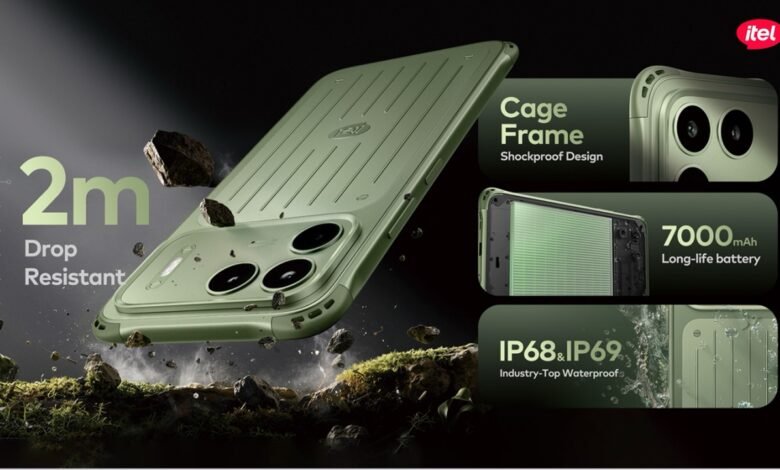
itel has launched the Power 80 in Kenya at a recommended retail price of KES 19,499. It has a 7,000mAh battery, a 6.78-inch screen and a body rated for a two metre drop onto concrete. itel’s line for it is Hakuna cover, bado. No case, still tough.
Normally, you buy a phone. Then a case. Then tempered glass. Then it slides out of your pocket at the stage anyway and you pay for a new screen. itel’s is saying that the math is usually something like: KES 20,000 for a phone, KES 500 for a case, KES 500 for a screen protector and KES 3,000 the first time the glass cracks. Over two years the extras can cost more than the phone did.
itel is arguing that phones need all of that because they are fragile, and they’re fixing that cost build-up with their new Power 80.
“Why should Kenyans buy a phone, a case, and a screen protector just to trust their phone will survive the week?” itel Kenya’s marketing manager Greyson said at the launch. “We built the POWER 80 so the answer is: you don’t have to.”

How it is built
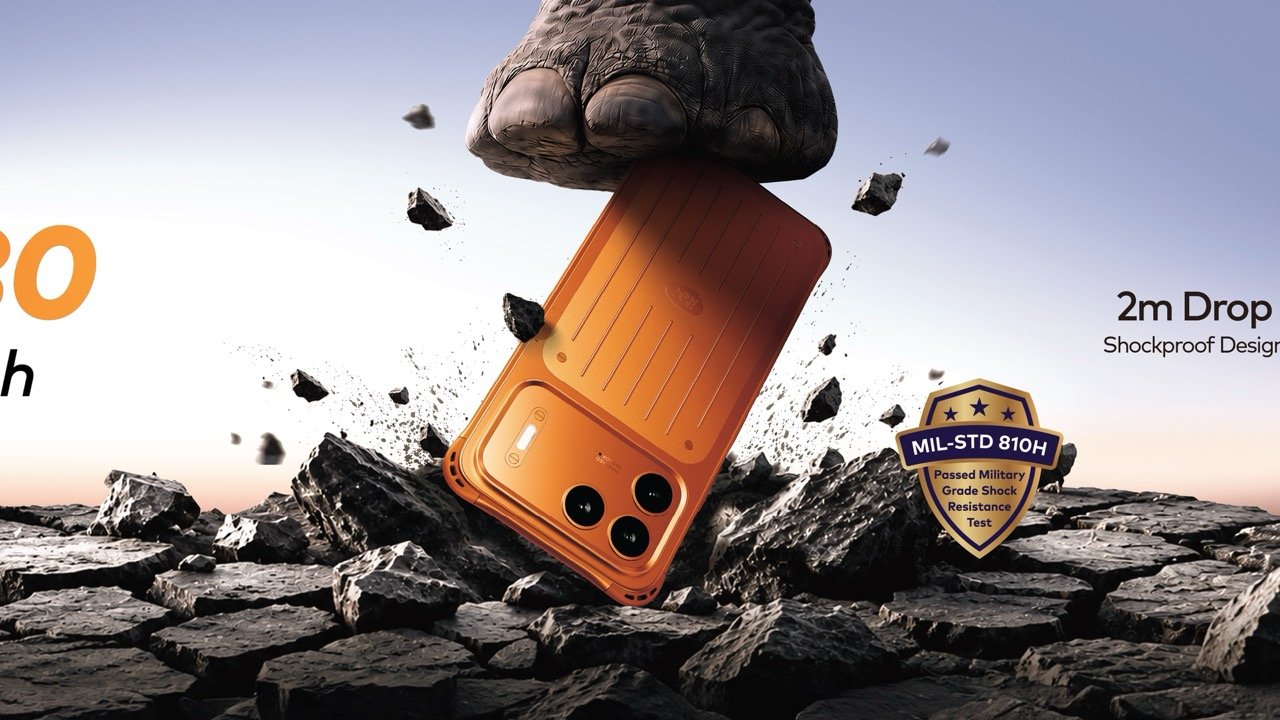
The Power 80 is built around what itel calls a cage frame, a reinforced internal structure that spreads the energy of an impact outwards instead of letting it reach the screen and the boards behind it. The corners carry buffers that sit slightly proud of the display, so the glass never makes first contact when the phone hits tile face down. The back and mid-frame are a high-strength composite chosen to flex rather than crack, and every seam, port and speaker grille is sealed.
A case and a screen protector do the same job from the outside. itel has built it in, which at this price is unusual.
The certifications
Most phones here carry one durability rating, or none. The Power 80 carries four, tested by independent laboratories.
- SGS 5-Star Gold Drop-Proof. SGS is a Geneva testing company, and its five-star drop mark is the one Honor, Oppo and vivo put on their tougher budget phones. The Power 80 passed at the top rating, against repeated drops from two metres onto hard surfaces.
- MIL-STD-810H. The United States military’s environmental testing standard, written for kit that has to keep working after a shaking, a freezing and a fall. On a phone under KES 20,000 it is rare.
- IP68. Dust tight, and sealed well enough to survive fresh water at 1.5 metres for half an hour. That covers rain, a sink and a downpour on a boda.
- IP69. Under IEC 60529 it means the phone withstands water at around 80 degrees Celsius, fired from four nozzles at 80 to 100 bar while it rotates. That test exists for lorries and food plants that get steam cleaned after a shift. Between IP68 and IP69 the Power 80 is sealed against effectively every way water reaches a phone here.
Battery and charging
The battery is 7,000mAh and charges at 18W over USB-C. Reverse wired charging lets it charge other hardware, so it doubles as a power bank for a friend’s phone or a pair of earbuds.
Screen, chip and cameras
The screen is a 6.78-inch IPS LCD at HD+ resolution tuned by itel for outdoor visibility, with peak brightness listed at 500 nits. The processor is a Unisoc T7250 octa-core, enough for WhatsApp, YouTube, M-Pesa and a browser. There is a 50MP main camera and an 8MP selfie camera, and it runs Android 16 with itel OS 16.
| Display | 6.78-inch IPS LCD, 720 × 1576, 500 nits peak |
| Processor | Unisoc T7250, 12nm octa-core |
| RAM | 6/8GB, extendable to 16GB with Memory Fusion |
| Storage | 64GB or 128GB, microSD up to 256GB |
| Battery | 7,000mAh, 18W wired, reverse wired charging |
| Cameras | 50MP main, 8MP selfie |
| Durability | IP68, IP69, MIL-STD-810H, SGS five-star, 2m drop rated |
| Software | Android 16 with itel OS 16 |
| Network | 4G |
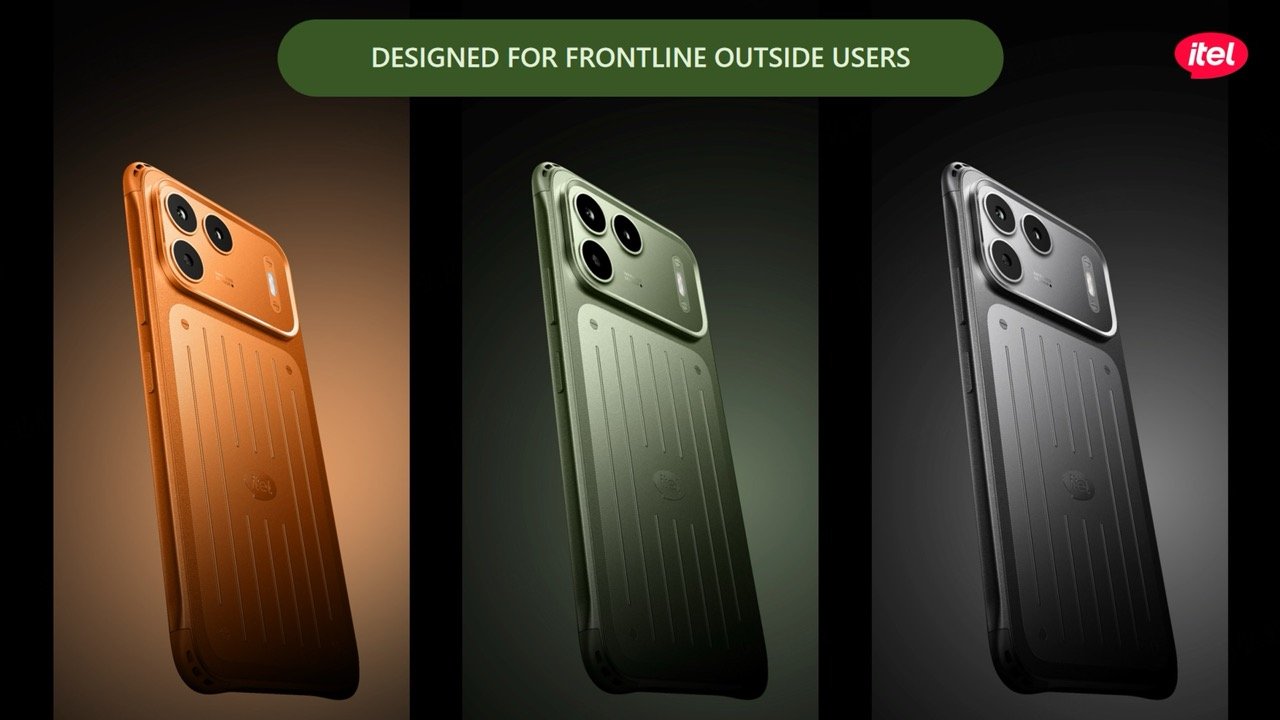
| Colours | Lava Orange, Tundra Green, Rock Black |
| Price | RRP KES 19,499 |
The RAM figure itel advertises is the combined one. Physical memory is 6GB or 8GB by variant, and Memory Fusion tops it up virtually from internal storage. That keeps more apps open in the background, though storage is slower than real memory.
Should you buy it
itel launched the Super 26 Ultra last October at RRP KES 20,499, and we covered it then. It has a 1.5K curved AMOLED at 144Hz behind Gorilla Glass 7i and a faster 6nm chip. For a thousand shillings less the Power 80 gives up that screen and that chip, and hands back a bigger battery, a two metre drop rating and full water sealing.
If you work outdoors or have a history of dropping things, take the Power 80. The money you would have spent on a case and a screen protector stays in your pocket. If you work in an office, the Super 26 Ultra has the better screen for about the same money.


Join the discussion