

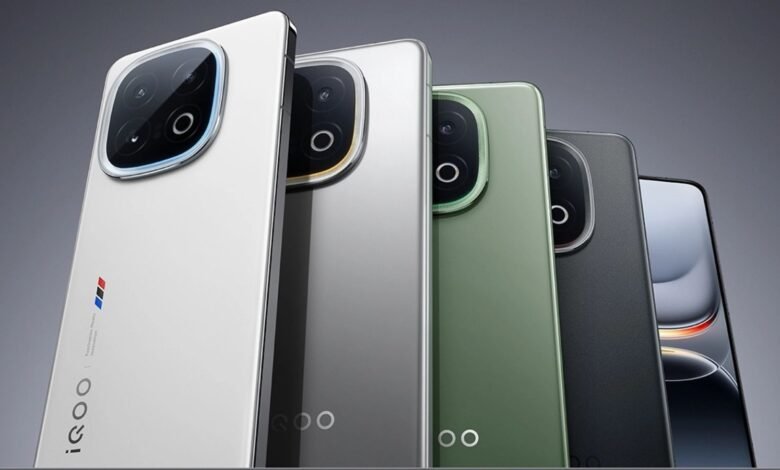
iQOO and Samsung Display unveiled a 2K, 165Hz screen for the upcoming iQOO 16 on 14 September. The vivo sub-brand says it is the first phone to combine that resolution and refresh rate, with Samsung’s M16 light-emitting material and LEAD 2.0 display technology.
Those names describe changes inside the screen. Their purpose is straightforward: keep the picture sharp as it moves, without making the display consume too much power. In its announcement of the 14 September event, iQOO claims the panel uses 31% less power than a similarly sized 1.5K display at 150 nits of brightness.
Understanding that claim starts with separating two numbers that phone launches often bundle together.
What 2K and 165Hz each do
Resolution describes the grid of pixels that makes up an image. More pixels can draw finer detail, from the edges of small text to distant objects in a game. Refresh rate describes how often the screen can update that image.

For a concrete example, the iQOO 15’s official specifications, checked on 15 September 2026, pair a 2K screen with a 144Hz refresh rate. Its 3,168 by 1,440 resolution amounts to about 4.56 million pixels. That gives a sense of what iQOO means by 2K; it should not be mistaken for a confirmed pixel count for the iQOO 16.
At 165Hz, a screen can update every 6.06 milliseconds. At 144Hz, the interval is 6.94 milliseconds. The iQOO 16 therefore raises the ceiling for how often a new image can appear by about 15% over its predecessor.
In a fast-moving game, shorter intervals can make movement easier to follow. The benefit depends on the game producing enough frames. A title that produces 60 new frames a second does not acquire 165 distinct frames simply because the screen supports 165Hz. Intel’s refresh-rate explainer, checked on 15 September, explains the same relationship between display speed and the hardware that creates each image.
Drawing more detailed images more often also increases the work the phone must do. That is why the engineering behind the panel matters alongside its refresh rate.
Letting more light out
An OLED screen produces light in the panel itself. Conventional OLED panels have a polariser, a layer that reduces reflections from light hitting the screen. It helps you see the image, but it also absorbs some of the light travelling out towards your eyes.
The panel must compensate for that lost light to reach the brightness you want.
Samsung’s LEAD technology removes the conventional polariser and controls reflections through a different structure. In its 6 May 2025 explanation of LEAD, Samsung Display describes the use of an on-cell film and colour filters. Less light is lost on its way out, which lets the screen reach a given brightness with less power.
The iQOO 15 already used LEAD. The iQOO 16 moves to LEAD 2.0 alongside M16, the material responsible for emitting the light. These changes address different parts of the job: producing light efficiently and getting it through the panel.
iQOO’s September announcement also identifies a custom 22-nanometre display driver chip for the higher refresh rate, plus a dedicated flagship production line. The driver controls the panel; it is separate from the phone’s main processor that runs apps and games.
What the power claim tells us
The 31% figure is a comparison of display panels at a specified brightness. It cannot tell us how much longer the finished phone will last between charges.
The announcement does not identify the comparison panel or give both panels’ refresh rates during the test. We therefore cannot conclude that running the iQOO 16 at 2K and 165Hz uses less power than every lower-resolution alternative.
The distinction matters when gaming. A more efficient display can reduce one part of the power demand, while the processor still has to generate the images. Battery testing on the finished phone will show how those demands add up.
iQOO also quotes 2,800 nits of global peak brightness. A nit measures display brightness, and a figure measured across the screen is useful context for outdoor use. It still does not establish how long that brightness can be sustained or how easily we will read the phone in direct sunlight. Those need testing too.
The next check is the finished phone
When we covered the launch plans on 8 September, iQOO had given an end-of-September window. FoneArena’s 15 September report now puts the China launch on 29 September.
The display announcement does not give a price or a Kenya release plan. For buyers, the next useful information is what the phone costs and which games can use its 165Hz screen. After that, we need to see whether it can sustain those frame rates and what they cost in battery life.



Join the discussion